


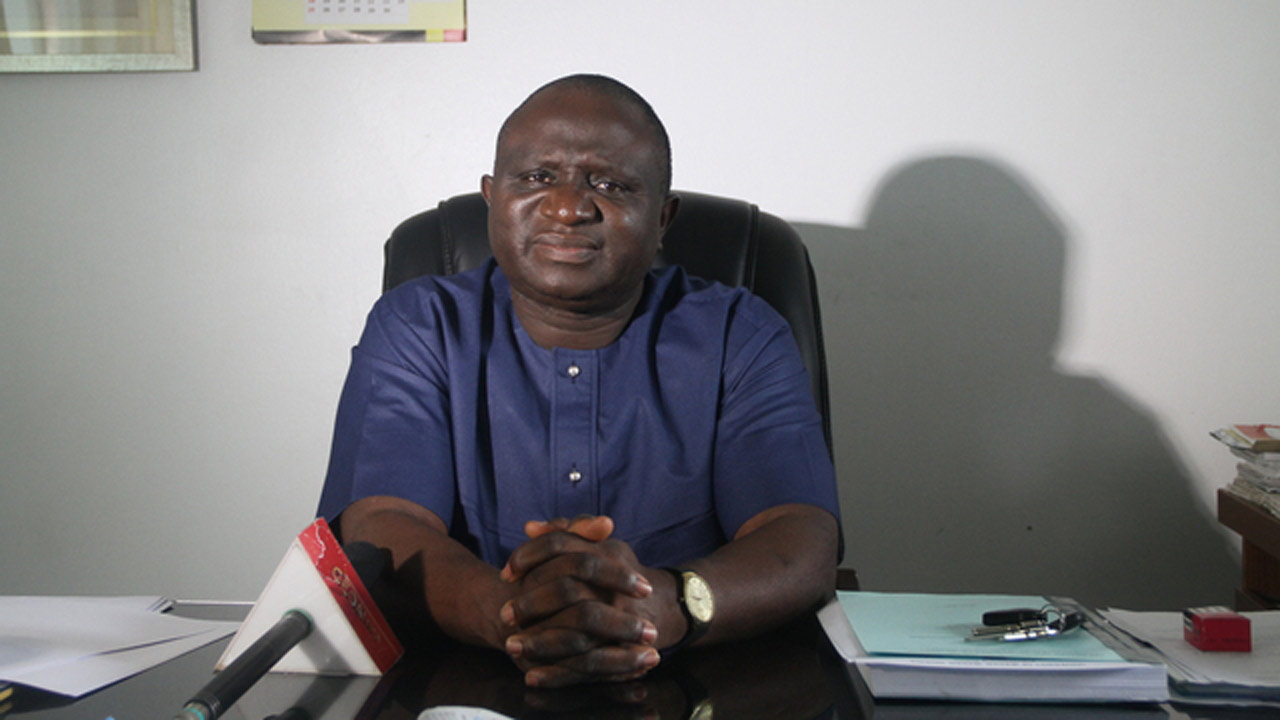
Prof. Isaac Olawale Albert is a renowned security scholar and former Director of the Institute for Peace and Strategic Studies (IPSS), University of Ibadan (UI), Oyo State. In this interview with ROTIMI AGBOLUAJE, he says Nigeria must deepen its ties with the United States of America and fix its security architecture to avoid external strikes.
How would you characterise the current pattern of insecurity in Nigeria? Is it still dominated by ideological terrorist groups like Boko Haram/ISWAP, or has criminal banditry become the more dangerous threat?
The current insecurity landscape in Nigeria is marked by two predominant threat categories: ideological terrorism (principally by groups like Boko Haram and ISWAP) and criminal banditry. Terrorism in the North-East remains driven by extremist ideology aimed at destabilising the state, imposing alternative governance structures, and attracting international attention.
In contrast, banditry, most prevalent in the Northwest and central regions, is largely opportunistic, motivated by financial gain through kidnappings, cattle rustling, and attacks on rural communities. While terrorism and banditry have distinct motivations, recent years have seen a blurring of lines. Some bandit groups have adopted tactics reminiscent of terrorist organisations, including mass abductions and coordinated attacks, complicating response strategies and amplifying national security threats. The Boko Haram crisis in the Northeast is now also driven more by economic than ideological interests.
What is driving the recent escalation of mass kidnappings, attacks on rural communities, and highway abductions? Are these attacks coordinated or largely opportunistic?
Recent surges in mass kidnappings and attacks on rural communities can be attributed to several factors. Existing studies and media reports highlight that many rural areas lack effective government oversight and security infrastructure, making them vulnerable to criminal groups. High unemployment and poverty also drive many into the warm embrace of criminal networks. Nigeria has not found sustainable solutions to the unregulated movement of people and weapons across its borders, which strengthens both terrorists and bandits. In some cases, local political actors have allegedly supported or tolerated bandit groups for personal or electoral gain. Armed non-state actors are increasingly showing signs of coordination, using mobile technology and informants to target communities and evade security forces.
To what extent do the security agencies understand and map the networks behind these attacks? Are there intelligence gaps worsening the crisis?
Nigeria’s security agencies face significant intelligence challenges. While there have been improvements in surveillance and coordination, intelligence gathering remains hampered by poor inter-agency cooperation and rivalry, limited technological capacity and outdated equipment, insufficient human intelligence in rural and remote areas, inadequate training, and low morale among personnel. These gaps often result in delayed responses, inability to preempt attacks, and difficulty dismantling criminal networks. However, in some situations, actionable intelligence is said to have been available but not used preventively, which fuels public suspicions of complicity.
Do you see the current security responses—emergency declarations, deployments, and mass recruitment—addressing the root of the problem, or are they temporary firefighting measures?
Emergency responses such as military deployments, police operations, and community vigilante initiatives have produced some short-term successes. However, these measures are frequently reactive rather than preventive and lack sustainability due to resource constraints, logistical challenges, and inconsistent policy direction. There have been isolated successes in rescuing abductees and disrupting criminal cells, but the overall impact remains limited. Nigeria must design and operationalise a better coordinated security architecture.
What do you see as the biggest structural weaknesses—intelligence gathering, inter-agency rivalry, political interference, or inadequate technology and logistics?
Several key structural weaknesses undermine Nigeria’s security apparatus. These include what can be described as a “fragmented command structure”—overlapping mandates and poor coordination among the military, police, and intelligence services. People have been pointing to this challenge since my early days as a scholar at the University of Ibadan, but little has changed. Political considerations, rather than operational needs, often influence security decisions. Chronic underfunding and mismanagement of security budgets persist. I do not believe our security agencies have adequate equipment, vehicles, or communication systems.
What reforms are urgently needed to make the police, military and intelligence agencies more responsive and proactive?
To address these weaknesses, urgent reforms are essential. Nigeria needs a unified command-and-control system for security operations, increased investment in modern intelligence and surveillance technology, further restructuring and empowerment of the police, stronger inter-agency collaboration and information sharing, transparent and adequate funding, and improved community engagement and local intelligence networks.
President Donald Trump recently threatened to order U.S. military strikes on terrorists inside Nigeria. From a security standpoint, how realistic or dangerous is this?
Recent statements by U.S. President Donald Trump alluding to possible military intervention in Nigeria have heightened concerns about sovereignty and national security. Such rhetoric, even if not immediately actionable, can inflame tensions, undermine Nigeria’s diplomatic standing, and create uncertainty in bilateral relations. It may also embolden insurgent groups who could interpret foreign threats as evidence of the government’s weakness. However, external pressure of this kind can spur Nigeria to take its security responsibilities more seriously. Since the U.S. threat, one can already observe rapid changes in how Nigeria manages national security. It forces our leaders to act responsibly because they understand the implications of Nigeria being labelled a rogue state.
Could foreign threats of unilateral intervention exacerbate tensions, fuel anti-foreign sentiment or embolden insurgent groups? And is there any scenario in which such a threat could indirectly help Nigeria—for example, by pushing the government to accelerate reforms or by attracting international support?
The risks of foreign intervention include loss of autonomy, collateral damage, and potential escalation of violence. However, indirect benefits may arise from increased international attention, pressure for reform, and opportunities for technical assistance and capacity building. Careful diplomatic management is essential to avoid escalation and preserve Nigeria’s sovereignty, as well as the existing healthy relationship between Nigeria and the U.S.
How should Nigeria respond diplomatically to avoid escalation while also assuring its citizens and international partners that terrorism is being addressed?
To de-escalate tensions and counter threats of foreign intervention, Nigerian policymakers should engage in proactive dialogue with U.S. officials to clarify misunderstandings and reaffirm Nigeria’s commitment to tackling insecurity. The government must also demonstrate tangible progress in security sector reforms, leverage regional alliances and multilateral platforms, and enhance communication strategies to effectively showcase its efforts and successes to both domestic and international audiences.
President Tinubu recently strengthened diplomatic channels by appointing a new ambassador to the U.S. How significant is this move for security cooperation?
The appointment of a new Nigerian ambassador to the U.S. signals a renewed commitment to strengthening bilateral relations and security cooperation. It is significant for facilitating direct communication, negotiating security agreements, and shaping the narrative around Nigeria’s counter-terrorism efforts.
The administration has also agreed to a U.S.–Nigeria Joint Security Working Group. What practical benefits can Nigeria expect from intelligence, training, technology, or operational support?
The establishment of a joint security working group between the U.S. and Nigeria is expected to yield practical benefits, including enhanced intelligence sharing, joint training exercises, technical support for counter-terrorism operations, and improved coordination against transnational threats such as trafficking and cybercrime. These initiatives can build capacity and foster greater trust between the two countries.
How can Nigeria deepen security ties with the U.S. without compromising its sovereignty or appearing to outsource internal problems?
While deeper security ties with the U.S. offer significant advantages, Nigeria must ensure such cooperation does not compromise its sovereignty. This requires clear partnership frameworks, transparent oversight, and a focus on building local capacity rather than dependency. Nigerian officials should negotiate terms that respect national interests and maintain control over sensitive operations.
Some stakeholders in the North argue that confronting terrorists militarily could be counterproductive and instead advocate incorporating them into the national budget and negotiating with them as a pathway to peace. How comfortable are you with this line of thinking, and what risks or implications do you see in such an approach?
Yes, some northern stakeholders have advocated negotiating with terrorist groups as part of the peace process.
While dialogue may offer a pathway to conflict resolution, it carries substantial risks. Negotiations can embolden insurgents and undermine the rule of law. Terrorist groups are often factionalised, complicating any agreement. Evidence shows that concessions to one group may incentivise others to escalate violence for similar gains. Victims and affected communities may perceive negotiations as a betrayal, further weakening state legitimacy. Any negotiation strategy must be carefully designed, transparent, and supported by robust disarmament, demobilisation, and reintegration frameworks. I am aware that the Office of the National Security Adviser is doing considerable work in this area.