

Angela Onwuzoo
The Director-General of the Nigeria Centre for Disease Control and Prevention, Dr Jide Idris, has said the agency has intensified preparedness activities nationwide to prevent the importation of Ebola into the country following the confirmation of an outbreak in the Democratic Republic of Congo.
Idris maintained that Nigeria remains ready to rapidly detect, investigate, contain, and respond to any potential importation of the disease.
He cited strengthened infection prevention and control measures, particularly at points of entry, as well as the availability of well-equipped laboratories and health facilities across the country.
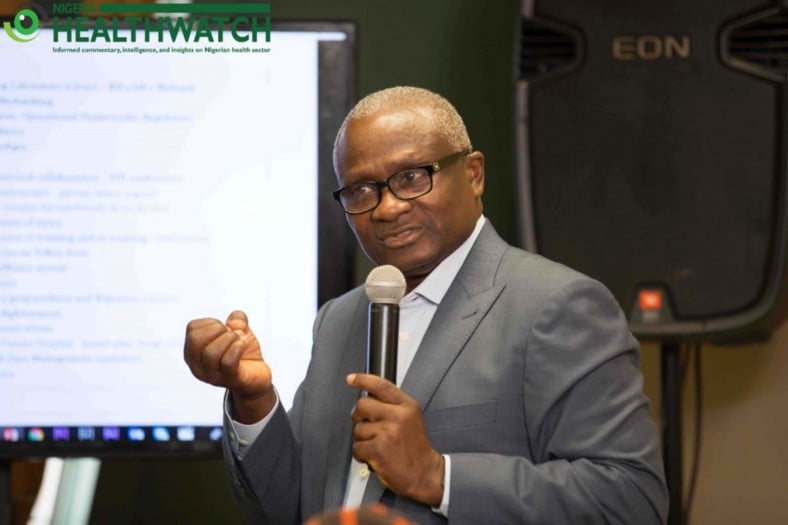
Speaking at a briefing in Lagos on Friday on Nigeria’s preparedness and readiness for Ebola Virus Disease, the former Lagos State Commissioner for Health reiterated that there is currently no confirmed case of Ebola in Nigeria, although the NCDC has classified the risk of importation of the Bundibugyo strain of the Ebola virus as high.
Drawing on Nigeria’s experience during the 2014 Ebola outbreak, the NCDC boss said lessons from previous outbreaks have shown that early detection, rapid isolation, infection prevention and control, contact tracing, risk communication, and effective emergency coordination remain the most effective tools for preventing transmission and saving lives.
He urged state governments to activate their preparedness mechanisms and ensure that emergency response structures are fully operational, while appealing to Nigerians to remain calm and avoid misinformation about the virus.
“Let me begin by reassuring Nigerians that there is currently no confirmed case of Ebola Virus Disease in Nigeria. However, following ongoing transmission in the region, NCDC has conducted a comprehensive dynamic risk assessment, which classified the risk of Ebola importation into Nigeria as high.
“This assessment reflects increasing regional transmission, international travel, and population movement, porous borders, and the potential for delayed recognition because Ebola symptoms may resemble those of malaria and Lassa fever.
“The seriousness of the current outbreak is reflected in the declaration of a Public Health Emergency of International Concern (PHEIC) by the World Health Organization on May 17, 2026, and a Public Health Emergency of Continental Security (PHECS) by Africa CDC on May 18, 2026,” he said.
According to him, there are currently no widely available licensed vaccines or approved targeted treatments specifically for the Bundibugyo strain of the Ebola virus, underscoring the need to intensify infection prevention and control measures.
Giving an insight into Nigeria’s preparedness efforts, Idris said the NCDC had disseminated national public health advisories and healthcare worker guidance to all states and healthcare facilities to strengthen preparedness and infection prevention measures.
He disclosed that readiness assessments had been completed in 549 health facilities across 32 states and the Federal Capital Territory. In addition, 17 designated treatment centres were assessed to evaluate screening capacity, isolation readiness, infection prevention and control systems, healthcare worker protection, and treatment readiness.
He listed the completion of a national dynamic risk assessment and vulnerability analysis to guide the placement of the National Emergency Operations Centre on alert mode, as well as the activation of enhanced national preparedness coordination mechanisms to strengthen readiness, coordination, information sharing, and response efforts, among the key measures already taken.
Other measures, he said, include mapping readiness capacities and gaps, deploying preparedness assessment tools to all states to support systematic monitoring, completing the WHO Filovirus Disease Readiness Assessment, and assessing the likelihood of Ebola importation based on international points of entry and population movement patterns.
“We also completed a national risk stratification exercise, categorising states according to mobility patterns and border connectivity. This risk-based approach is guiding preparedness activities across the country,” he said.
He stated that while the NCDC is leading national coordination efforts, effective prevention and early response require active collaboration among state governments, healthcare facilities, communities, development partners, professional associations, and the public.
“The actions being taken today are designed to ensure that Nigeria can rapidly detect, investigate, and contain any suspected case before wider transmission occurs,” he added.
The increased infection prevention measures follows the WHO declaration of the outbreak in DRC and Uganda as an international health emergency over concerns about regional spread and the absence of an approved vaccine for the Bundibugyo strain.
More than 1,100 people were suspected of having contracted Ebola in the Democratic Republic of Congo and neighbouring Uganda, the head of the African Union’s health agency said on Sunday in a commentary for the Financial Times.
Africa Centres for Disease Control and Prevention director general Jean Kaseya said there were 263 confirmed cases in both countries as of Saturday, with 43 confirmed deaths.
On the next steps, Idris said the NCDC is working closely with state governments and partners to identify and strengthen preparedness capacities. States, he said, have been requested to activate and sustain preparedness coordination mechanisms and strengthen surveillance and alert management systems.
“We urge all clinicians and frontline health workers to maintain a high index of suspicion, particularly among persons with recent travel history to affected countries or epidemiological links to confirmed or suspected cases.
“In other words, carefully assess travel history, exposure history, contact with sick persons, and attendance at burial or funeral activities where relevant, and promptly notify public health authorities when a suspected case is identified. They should also continue to implement standard IPC precautions at all times,” he advised.
The NCDC boss urged Nigerians to remain calm and continue their normal activities.
He added, “Members of the public should obtain information only from credible sources, avoid spreading rumours and misinformation, practise good hygiene, and promptly report any unusual illness through established public health channels.”
He noted that Nigeria successfully contained Ebola in 2014 through strong leadership, rapid detection, effective coordination, public trust, and collective action.
“Today, we are building on those lessons and strengthening preparedness even further.
“Nigeria currently has no confirmed case of Ebola Virus Disease. However, preparedness must begin before the first case is detected,” he concluded.
Copyright PUNCH
All rights reserved. This material, and other digital content on this website, may not be reproduced, published, broadcast, rewritten or redistributed in whole or in part without prior express written permission from PUNCH.
Contact: [email protected]
