

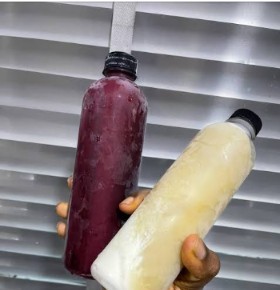
The National Agency for Food and Drug Administration and Control has said all locally manufactured food and beverages, including packaged and labelled zobo and tigernut drinks, must be registered with the agency.
The agency insisted that all packaged food products must undergo safety assessments, and samples of such products must be subjected to laboratory testing to verify their safety and suitability for human consumption before being introduced to the market.
In an exclusive interview with PUNCH Healthwise, NAFDAC’s Resident Media and Communication Consultant, Sayo Akintola, said, “All packaged food products are required to have NAFDAC certify their safety for human consumption. Samples of your products must undergo NAFDAC laboratory testing to ensure that what you claim is food is not poison in disguise. It’s the responsibility of the Agency to safeguard the health of the Nation.”
Akintola maintained that NAFDAC registration is compulsory for all businesses, irrespective of their size, that manufacture, import, distribute or sell products within the agency’s regulated categories in Nigeria.

“You have a product — food, cosmetics, a supplement, a pharmaceutical, packaged water, a medical device. It is ready to sell. But in Nigeria, between a finished product and a legal sale sits one non-negotiable requirement: a NAFDAC registration number.
“Skip it, and NAFDAC can seize your entire stock, shut down your production facility, and prosecute you under federal law. Get it right and that NAFDAC number becomes one of your most powerful marketing assets — a signal to distributors, retailers, and consumers that your product is certified safe, genuine, and legal”, he said.
The agency’s clarification comes amid public attention following a viral video in which police officers were seen questioning a woman selling bottled zobo drinks and asking her to produce the products’ NAFDAC registration number and labels.
In the viral video, which circulated on October 28, one of the officers insisted that the drinks should carry a NAFDAC registration number.
“This thing is supposed to have a NAFDAC number. Does this thing have a NAFDAC number? As a police officer, don’t I have the right to ask?” the officer said.
Meanwhile, registered dietitians and nutritionists have warned consumers against buying zobo and tigernut drinks prepared or stored under unhygienic conditions.
The registered nutritionists noted that contamination during production, handling and storage could expose consumers to foodborne infections, including those that cause diarrhoea, vomiting and abdominal pain.
The experts said consumers should pay attention to the cleanliness and condition of bottles, signs of fermentation, unusual smells, changes in colour and the environment where the drinks are sold.
Commenting on the matter, an experienced nutrition and public health practitioner and Registered Dietitian-Nutritionist, James Oloyede, warned that contamination during production could expose consumers to gastrointestinal infections.
Oloyede, a former Director of Nutrition Services and Health Education at the Osun State Primary Health Care Development Board, identified unsafe water, unclean utensils, poorly washed ingredients and contaminated packaging materials as possible sources of harmful microorganisms.

He said such contamination could cause vomiting, diarrhoea, typhoid and cholera, among other illnesses.
Oloyede added that poor handling during the mixing process could also contaminate the drinks, particularly where foreign materials came into contact with the ingredients.
He said such contamination could result in vomiting, diarrhoea, typhoid and cholera, among other illnesses.
The dietitian further warned that prolonged storage at room temperature could encourage the growth of moulds, fungi and yeast, leading to spoilage and possible foodborne illness.
He said consumers should also be wary of the plastic bottles used to package the drinks, noting that some vendors reused containers collected from dumpsites, roadsides and drainage channels.
Oloyede said such bottles might not have been designed for repeated use and could pose additional risks, particularly if they had previously contained chemicals or had not been properly washed.
He also raised concerns about the quantity of sugar added to some locally made drinks, saying excessive added sugar could be harmful to people managing diabetes or trying to control their weight.
The dietician further noted that the excessive sugar content could also mask signs of spoilage by making a drink taste sweet even when fermentation had begun.
“Most of these drinks are sweetened with heavy sugar. So it’s added sugar, which in itself is a challenge for people who are managing diabetes or want to reduce weight and other things like that.
“In most cases, the added sugar masks spoilage and also the taste. In case it has started to ferment, the sugar will give a sense of sweetness. Whereas the drink itself is already spoiled,” he said.
Oloyede advised consumers to examine the bottles carefully before buying zobo and tigernut drinks, particularly those sold by roadside vendors.
He said buyers should check whether the bottles were new, clean, and free from signs of previous use, including stains, swelling or damage.
He also urged consumers to check whether the bottle caps were properly sealed and tamper-proof, explaining that a loose or previously opened cap could expose the contents to contamination.
He advised buyers to smell the drinks before consuming them, saying unusual odours, sourness, unexpected gas or a slimy texture could indicate spoilage.
“This is not a carbonated drink. It’s not supposed to produce a sound. And when it produces a sound, you know that what you are drinking, I’m afraid, will be spoiled and a lot of issues will arise, health issues when you consume such,” he said.
He further advised vendors to keep zobo and tigernut drinks chilled or refrigerated, noting that storage at natural temperatures could encourage microbial multiplication and fermentation.
Oloyede also urged NAFDAC to intensify consumer education and provide guidance to small-scale producers on hygienic production methods, rather than focusing only on punitive measures.
“Everything is not all about catching somebody, sentencing, or giving them a fine. The overall goal is to improve the health of the community, the health and safety of what people eat or drink or consume,” he said.
Also speaking, a Chief Dietitian/Nutritionist, Olufunmilola Ogunmiluyi, warned that poor preparation, handling and storage could make the drinks sources of foodborne infections.

She identified bacteria such as Salmonella, E. coli and Staphylococcus aureus as possible contaminants, saying they could cause diarrhoea, vomiting, abdominal pain, fever, nausea and dehydration.
The dietitian also warned that yeast and mould contamination could cause fermentation, spoilage and foodborne illness, noting that tigernut drinks were particularly vulnerable.
“Poor hygiene and improper storage can make locally prepared Zobo and tigernut drinks unsafe for consumption by introducing harmful microorganisms, allowing them to multiply and produce substances that can cause foodborne illnesses,” she said.
Ogunmiluyi stressed that failure to maintain adequate refrigeration could allow microorganisms to multiply rapidly, increasing the risk of illness.
She said the consequences of consuming contaminated drinks could be dangerous for children, pregnant women, older adults and people with weakened immunity.
Ogunmiluyi cautioned that a drink could appear attractive and taste pleasant but still contain harmful microorganisms, stressing that proper preparation, hygienic handling and appropriate storage were essential to ensuring safety.
“Zobo and tigernut drinks may be nutritious and refreshing, but their safety depends largely on proper preparation, hygienic handling and appropriate storage,” she said.
Copyright PUNCH
All rights reserved. This material, and other digital content on this website, may not be reproduced, published, broadcast, rewritten, or redistributed in whole or in part without prior express written permission from PUNCH.
