






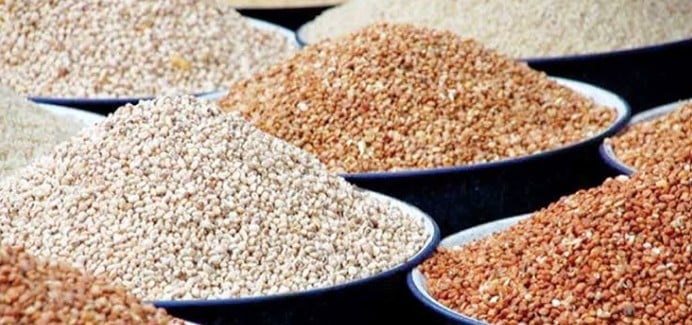
Seasoned nutritionists have clarified that beans contain more carbohydrates than protein, contrary to the notion in Nigeria that the staple is majorly protein-dense.
The nutrition experts explained that although beans are widely recognised for their protein content and health benefits, complex carbohydrates make up a larger proportion of their nutritional composition.
They noted that beans remain an important food source because they also provide fibre, vitamins, and minerals that support digestion and overall health.
Beans are one of the major staple foods in Nigeria, eaten in whole or in processed forms like bean cake, locally called Akara, and bean pudding, known as moi moi, and bean flour soup.
In several Nigerian dishes, beans are paired with other foods, such as beans and bread, beans and rice, beans and pap, and beans and garri.
Beans are mainly grown in Kano, Yobe, Zamfara, Sokoto, and Gombe. There are different varieties of beans sold in the market, which include honey beans, brown beans, and white beans, popularly referred to as ‘oloyin’, ‘drum’, and ‘Sokoto white’, respectively.
However, many Nigerians mostly eat beans as substitutes for the carbohydrates they consume daily, with the assumption that beans are protein-dense foods.
For instance, some Nigerians also advise themselves to eat beans for maximum growth, particularly for height.
But nutrition experts have cautioned Nigerians against relying solely on beans as a major source of dietary protein, saying carbohydrates are more than protein in the nutrient content of cooked Nigerian beans.
Speaking exclusively to PUNCH Healthwise, a registered dietician-nutritionist and former Director of Nutrition Services in Osun State, James Oloyede, said while beans are a generally nutritious food, they are not purely protein.


“Beans contain other nutrients apart from protein, especially carbohydrates, which make them both an energy and protein source,” he said.
Oloyede said the nutrients in beans depend on the variety of the beans and the size.
“Depending on the variety of the beans, we can get close to 300 kilocalories from a cup of beans. In that kind of cup of beans, it is likely you get around 40 to 60 grams of protein, while carbohydrates could be as high as 45 grams,” he said.
Aside from protein and carbohydrates, he said beans contain fiber and fat.
“In addition to this, there are other micronutrients in beans, such as folate, iron, magnesium, potassium, zinc, and B-group vitamins, which make beans very nutritious. It is very low in fat and cholesterol,” he said.
Clarifying the percentage of protein and carbohydrates in beans, he said, “If you want to put it in perspective, it is about a ratio of 1 to 3. Protein is 1, while carbohydrate is 3. So, carbohydrates are more than protein in beans.”
Oloyede explained the assumption among Nigerians that beans are a protein-dense food and used as a substitute for carbohydrates like rice, swallow, bread, and others came right from primary school, where many were taught that beans are solely proteinous food.
The nutritionist said, “We were taught that beans are proteinous food, and the reason is that they contain more protein than most plant foods. If we put most plant foods side by side with beans, beans contain more protein than many of them.
“So, because we are not used to eating meat, fish, and eggs regularly early in life, in order to reduce protein deficiency, right from elementary school, we were made to believe that beans could substitute for other protein foods.
“That was where the notion came from, though scientifically, beans still contain more carbohydrates than protein. But as I said, they contain more protein than most plant foods we have. So, when you compare beans with many other plant foods, beans still have a higher concentration of protein.”
The former Director of Nutrition Services in Osun stressed that while beans are a healthy food, they are not only a source of protein.
“People should combine beans with other protein foods like chicken, fish, eggs, and others. Balance and moderation are key,” he said.
On people living with diabetes who try to avoid carbohydrates but consume beans regularly, thinking beans are purely protein, the nutritionist said beans are among the foods that the body digests very slowly.
“In dietetics, we measure the ability of food to raise blood sugar using the glycaemic index. Beans generally are known to have a low glycaemic index, which means they release sugar into the blood slowly.
“As I said earlier, beans contain both carbohydrates and protein. In fact, the carbohydrates are even more than the protein in beans. But because beans contain high fibre and protein, they help regulate blood sugar,” he said.
Oloyede, however, urged Nigerians living with diabetes to control the quantity of beans they eat.
“Compared to foods like pounded yams and some other carbohydrate-rich foods that release sugar into the blood quickly, beans release sugar more slowly because of the fibre and protein content. But diabetic patients still need moderation,” he said.
On his part, a registered dietitian-nutritionist, Olusola Malomo, said beans are among the most nutritious and affordable foods and an excellent plant source of protein for Nigerians.


Explaining the nutritional content in one cup of cooked beans, he said, “A cup may contain 200–250 kilocalories, 12-15g of protein, 10-15g of fibre, 35-45g of carbohydrates, and 1-2g of fat, among others.”
He listed the common beans to include cowpea, kidney beans, black beans, pinto beans, navy beans, soybean, and bambara beans.
Malomo noted that while beans are highly nutritious, excessive intake beyond the body’s needs may cause some health concerns, especially when consumed frequently in very large quantities.
He listed the possible health concerns to include excessive gas and bloating, flatulence, abdominal discomfort, and stomach cramps, among others.
Meanwhile, a 2017 study by Nigerian researchers published in the Journal of Endocrinology, Metabolism and Diabetes of South Africa, which analysed the nutritional value of beans, showed that carbohydrates are more than protein in beans commonly consumed in Nigeria.
Findings from the study showed that ‘oloyin’ beans contain 62.48g of carbohydrates per 100g, alongside 23.48g of crude protein, making it the bean variety with the highest protein content among those analysed.
It added that ‘drum’ beans contain 64.87g of carbohydrates per 100g and 19.63g of crude protein.
Similarly, ‘Sokoto white’ beans were found to contain the highest carbohydrate content at 65.29g per 100g, with 19.74g of crude protein.
Copyright PUNCH
All rights reserved. This material, and other digital content on this website, may not be reproduced, published, broadcast, rewritten, or redistributed in whole or in part without prior express written permission from PUNCH.


