

As economic hardship deepens, its toll on early childhood development is becoming harder to ignore. Poverty, malnutrition, and limited access to quality education are stunting children’s growth, learning and school readiness, pointing to a crisis with far-reaching consequences for the nation’s future, IBRAHIM ADAM writes
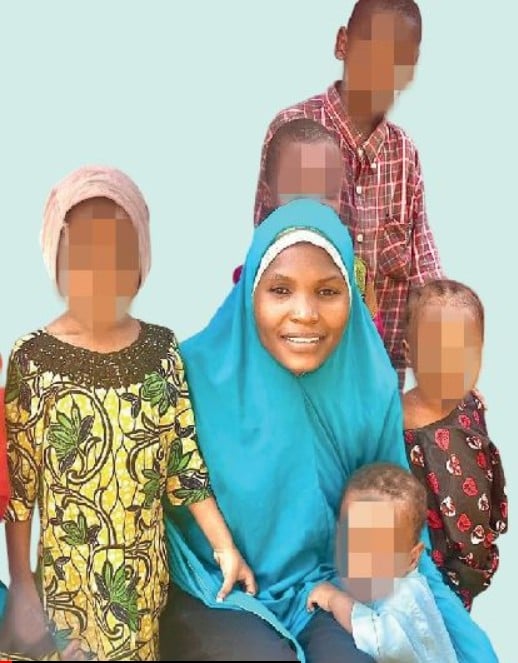
A cleaner and laundry worker in Bauchi State, Zuwaira Muhammad Bala, began to notice worrying signs in her children’s development—delayed milestones, low physical strength, and a pattern of growth that differed from what she had expected.
She observed these changes over time, raising concerns about the challenges shaping their early years.
Zuwaira, a mother of five children aged 12, seven, five, three, and under one, said she continues to manage the demands of raising her family with determination, relying on her faith while working to support the household.
“I do my best in accordance with what God provides for my family and me,” she told Saturday PUNCH.
She acknowledged that providing adequate meals and education for her children remains a major challenge, but continues to hold on to hope despite the difficulties.
“Honestly, there are so many challenges. But God will continue to see us through,” Zuwaira said.
She disclosed that the impact of these challenges is already evident in her children’s early development, adding, “Yes, the children usually take a year or two to walk and gain strength,” she said.
The mother of five noted that although the family previously struggled severely with access to food, their situation has improved slightly, which she attributed to gratitude and divine provision.
“Before, we had many difficulties with food, but now, thanks to God. Whatever God sets on our table, we eat with satisfaction,” Zuwaira said.
She added that she contributes to the household purse through earnings from her work, whenever necessary.
“I work as a cleaner and laundress, and I use the money I earn to support the family when my husband is unable to provide or when I need to supplement what he brings,” she said.
She emphasised that her greatest concern remains her children’s education, which she believes is the most important investment in securing their future.
World Bank report
According to the World Bank, Nigeria is facing a deep early childhood development crisis, with weak outcomes in health, nutrition and learning undermining long-term productivity and economic growth.
In its latest Nigeria Development Update titled, “Nigeria’s Tomorrow Must Start Today: The Case for Early Childhood Development,” WB cautioned that without urgent investment in the early years, the country risks squandering its demographic potential.
The report released on April 7, 2026, stated that more than seven million children are born in the country every year, many of whom do not survive, with over 110 per 1,000 dying before the age of five.
The report said that early growth faltering is widespread, with more than 40 per cent of children under five suffering from stunting, often with lasting consequences for cognitive development and future earnings.
It also found that developmental gaps emerge early and widen quickly, with 52 per cent of young children not developmentally on track.
Similarly, only 30 per cent of children aged three to five can identify five letters, while 34 per cent can recognise numbers from one to five.
Despite recording macroeconomic progress through 2025 and into early 2026, driven by services, agriculture, oil and manufacturing, the report noted that the country continues to underperform relative to its income peers on early child development.
It also observed that under-five mortality and stunting rates remain significantly higher than those of countries with similar income levels, including peers in West Africa and across Eastern and Southern Africa.
The Bank warned that the implications of poor early childhood development go beyond health outcomes, stressing that children who are not stunted are 1.6 times more likely to complete primary school and more than twice as likely to complete secondary school.
These gaps, it explained, later translate into weaker labour market outcomes and lower productivity in adulthood.
It says, “Nigeria’s jobs challenge reflects foundational human capital constraints, and children lacking early skills are less able to transition into productive wage employment, adopt new technologies, or acquire new abilities.”
It also highlighted regional disparities, with southern states recording under-five stunting rates below 15 percent, compared to over 60 percent in parts of the North.
WB called on Nigerian authorities to establish a minimum integrated service framework from pregnancy to age five as the foundation of an effective early childhood development strategy.
It urged the government to adopt shared, child-centred outcomes, clarify institutional roles and strengthen accountability across sectors and levels of government.
The report also recommended aligning incentives and fiscal frameworks with measurable child outcomes, while integrating early childhood development into Medium-Term Expenditure Frameworks and national budgets through clear links to priority service areas.
It advocated mobilising private sector participation to expand service delivery, encourage innovation and create jobs.
A mother’s struggle
Relaying her daily struggle, another mother, Rose Gaya, said raising her daughter was defined by hunger, sacrifice and an unyielding determination to secure a better future through education.
Gaya, who hails from Angwan Auta community in Kokona Local Government Area of Nasarawa State but now resides in Toto Local Government, recalled that providing basic nutrition and early schooling for her only child was a daily challenge shaped by poverty and uncertainty.
“It was not an easy experience for me because her birth came with its own challenges. At times, getting food for her was very difficult. I had to take on many menial jobs just to feed her and support her education from nursery school,” she said.
Without a stable source of income, Gaya turned to physically demanding and risky work, including gathering firewood in the bush for sale, to meet her child’s needs.
“There were days we woke up with no food, and sometimes she was sent home from school because I could not pay her fees,” she said.
These conditions initially affected her daughter’s learning, particularly at the start of her education, when she struggled to retain what she learned.
However, Gaya said she remained resolute, enrolling her in extra lessons and ensuring consistent support despite financial constraints.
“Over time, she improved and eventually became one of the brightest among her peers,” she said.
Despite the hardship, Gaya noted that the experience strengthened the bond between her and her daughter, reinforcing shared values of resilience and love.
“It did not create distance between us. Instead, it brought us closer. It taught us both the value of hard work and love,” she said.
Gaya also emphasised that educational support would have made a significant difference in easing the burden she went through.
“I would have appreciated support for my child’s education. I strongly believe that if my child is educated, she will succeed and be able to support me in the future,” she said.
Is early childhood underfunded?
An analyst with SBM Intelligence, Uchechukwu Ejezie, in a BusinessDay report titled “Public Spending and Early Childhood Development in Nigeria,” said early childhood development, which covers pre-primary education, nutrition, health and early stimulation for children aged 0 to five, is widely recognised as one of the highest-return public investments.
However, he noted that the country’s youngest citizens remain structurally underfunded.
Ejezie said that although the federal education budget has increased from N1.54 trillion in 2023 to N3.52 trillion in 2025 and remains at that level in the 2026 budget, it is difficult to determine how much directly benefits these children aged.
He explained that N113.7 billion in the 2026 education budget is allocated to school feeding, scholarships and out-of-school children’s interventions, including N42 billion for the National School Feeding Programme and N35 billion for out-of-school initiatives, but these are not specifically targeted at pre-primary children.
Ejezie added that public education spending remains low on a per-child basis, averaging about $23 per capita, while only about 36 percent of Nigerian children have access to early childhood education.
He also noted that while some states have prioritised education in their 2026 budgets, actual spending often falls short, with Enugu State Governor, Peter Mbah allocating 32.27 per cent of its budget to education without mentioning the figures, Katsina State earmarking N156.3 billion and Borno State allocating approximately N135.4 billion.
Malnutrition shrinks young minds
A company physician at Aim Group of Companies, Dr Frederick Unuigbokhai, warned that malnutrition causes long-term damage to brain development, reducing intelligence and productivity later in life.
He explained that the condition extends beyond physical health, significantly affecting cognitive development and limiting a child’s future potential.
“Malnutrition’s impact on the brain is actually long-term damage because it affects neurotransmitter production and reduces brain growth, leading to poor memory, reduced attention span and a lower intelligence quotient,” he told Saturday PUNCH.
Unuigbokhai noted that these effects often translate into poor academic performance in childhood and reduced productivity in adulthood.
He also stressed the importance of maternal health in shaping early childhood development, describing it as the foundation of a child’s overall well-being.
According to him, malnutrition during pregnancy can result in low birth weight, which he identified as a precursor to developmental delays and stunting.
The physician added that poor breastfeeding practices, often influenced by knowledge gaps or cultural beliefs, further limit a child’s access to adequate nutrition.
“To improve child nutrition, the focus should be on realistic and affordable measures such as exclusive breastfeeding for six months, continued breastfeeding where possible, and the use of locally available foods to provide balanced nutrition,” he said.
Unuigbokhai recommended foods such as beans, groundnuts, pap, vegetables, potatoes, fish and crayfish as accessible options for families.
He also emphasised the need for proper hygiene and infection-prevention practices, including regular handwashing, good sanitation, and access to clean water to support healthy child development.
Early neglect threatens future
An Early Childhood Specialist, Toluwanimi Fatukasi, has warned that neglecting the first five years of a child’s life can lead to lasting developmental setbacks, stressing that early investment in learning and nutrition is critical to shaping future outcomes.
She told Saturday PUNCH that scientific evidence shows that by the age of three, about 90 percent of a child’s foundational skills, including emotional regulation, social interaction, language, self-control and independence, are already formed.
Fatukasi explained that when these early years are not properly supported through play, social stimulation and communication, children may fall behind, although the gap often becomes evident only when they begin formal schooling.
She noted that by that stage, catching up can be difficult, with many children requiring intervention support to address learning delays.
According to her, the long-term consequences of early neglect include poor academic performance, particularly in reading fluency and comprehension, as well as difficulty engaging meaningfully in classroom discussions.
She added that affected children may struggle with emotional expression, often displaying aggression, frustration, low confidence, poor self-esteem and limited attention span.
Fatukasi identified parenting education as a key area requiring urgent attention, noting that many parents are unaware of the critical role they play during the early years until it is too late.
She also raised concerns about the quality of early childhood care and education in the country, particularly in the public sector, where she said caregivers and teachers often require reorientation.
The expert called for a review of the curriculum to prioritise activities that stimulate critical thinking, creativity and exploration rather than an over-reliance on theoretical teaching.
Fatukasi added that improved nutrition through consistent school feeding programmes and access to intervention services should follow once foundational gaps in parenting education and teaching quality are addressed.
A teacher and mentor, Ibiere Brown, also warned that the country risks long-term social and economic decline if urgent attention is not given to early childhood development.
Brown told Saturday PUNCH that too many children are growing up without the basic support, learning and care required during this critical stage, which she described as the foundation of a child’s entire future.
She said poor investment in education, nutrition and healthcare for children aged zero to five is already evident in weaker school performance, higher disease rates and slower economic growth.
Brown explained that the first five years are crucial because the brain develops faster during this period than at any other time.
“This is the age where confidence is born, curiosity begins, and children start to understand emotions and whether the world is safe or frightening. Simple practices like shared reading, responsive play and structured learning help children adapt to classroom environments and follow instructions effectively,” she said.
The teacher added that children raised in supportive environments are better prepared to learn, while those without such conditions may suffer lasting developmental challenges.
The childhood educator noted that poverty worsens these outcomes, contributing to poor health, slower brain development and limited economic opportunities in adulthood.
According to her, this trend could weaken Nigeria’s workforce through lower productivity and higher unemployment.
She stressed that proper nutrition in the early years is vital for brain development, warning that malnutrition increases the risk of cognitive delays and poor academic performance.
Brown called for integrated, evidence-based interventions, including community programmes, improved prenatal care, breastfeeding support and expanded access to early learning centres.
The teacher emphasised the need for policies that prioritise early childhood development and align with research findings.
She urged the government to establish a clear national strategy with measurable targets, increase funding for early childhood services and improve coordination across relevant sectors.
Brown added that better data collection and monitoring systems are essential for identifying high-risk communities and ensuring effective programme implementation.
“Policies must focus on scaling what works and engaging communities meaningfully, ensuring that parents and caregivers are part of the solution,” she said.
Urgent action on child welfare
The founder and Executive Director of the Dankofa Foundation in Kaduna State, Abdullahi Dankofa, has said that lack of proper nutrition, limited access to quality education and families’ inability to adequately support children are undermining early childhood development in underserved communities across the country.
He told Saturday PUNCH that the challenge is most visible in rural areas, where children are eager to learn but are held back by hunger, poor health and limited access to basic schooling.
Dankofa warned that poor nutrition remains one of the most critical barriers to learning, stressing that its impact extends beyond education into overall child development.
“The most common early childhood development challenges we see in the communities we serve are a lack of proper nutrition, limited access to quality education, and families being unable to support their children adequately.
“There is a very strong link between nutrition and a child’s ability to learn. When nutrition fails, education suffers. We consistently see children who are highly spirited, willing and eager to learn, but the system fails them because they do not have access to proper nutrition or even basic schooling,” he said.
Dankofa further explained that malnutrition affects children physically and cognitively, making it difficult for them to concentrate, retain information and participate meaningfully in class.
“When a child is not in a healthy state physically, it becomes incredibly difficult for them to concentrate, retain information, or even participate actively in school. Malnutrition can lead to fatigue, weakened immunity and cognitive delays,” he added.
The Executive Director emphasised that nutrition should be treated as both a health and education priority, given its central role in a child’s development outcomes.
“Poor nutrition not only affects a child’s ability to learn, but it affects the foundation of their entire growth and development,” he said.
Dankofa stressed that interventions must be proactive rather than reactive, “It is not enough to wait for children to come to the system, but the system must go to them.”
He also called for government investment in rural education and healthcare infrastructure, adding that insecurity in some communities continues to discourage school attendance.
Dankofa also raised concerns over funding gaps, budget implementation challenges and insufficient allocation to education, warning that these issues continue to stall meaningful progress.
Parental stress risks development
A psychotherapist and emotional intelligence expert, Jacob Micheal, warned that mounting parental stress caused by limited access to basic needs is threatening early childhood development.
He told Saturday PUNCH that many parents experience intense psychological pressure when they are unable to provide adequate nutrition, education and healthcare, often leading to anxiety, guilt and emotional exhaustion.
Micheal said ongoing worries about basic needs like food, school fees and healthcare can lead to anxiety, while many parents see these struggles as personal failure, reducing their confidence as caregivers.
He noted that such emotional strain can alter the atmosphere within the home, with children absorbing the stress and instability around them, which in turn affects their sense of security and development.
“Children are very sensitive to the emotional state of the adults raising them. When parents are constantly stressed, anxious, or emotionally exhausted, the child tends to absorb that emotional atmosphere,” Micheal said.
According to him, the long-term effects may include difficulties with attention, memory, communication and emotional regulation, particularly when poor nutrition and limited early learning persist during the first five years of life.
“It is important to say that these effects are not always permanent. With the right support, quality education, and a stable environment, many children can recover and thrive. Early intervention is always very powerful,” he said.
Michael said warning signs of parental distress include exhaustion, withdrawal, irritability, and anger, with severe cases showing hopelessness or emotional numbness.
He emphasised the need for a comprehensive approach that supports both parents and children, including access to parenting education, economic assistance, mental health services, and quality early childhood education.
He added that stronger economic and social support systems, including childcare programmes, nutritional assistance, and affordable healthcare, would help reduce the psychological burden on parents.
“Early childhood development cannot succeed if the caregiver is overwhelmed or unsupported,” Michael added.
FG calls for funding reform
In a statement posted on the Presidential Villa State House website on December 9, 2025, Vice President Kashim Shettima said the number of out-of-school children in the country constitutes a national emergency, calling for collaboration between government and private sector stakeholders to address the problem.
He made the statement at the opening of the 2025 Nigeria Education Forum in Abuja, organised by the Nigeria Governors’ Forum, the Federal Ministry of Education, and the Conference of State Commissioners of Education, on the theme “Pathways to Sustainable Education Financing: Developing a Synergy Between Town and Gown in Nigeria.”
Represented by the Special Adviser to the President on General Duties, Office of the Vice President, Dr Aliyu Umar, Shettima noted that education spending under President Bola Tinubu reflects the administration’s commitment to building an enlightened and globally competitive population.
Shettima said an uneducated generation threatens civilisation, adding that nations rise when people have the knowledge and skills to build a better future.
The VP emphasised that the country has reached a critical inflection point where traditional government-only funding models can no longer sustain its educational needs.
He called for a shift toward collaborative, innovative and resilient financing mechanisms.
“Since education begins in the community, local governments and traditional institutions must take responsibility for infrastructure development, school maintenance, security, and teacher welfare.
“We are here today because we do not treat education as just a line item in the national budget. We treat it as the foundation of our national identity, the engine of our economic transformation, and the shield of our collective security,” Shettima said.
Copyright PUNCH
All rights reserved. This material, and other digital content on this website, may not be reproduced, published, broadcast, rewritten or redistributed in whole or in part without prior express written permission from PUNCH.
Contact: [email protected]
