

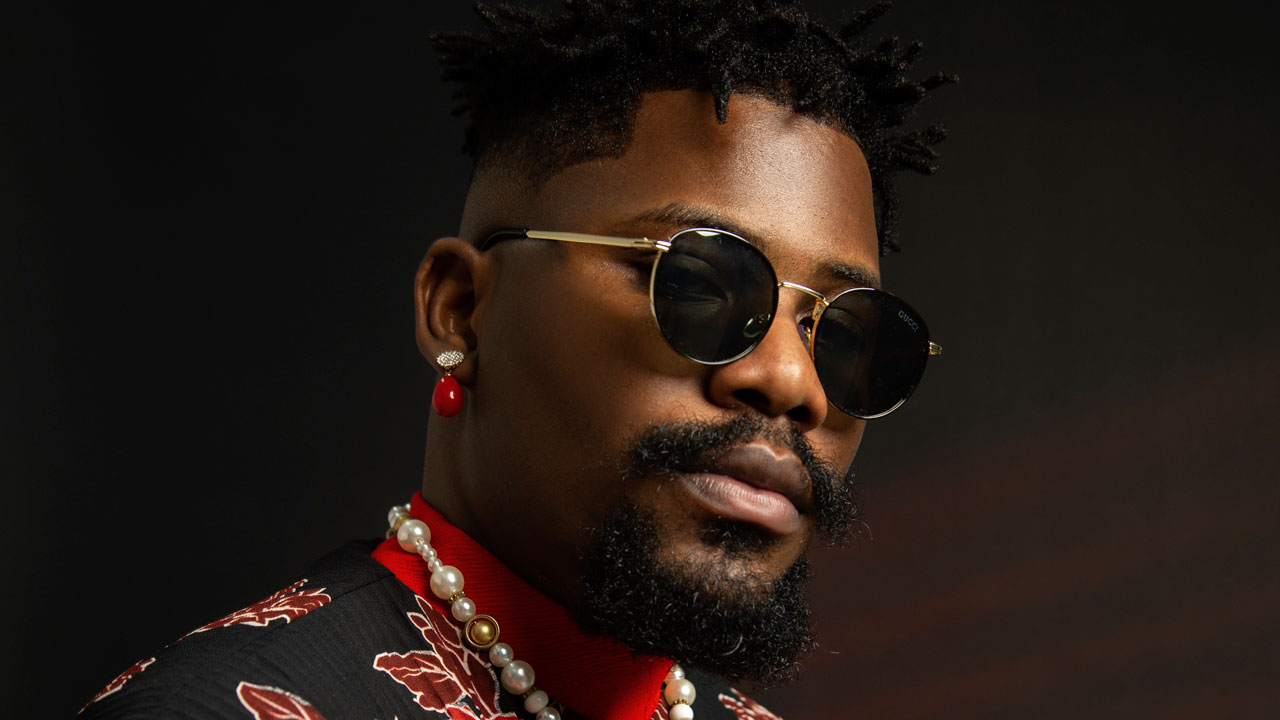
Let us talk about YCee’s warning and the data behind our intellectual decline.
On the Afropolitan Podcast, rapper YCee, full name Oludemilade Martin Alejo, said something that cracked the internet open:
“This Olodo uprising that we have right now is terrible. We’re trying so much to accommodate unintelligent and ignorant people. Now we have ‘Peller culture’ people doing dumb things and getting rewarded for it. People go online, do obscene things, and they get clicks and views in Nigeria. If we keep rewarding these dumb people, what exactly are we telling the younger generation?”
The backlash was instant with TikTok creator Jarvis, whose husband is popular creator Peller, firing back: “I went to school. I graduated. Since the government didn’t provide jobs for us, what exactly did you expect people to do?”
Both sides have a point but both sides are also missing something.
Because buried beneath the noise is a question this country desperately needs to answer: When did Nigeria stop celebrating people who know things?
What Is The “Olodo Uprising”?
“Olodo” (Yoruba for a dull or slow-witted person) has historically been an insult but now it’s almost a brand.
The argument made by YCee is that Nigerian social media has entered an era where the most viral content is not thoughtful or educational. It is sensational, provocative, or simply foolish. And because attention equals income online, the incentive structure now actively rewards behaviour that would once have brought social shame.
But this is the symptom of a deeper rot, one that started long before TikTok existed. The book The Yahoo Boys: Real Life with the Love Scammers of Lagos by Carlos Barragan traces the original virus:
“For some Yahoo Boys, the path toward scams begins shortly after entering university. They see that their degrees may offer little advantage in a bleak job market.”
The “school na scam” mindset didn’t happen by accident, as it emerged from deep economic, historical, and political roots.
Barragan’s book provides critical historical context that most Nigerians gloss over: “When oil prices dropped in the 1980s, Nigeria’s economy collapsed, triggering soaring unemployment and inflation. Nigeria’s debt ballooned from $3.4 billion in 1980 to $32.9 billion by 1990. Millions of college graduates were left jobless, with many emigrating to work as nurses, doctors, bankers, or taxi drivers in the US and UK.”
Historian Max Siollun, in Soldiers of Fortune, documented the aftermath: “Nigerian society became monetised to the extent that power and respect were accorded to those with money whether legitimately or dishonestly acquired.”
The 1980s oil crash severed the link between education and prosperity in the Nigerian imagination, leaving a generation to watch their degree-holding parents struggle. This economic collapse birthed the rise of prosperity churches, advance-fee fraud, and internet scamming. The “school na scam” narrative was inherited from a legacy of survival, and it has now found its perfect amplifier in social media.
Nigeria’s Education System Is In Crisis
The disturbing numbers match the reality on the ground:
• Out-of-School Crisis: Nigeria holds the global record with an estimated 18 to 20 million out-of-school children, according to United Nations Educational, Scientific and Cultural Organization UNESCO’s 2026 report.
• Collapsing Standards: The university admission baseline has cratered, with JAMB setting the minimum cutoff score at just 150 for the 2026/2027 session. This is a massive drop from the 200 threshold common in the 2010s.
• Severe Underfunding: Fewer than 30% of early-grade children meet basic literacy and numeracy benchmarks, yet national education spending remains well below the UNESCO recommended 15–20% budget threshold.
Read Also: Diezani Alison-Madueke acquitted of £100,000 bribery charges in UK
Beyond funding, the system produces a deeper, more corrosive problem: unemployable graduates. A 2026 Edugist report and National Bureau of Statistics data confirm that over half of Nigerian graduates enter the workforce lacking critical, practical skills, forcing nearly 60% of employers to deem them not job-ready.
The rot runs both ways: institutions design exams to extract memorized definitions rather than test applied reasoning, while students chase certificates over competency through a culture of late-night cramming. This leaves a generation trained to prioritize grades over principles, entering a modern labor market that demands the exact opposite: the ability to think critically, adapt swiftly, and apply knowledge in contexts no textbook ever anticipated.
Nigeria’s political class has a structural incentive to underfund education since a low-information public is easier to govern and less likely to demand accountability.
This is reflected in the 2026 budget proposal, which allocates just 6.1% to education, amounting to only 3% of GDP, far below the global 4–6% benchmark. In contrast, smaller African economies prioritize human capital, with Kenya committing 20% of its budget to education and Rwanda over 15%.
While many have long warned youth not to be distracted by the fleeting wealth of “Yahoo Boys,” the state has failed to fix the structural failures that drive them. By maintaining mass youth unemployment and underfunded schools, the system continues to produce the very ignorance and desperation it cautions against.
The online war between YCee’s supporters and defenders of “content culture” has produced more confusion but here is a fair breakdown of both positions:
• YCee’s core argument (the part his critics ignored): He is not saying content creation is bad but that what gets rewarded is increasingly harmful and that this shapes what young Nigerians aspire to.
• Jarvis’s counter (the part YCee’s fans ignored): Jarvis challenged YCee’s position, arguing that many creators are actually educated graduates who turned to online platforms out of sheer necessity.
• The nuance both sides miss: The question is whether the type of content being celebrated creates healthy aspirational models for children too young to have economic pressures. A 12-year-old watching sexualised skits is being shaped.
And here is the uncomfortable truth that creators must sit with: whether they want to be or not, they are role models. The moment you monetise public attention, you have accepted a position of influence over young, impressionable minds and that carries a responsibility that cannot be waved away.
A creator who profits from an audience of millions does not get to disclaim mentorship because by default, they occupy that space whether they acknowledge it or not. The question is simply what they choose to do with it.
Nigeria’s massive skit economy thrives on a young, mobile-first audience seeking stress relief, but it operates within an unregulated ethical minefield.
Driven by the chase for views and monetization, creators face a complete policy vacuum and weak intellectual property laws.
This lack of moderation has normalized harmful content categories, including but not limited to:
• Dangerous Pranks: Fake kidnappings and accidents that glorify chaos.
• Sexual Objectification: Reducing women to body parts and punchlines for underage viewers.
• Rape and Theft Humor: Treating non-consensual acts and crime as comedy, creating dangerous normalization through mass exposure.
• Poverty Humour: Mocking financial struggle and suggesting those who cannot hustle deserve ridicule.
None of this harmful content is regulated, yet all of it is highly monetized.
Social media apps are attention-harvesting machines calibrated to serve the most emotionally stimulating content possible, regardless of its educational value or psychological harm.
The For You Page algorithm personalises content based on user interactions, often pushing increasingly extreme videos to keep viewers engaged.
This is why UK Prime Minister Keir Starmer announced on June 15, 2026, that Britain will ban children under 16 from platforms including Snapchat, TikTok, YouTube, Instagram, Facebook and X, saying “social media is making our children unhappy and unsafe.”
More than 83% of parents who responded to the UK government consultation said the risks of social media use outweigh the benefits, and 90% expressed support for a minimum age of 16 before children can access social media platforms.
Nigeria is doing the opposite as the federal government was still conducting surveys as recently as March 2026 on whether to consider regulating social media for minors.
While the West builds digital guardrails for its children, Nigerian children scroll freely.
YCee’s argument, though valid, carries a blind spot of its own: for decades, Nigeria has confused being truly educated with sounding a certain way or coming from a certain class. Society labels a broke, degree-holding academic as “intelligent” while dismissing a thriving mechanic who solves practical problems daily.
True intellectualism is not just about titles or polished English but also the capacity for critical thought; the ability to interrogate data, resist manipulation, and make evidence-based decisions.
By this standard, Nigeria’s highly educated political class has proven to be just as deficient as the TikTok creators they mock. It was university graduates and PhD holders who looted public funds and misallocated national budgets.
The real threat is not TikTok but a total cultural collapse where actual knowledge is no longer valued anywhere, whether on the streets, in universities, or within the corridors of power.
Knowledge is the ultimate equalizer in Nigeria.
Whether through books, research papers, long-form journalism, or educational podcasts, anyone with a data connection can access the world’s greatest minds.
Being well-informed is about the deliberate choice to seek truth beyond what is trending which is why a well-informed public is politically dangerous. A citizenry that understands history, economics, and law can easily see through bad governance, trace systemic corruption, and demand its constitutional rights.
With over 80 million Nigerians living in poverty, a sustained anti-intellectual culture ensures that economic hardship remains an effective tool for political manipulation rather than a problem to be solved. In a system that thrives on ignorance, choosing to learn is an active form of resistance.
YCee’s critics accused him of punching down. Some of his supporters responded with their own condescension. But the more important response to the “Olodo Uprising” is amplification of the opposite.
Positive counter-examples exist:
• Nigerian students sweep international science and mathematics olympiads annually, with virtually no government support or media coverage.
• Nigerian authors are winning global literary prizes.
• Nigerian researchers are publishing in world-leading journals.
• Nigerian engineers are at the frontiers of AI, biomedical science, and climate tech.
• On social media itself, accounts focused on African history, Yoruba linguistics, Nigerian economics, and civic education are growing. This is proof that there is a market for knowledge.
The issue is that Nigeria has no cultural infrastructure for celebrating academic excellence the way it celebrates viral content.
The counter to noise is better and more shareable knowledge content. Every time a fact-checked, well-researched carousel gets shared more than a dangerous prank video, the algorithm learns something. Every time a parent chooses a book over a screen for a child, a different future becomes possible.
The “Olodo Uprising” thrives because Nigeria lacks an alternative culture of celebration. To fix this, we must intentionally champion:
• Academic Excellence: Celebrate high-achieving students from under-resourced public schools, not just elite institutions.
• Reading and Literacy: Support public reading cultures, libraries, and knowledge-building communities.
• Intellectual Curiosity: Promote science fairs, debates, and critical thinking as foundational societal tools, not elite hobbies.
• Craft and Skill: Value practical expertise as true forms of intelligence.
• Honest Discourse: Encourage plain-language conversations where people value evidence and admit when they don’t know something.
• Parental Accountability: Parents, not algorithms, must protect children by setting screen limits and modeling curiosity.
The media, entertainment industry, and creators must realize that promoting mediocrity as harmless entertainment actively reshapes minds. Building a culture of excellence is everyone’s responsibility.
However, not everyone agrees with YCee. Many Nigerians have accepted things as they are. They are either too exhausted by daily survival to question the culture, or they simply don’t believe that learning and ambition will lead to a better future in a broken economy. The discomfort he voiced is shared only by a small sliver of society; those who still value knowledge enough to grieve its decline.
But this conversation is really for the malleable ones: young people who haven’t fully bought into the “Olodo” script, who still want something more substantial, but have never been given a compelling reason to choose it. They are just waiting for the right content to reach them and the real opportunity for change lies in making such impactful knowledge so visible and celebrated that it becomes a genuinely aspirational alternative to any prank video on a phone screen.
Every time a well-researched carousel is shared over a viral sexualized content, the algorithm learns and small cultural shifts compound into a different future.
Share this carousel, and ask yourself: when did you last choose to learn something and who in your circle are you sharing that knowledge with?
