






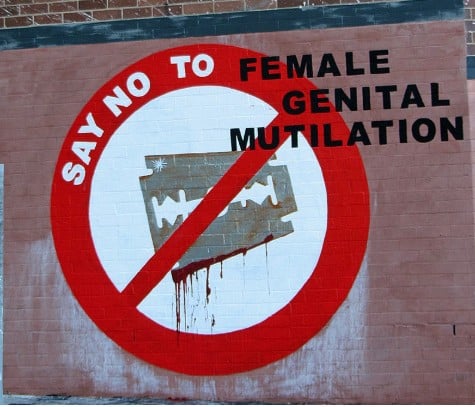
Eleven years after Nigeria banned female genital mutilation, investigations by PUNCH HealthWise reveal that some families still subject baby girls to the harmful practice in secret, with grandmothers painfully pressing and massaging infants’ genitals using their thumbs, hot water, Vaseline, and ointments to “shrink” them. The practice, driven by deeply rooted cultural beliefs, exposes the children to trauma, infections, and abuse, JANET OGUNDEPO reports
Every morning and night, the cries of 33-year-old Ogechi Ndulaka’s newborn pierced the air during bath time. Bathing had become a ritual of pain for the infant, and her wails were a clear protest of what was being done to her.
Ndulaka’s newborn, Chiamaka, a name meaning God is good, soon became known among neighbours for the cries echoing through her parents’ two-bedroom apartment in Ogbor Hill, Aba, Abia State.
But behind those curtains, Chiamaka’s grandmother repeatedly pressed the infant’s clitoris with a Vaseline-coated thumb to reduce the size, insisting the baby girl’s clitoris must not be “left like that.”
For over a month, the infant endured the repeated pressing of her grandmother’s thumb against her clitoris and was finally free when the clitoris shrank to a size that satisfied the older woman.
“My mother-in-law was the one bathing my baby. Since the government banned FGM and vowed to arrest those engaging in the act, my mother-in-law devised another way to reduce my baby’s clitoris. She would apply Vaseline to her thumb and use it to press on my baby’s clitoris. She did that for over a month whenever she was bathing the child, and it went inside,” the businesswoman told PUNCH Healthwise.
Ndulaka said her baby’s cries were distressing, but it was difficult for her to fight a culture that was believed to protect her girl from becoming “promiscuous in the future.”
Although Chiamaka, who is now two years old, has forgotten that bath time used to be a ritual of pain, she unknowingly carries the desired impact her culture has stamped on her.
But Chiamaka is not alone.
An underground practice
Across several communities nationwide, an underground practice has emerged in the wake of Nigeria’s ban on female genital mutilation.
Instead of using blades, families now repeatedly press and massage baby girls’ clitorises with thumbs, hot water, Vaseline, shea butter and penicillin ointments in an attempt to make them shrink.
Findings by PUNCH Healthwise revealed that the practice, often carried out by grandmothers and older female relatives, may continue for one to three months until the clitoris becomes “very small.” In some cases, mothers perform it themselves after being convinced it is necessary.
A Lagos Island trader, identified simply as Iya Edo, said her mother or an older female relative was unable to come around to assist her in caring for her newborn daughter when the newborn was born in July 2020.
Iya Edo said a health worker at a secondary health facility in Lagos State encouraged her to perform the practice on her infant.
“She said since cutting was no longer allowed, they now use hands to manipulate the clitoris by pressing it during bathing,” the trader recalled.
The woman said she carried out the procedure on her daughter, now six years old.
“Though pressing it and hearing my baby’s cries was not easy, I had to do it. I used hot water to massage it and then added Vaseline,” the Iya Edo said.
Another mother, Risikat Alaba, said she resorted to the practice after learning that FGM was criminalised in the country.
Alaba claimed that she had to do it so her daughter wouldn’t grow up with a “big clitoris that could make her become promiscuous.”
Constantly pressing the clitoris to shrink
An Auxiliary nurse residing in Lagos, Ibukunolu Adewolu, confirmed the practice to PUNCH Healthwise.
She admitted that she still carried out FGM, but she was aware of mothers who allow their older female relatives to massage their baby girl’s clitoris to reduce its size. “They do it after the cord has fallen off so that the child won’t suffer dual pain. They massage the clitoris for three months to ensure it goes inside very well and becomes very small,” the local nurse said.
Penicillin and Vaseline, Adewolu said, were applied to the clitoris while massaging it during bath time in the morning and night.
“The pressing is very painful, but they do it since the government has banned female circumcision and they don’t want to leave the clitoris like that,” she said.
When asked the reason for the practice, the auxiliary nurse quipped, “If it is left like that, the girls would become promiscuous when they grow up.”
An Imo State resident, Annette Ugwu, argued that the practice was different from FGM and described it as a personal choice rather than a cultural obligation.
Ugwu said that although she disliked being circumcised because it affected her sexual arousal, she believed massaging the clitoris to reduce its size was preferable.
“I was circumcised, and I don’t like it because it takes time for me to get aroused. Though I don’t have a girl child, I believe massaging it a little to reduce the size is better than leaving it like that. It has nothing to do with culture now; it is a personal decision,” she said.
From blades to thumb
Further findings reveal that while this practice is done both among the educated and non-educated women across rural and urban areas in the country, it is rampant in the South East.
While this practice has become an alternative to FGM, the goal remains the same. The instrument has simply changed. FGM was banned in Nigeria in May 2015 when former President Goodluck Jonathan signed the Violence Against Persons (Prohibition) Act into law. Article six of the VAPP law specifically prohibits circumcision or genital mutilation of a girl child or woman with a fine of N200,000, four years imprisonment or both.
However, 11 years later, there are no records of arrests or prosecutions of persons who perform the act.
Seasoned legal, women and child rights experts who spoke with PUNCH Healthwise stated that the inability of the law to be domesticated across the federation was a factor hindering the expected success of the act.
They noted that the lack of implementation and continuous monitoring of compliance in settings known for such practices were clogs in the wheel of the success of the eradication of FGM in the country.
FGM, a violation of girls’ rights
The clitoris is the sensitive part of the female organ responsible for sexual pleasure and orgasms. It is equivalent to the penis in males.
Despite the shift from blades to thumbs, the belief driving the practice remains unchanged: that altering a girl’s clitoris will control her sexuality.
According to the World Health Organisation, FGM comprises all procedures that involve partial or total removal of the external female genitalia or other injury to the female genitalia for non-medical reasons.
It notes that over 230 million girls and women alive today have undergone FGM in 30 countries in Africa, the Middle East and Asia.
FGM exposes women to complications during childbirth – WHO
The global health body asserted that the practice has no health benefits for girls and women; instead, it puts them at risk of severe bleeding, urinary problems, cysts, menstrual difficulties, infections and complications during childbirth.
Internationally, FGM is recognised as a violation of girls’ and women’s rights.
The WHO classifies FGM into four major types. These are Type 1, which is the partial or total removal of the external and visible part of the clitoris and or the surrounding fold.
Type two is the partial or total removal of the inner fold of the vulva with or without the removal of the outer folds of skin. While type three is the narrowing of the vaginal opening through the creation of a covering seal, type four includes all other harmful procedures to the female genitalia for non-medical purposes.
Unarguably, massaging a newborn female’s clitoris with the thumb covered with shea butter, penicillin ointment, or Vaseline is a form of FGM.
Subjecting females to FGM, the WHO says, is because of societal norms, as a rite of passage into womanhood, controlling the female sexuality to promote premarital virginity and marital fidelity and religious reasons.
No medical benefits of FGM
A renowned Professor of Obstetrics and Gynaecology, Oladapo Ladipo, has strongly stated that there is no medical benefit attached to massaging the clitoris to reduce its size, describing the practice as primitive, dangerous, and medically baseless that could expose affected children to infections, injuries, and future reproductive problems.


The renowned obstetrician and gynaecologist noted, “There is no medical benefit to circumcision of the female child; there is no need to do it. If you subject all that they are doing, the use of Vaseline, penicillin to massage the clitoris, to scientific research, you find that it is of no value whatsoever. Rather, the practice itself may injure the girl child through infection or injury.”
Ladipo, who is also the Co-Founder and President Emeritus of the Association for Reproductive and Family Health, dismissed claims that reducing or removing the clitoris prevents promiscuity among women.
“If you look at the educated people who are not circumcised, you do not see evidence of promiscuity. If you look at the developed world, where they do not circumcise their girl child, there is no evidence of increased promiscuity. It is just an assumption,” he stated.
Ladipo, who has over four decades of experience in obstetrics and gynaecology, stressed that the law prohibiting female circumcision must be enforced.
“The law prohibits circumcision of the girl child, and that law must be upheld. Any mother who circumcises the girl child, even a simple clitoridectomy, is a primitive, uneducated, illiterate.
“If the law is to be enforced, such people should really be, for me personally, if I am Head of State, I will imprison them. This is 2026, we are not in the 12th century,” he said.
He further criticised media portrayals that normalise harmful traditional practices.
Risk of chronic infection
Speaking on the health implications of manipulating the clitoris, Ladipo warned that infections arising from the practice could become chronic and affect the child’s reproductive health later in life.
“Any infection affecting the urinary tract can become chronic, while infections affecting the reproductive tract may have long-term consequences for the individual. Also, any injury that causes scarification may, in itself, lead to problems during sexual relationships in the future. It all depends on the extent of the injury sustained,” he explained.
He described reports of clitoral massage with Vaseline as practices rooted in ignorance.
The don further noted that health workers caught advising mothers to carry out the practice should be investigated, exposed and prosecuted.
The professor also said that girls whose clitoris has been massaged as babies may not enjoy sex if there is a scar or swelling that causes pain.
Ladipo maintained that FGM remained medically unjustifiable and legally prohibited.
“The circumcision of the girl child is not encouraged, and it should not be done.
“It is punishable. The medicalisation is wrong; it is of no benefit whatsoever. And like I said, subjected to scientific evidence, you see that it is of no benefit,” he stated.
He blamed the persistence of the practice on poor public awareness and weak enforcement of existing laws against female genital mutilation.
“So government and the Ministry of Health have failed at both national and sub-national levels to inform the public, to educate the public about the dangers of circumcision and no benefits,” he said.
Calling for intensified public education, Ladipo urged the media to focus on the dangers associated with the practice rather than presenting it as a cultural solution.
“The public has to be informed. It is when people are informed that they take the appropriate decision, and the practice will stop. It is of no value.
“If you massage the clitoris of a child, they’re likely to have an infection or scarification that will affect their sexual relationship in terms of causing pain during intercourse.
“And if it is the cut that is done, they are likely to have difficulty in consummating their marriage and difficulty in childbirth,” he warned.
Ladipo added, “What is being done is wrong, it has no benefit, and it is against the law of the land. It can cause injury to the girl child. They are encouraged to dissociate from such practices because when the girl child grows up, those who perform it will not be there to solve the problem.”
Girls at risk of infection, cyst
A leading obstetric gynaecologist, Dr Joseph Akinde, has dismissed claims that massaging a baby girl’s clitoris can reduce its size or prevent promiscuity, describing the practice as a disguised continuation of female genital mutilation.


Speaking on the growing practice reportedly replacing female circumcision in some communities following the ban on FGM, Akinde said there was no scientific or medical basis for the act.
“It’s not true. The clitoris is the equivalent of the penis in a man, and on sexual stimulation, it actually becomes erect, but in my 42 years of practice, I don’t think I’ve seen it enlarged to the extent that it would begin to touch the woman’s thighs.
“The clitoris has to be sexually stimulated for it to erect, so I can’t see it erecting on its own and causing the woman to be that sexually promiscuous,” he said.
The gynaecologist explained that the longstanding belief behind female genital mutilation was that reducing or removing the clitoris would lower women’s sexual desire, noting, however, that evidence does not support such assumptions.
“The truth of the matter is, the belief behind female genital mutilation is that if you cut the clitoris, the woman will not be sexually excited and then have a reduced libido. But people who have been mutilated, whose clitoris has been cut, are even more promiscuous than people who haven’t gotten their clitoris cut or massaged.
“So, there’s no basis for what they are doing. I think they just want to preserve the old practice of female genital mutilation under another disguise,” he said.
Akinde asserted that repeated massage of infants’ clitoris would not make the organ shrink, warning that tampering with the clitoris could instead lead to complications, including cysts, swelling, psychological trauma and marital problems later in life.
The gynaecologist with over four decades of experience further stated that the procedure could be painful and hurt the babies.
“Massaging it might even make it bigger than usual. I hope that they don’t cause some damage because women who have their clitoris cut or tampered with develop a cyst, which is a swelling on the clitoris and in some instances, it can be cosmetically embarrassing for the woman,” he said.
He further noted that women who have the cyst on the clitoris could suffer rejection from their husbands during sexual intercourse, with some claiming the swelling to be ‘juju.’
“I’ve seen a man whose wife has a cyst on the clitoris and said that the woman has put ‘juju’ on her genital tract. Any time a man sees the kind of swelling there, he thinks it has to do with one ‘juju’ or that kind of thing, and the men become reluctant to have a relationship with such a person. So, you might be inflicting so much trauma that may make them not go into a stable marital relationship in the future.”
“Such might even discourage a sexual relationship between husband and wife. So, I hope they will not be traumatising these girls and giving them psychological and mental stress, even when they are legally married,” he said.
He urged mothers and caregivers not to subject their baby girls to the practice, insisting that it offered no health benefits.
“They should not allow a female baby to be subjected to such treatment. There’s no basis for it. There’s no medical advantage to it. You cannot make a clitoris atrophy by massaging it repeatedly. No. Rather, you’ll be stimulating the clitoris, and it might even cause some more damage there, which might not be to the advantage of the girl at a later date,” Akinde warned.
FIDA condemns the practice
The International Federation of Women Lawyers Nigeria has condemned the manipulation of baby girls’ clitoris and other forms of female genital mutilation, describing them as violations of children’s rights and harmful traditional practices that must be stopped.
The Country Vice President of FIDA Nigeria, Eliana Martins, said the organisation strongly opposed practices targeted at young girls under the guise of culture, morality, or tradition.


“FIDA Nigeria condemns all these practices that end up as gender based violence or FGM. Do you understand in our communities? We work aggressively to prevent and to stop these practices, even if it is just to mitigate it. We encourage other NGOs, CSOs and government related agencies to work with us on this.
“It’s a very bad practice, especially when it’s targeted at young women and girls who do not have the knowledge or the capacity to say no. And they are being taken advantage of. I think it is a misinformed public and uneducated public that would do this.
“It is against the law, so it’s a criminal action and not something that you will hide under the cover of a tradition to implement,” she said.
Martins stated that the intention behind the constant massage of an infant girl’s clitoris made it a violation against the child and could be regarded as FGM.
She further noted that the procedures exposed children to avoidable complications and trauma.
“If you’re doing something like that and it’s to affect the physical body, then of course it’s a violation. Mutilation is like cutting. This one is not a cutting, but it comes down to the same effect,” she said.
FIDA’s country vice president further asserted that the practice amounts to an infringement on the rights of children.
“How do we bring up the responsibility of parents to love, to shield and to protect children, particularly those in infancy, against all these kinds of violations? Because clearly it is an infringement of their human rights.
“Clearly, it is against the law when it’s a violation of their rights. So we must tackle it and stop these practices in Nigeria,” she said.
The legal luminary further noted that despite increasing awareness and existing laws banning female genital mutilation, the practice persisted in some communities because of strong attachment to cultural and traditional beliefs.
“Our society, the way we are wired, is that we are very strongly tied to cultural and traditional practices, and it forms part of our social identity. While we find that with education and exposure, it’s dwindling, we see that in some areas, it’s not because of their strong ties to these practices. Some even have a ritualistic undertone,” she noted.
FIDA’s Country Vice President noted that many mothers were either unaware that such acts were harmful or were pressured into allowing them because they trusted elderly relatives.
The lawyer blamed poor enforcement of laws and weak implementation of policies for the persistence of female genital mutilation in parts of the country.
She called on authorities to prosecute offenders to deter others from continuing the practice.
“Perhaps by the time they prosecute one or two and make a bold statement about it, it will help to checkmate some of these things in the communities,” Martins added.
The FIDA country vice president further stressed the need to engage traditional rulers, women groups, religious leaders and community gatekeepers in advocacy against harmful cultural practices.
The legal luminary stated that “FIDA Nigeria has established paralegals in different communities, educating them so that they are able to continue with that advocacy, carrying out the necessary engagements at that community level.
”Martins also urged survivors of female genital mutilation to speak out and support ongoing advocacy efforts. “Silence from survivors does not help. Knowledge is power. They must be in the front when we go out there advocating against these things, so that people also hear their personal stories and understand,” she said.
Martins added that sensitisation in local languages remained crucial in changing harmful beliefs and improving understanding of the law.
Gender power relations fuelling practice – Women’s rights advocate
Lending her voice to the matter, the Executive Director of Women and Children Health Empowerment Foundation, Beden Barnabas, described the practice of massaging the clitoris of baby girls as another form of female genital mutilation, warning that beyond the health risks, the practice could leave lasting psychological, social and cultural consequences on affected children.


“I see it as another form of FGM. In fact, I don’t know why it is called a form of, because it is actually female genital mutilation.
“So when something is mutilated, it could be cut off, or something could happen, and it would wither. So yes, it is a form of FGM,” she stated.
Barnabas, a sociologist, said female genital mutilation should not be viewed only as a health issue because of its wider effects on the life course of girls and women.
“Female genital mutilation is not just a health concern. As a sociologist, we look at the effect of certain cultural practices, not just on health, but also on the life course of the child or of the babies involved in this female genital mutilation. It has social consequences on society,” she said.
Barnabas stressed that the harmful practice could negatively affect the self-worth and identity of girls as they grow older, particularly in social interactions and marriage.
“You can imagine going into the society, and during conversations with people, this topic comes up, there is something it does to you. Sometimes it also affects one’s value, especially when one is getting married into a different culture.
“So, if the aim is actually to deprive girls of having sexual satisfaction, then I think it’s a big problem, because it is also going to affect those children concerned psychologically,” she stated.
Barnabas linked the persistence of beliefs associating the clitoris with promiscuity to deeply rooted cultural norms and gender inequality.
The women’s health advocate noted that many families continue the practice because of pressure to conform to community traditions and preserve cultural identity.
“I think it is actually a social norm, and it is connected to gender power relations. And it is a cultural issue.
“There are a lot of beliefs that people hold on to that are not true. We still have those beliefs, and I believe that female genital mutilation or the link between clitoris and sex or sexual satisfaction or sexual arousal or sexual promiscuity is one of those things,” she said.
Explaining the role of older relatives in sustaining the practice, Barnabas said many families fear being ostracised if they refuse to comply with longstanding traditions.
Speaking of efforts to end the practice, Barnabas said enforcement of the Violence Against Persons Prohibition Act remained weak despite the existence of the law.
She, however, stressed that legal enforcement alone would not end the practice because of its cultural roots.
“The law is there. So it is important that the law is enforced. The government should enforce the VAPP law. I mean, it’s long overdue.
“But it is not a one-size-fits-all kind of intervention. It is an intervention that should be all-encompassing.
“So it should be the responsibility of the health and education sectors. I believe it is something that all hands need to be on deck because it has health, social, and psychological implications,” she said.
The sociologist advised advocates and government agencies to avoid condemning communities outright, warning that such approaches could make people more resistant to change.
She also called for community-based engagement involving traditional rulers, women leaders and other local influencers.
Barnabas further urged campaigners to adopt collective dialogue rather than imposing external opinions on communities.
Copyright PUNCH
All rights reserved. This material, and other digital content on this website, may not be reproduced, published, broadcast, rewritten, or redistributed in whole or in part without prior express written permission from PUNCH.


