


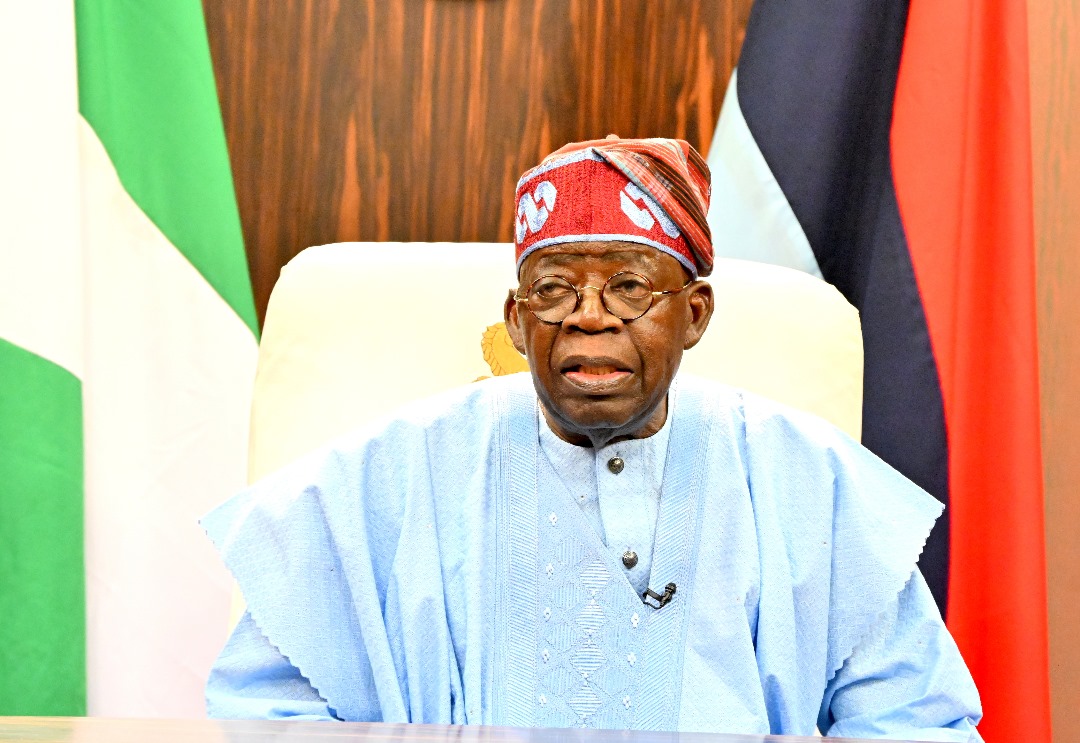
The absence of a well-heeled opposition that could challenge the incumbent All Progressives Congress (APC) and President Bola Ahmed Tinubu in 2027 is one concern that has continued to bother the Nigerian electorate, but with no respite on the horizon, TUNDE BODUNRIN reports.
On paper, if the election holds tomorrow, the incumbent APC and President Tinubu would be returned by the Independent National Electoral Commission (INEC) as winners. It is worth noting that barely one year into the tenure of the Tinubu-led administration, Nigerians began to wonder what manner of opposition political parties were in the polity.
As the citizens continued to lament the lack of purposeful opposition, which is the lifeblood of fruitful democracies, the voice of complaint from the opposing platform began to chorus the lame claim that both the APC and Tinubu were working towards donning the toga of authoritarian rule in the country.
However, in a last ditch effort to brave the odds, some leaders of the opposition parties, including former Vice President Atiku Abubakar, former Labour Party (LP) presidential candidate in the 2023 presidential election, Mr Peter Obi, immediate past Kaduna State governor, Nasir el-Rufai, former President of Senate, David Mark, among others, started experimenting with the idea of forging a common front in readiness to confront the ruling APC in the 2027 general elections.
However, with barely two months to go before the start of electioneering, it has continued to be one motion without movement, even though the coalition promoters had adopted the African Democratic Congress (ADC) as their platform of choice or Special Purpose Vehicle for the 2027 showdown.
Unprepared
Under the Electoral Act 2022, political parties are expected to commence or conclude their internal election processes on or before July 2026. This process begins with ward, local government, and state congresses, followed by conventions and primaries, as directed by the Independent National Electoral Commission (INEC).
However, developments within the major opposition parties suggest that personal ego, unrestrained ambition, and desperation may hinder the kind of teamwork needed to effectively challenge the ruling APC.
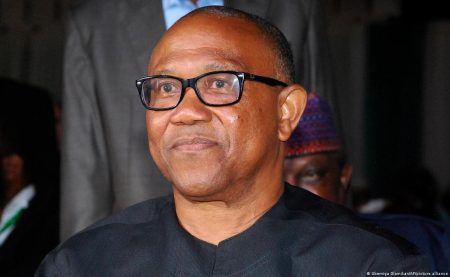
Peter Obi, former governor of Anambra State and 2023 LP presidential contender, recently told journalists that “no single party can oust the APC in 2027 unless they come together and present a single candidate; otherwise, it will be difficult, if not impossible, to defeat the ruling party.”
Many Nigerians, who share similar concerns expressed the fear that the major opposition platforms, the Peoples Democratic Party (PDP), the coalition-led ADC, New Nigeria Peoples Party (NNPP), LP, Social Democratic Party (SDP) and others, appear too consumed with verbal attacks on the incumbent APC without proffering credible policy alternatives to rejig the country and through effective governance.
It was also observed that the clash between the unbridled individual ambitions of leading opposition figures and the poor governance structure of the parties was militating against the cohesion of the opposition.
For instance, despite strong agitation from the South for power to remain in the region to complete the eight-year rotation following President Muhammadu Buhari’s tenure (2015–2023), there are clear signs that former Vice President Atiku Abubakar, from the North, is positioning himself to secure another presidential nomination.
Atiku’s camp is reportedly exploring vice-presidential options within the ADC after he formally defected to the party, with some speculating about a potential Obi–Atiku ticket under the ADC in 2027.
But, the Ohanaeze Youth Council fumed against this, urging Atiku to accept a running-mate role to Obi, citing the country’s rotation convention and Obi’s public appeal. However, some argue that Atiku should lead the ticket, given his experience and political weight.
Obi’s spokesman, Tanko Yunusa, told The Guardian emphatically that his principal “is not ready to settle for anything less than the presidency.”
These developments have further dimmed expectations of an Atiku–Obi alliance against Tinubu. Even if such a partnership remains theoretically possible, time is running out, especially as Obi has yet to fully integrate into the ADC.
Similarly, speculation about a possible Atiku–Amaechi ticket was recently dismissed when former Rivers State governor Rotimi Amaechi denied reports that he might serve as Atiku’s running mate.
Amaechi insisted he is running for President, not vice president, arguing that it is the South’s turn to produce the next leader and that he is seeking the ADC nomination.
Amid the wrangling over zoning, the ADC National Publicity Secretary, Bolaji Abdullahi, said it would take only a united front of all opposition parties behind a single presidential candidate to dislodge the ruling party in 2027.
While noting that the opposition has a genuine chance to unseat the APC, Abdullahi stated: “Nigerians are already fed up with the ruling party, and many governors and lawmakers are quietly holding discussions with the ADC and other platforms ahead of next year.”
He criticised President Tinubu’s leadership style, saying his policies have plunged Nigerians into the worst economic hardship in the country’s recent history. He also cited the persistent security challenges, noting that despite the administration’s promises, the nation “continues to wallow in insecurity.”
Reacting to the development, especially the crisis within the ADC, Chairman of the Human and Environmental Development Agenda (HEDA), Lanre Suraj, said opposition leaders appear oblivious to Nigeria’s political realities.
Questioning why they blame the sitting president for their own internal failures, Suraj said: “Although Nigerians are experiencing severe economic hardship, they still distrust opposition leaders, viewing them as no different from those in power.
“It is a complex situation. The leaders of the opposition lack the power and ability to win the confidence of Nigerians. They are completely different from President Tinubu, whose method of playing opposition leader was different from what we are witnessing today. While Tinubu used 2007 to 2015 — up to 2023 — to build political alliances and structures across the country, these ones simply want power.”
The ADC-led coalition is also struggling to build real grassroots structures, a sharp contrast to the experience of the ruling APC, which between 2013 and 2014 successfully consolidated its merger among the defunct Action Congress of Nigeria (ACN), Congress for Progressives Change (CPC), All Nigeria Peoples Party (ANPP), a faction of the All Progressives Grand Alliance (APGA) and the nPDP bloc.
It is worth recalling that while the coalition is currently entangled in North–South recriminations, with Atiku representing the North and Amaechi and Obi representing the South, over which zone should produce its 2027 presidential candidate, the APC faced no such ambiguity in 2014. From the onset of the merger talks, its leaders agreed that the presidential ticket would go to the North, ultimately settling on its most electable figure at the time, the late President Muhammadu Buhari. Although Atiku contested the 2014 APC presidential primary in Lagos, he lost to Buhari.
Today, apart from former Osun State governor Rauf Aregbesola, who is attempting to mobilise grassroots support for the party in Osun, most frontline figures in the coalition appear more preoccupied with personal presidential ambitions. Others, like former Kaduna State governor Nasir El-Rufai, who has yet to formally declare interest, are more focused on attacking the incumbent president than articulating what their would-be platform intends to offer Nigerians.
El-Rufai has been disconnected from the ADC in Kaduna, with some members alleging he is trying to hijack the party. The former governor’s actions have sparked controversy, with accusations of sidelining the elected state executive committee and running the party like a one-man show.
FOR the major opposition PDP, its challenges are peculiar, and there are hardly any chances it will resolve them before 2027 or before the timeline for party internal electioneering elapses.
The party heads towards the 2027 elections burdened by deepening internal crises that have eroded its cohesion and weakened its role as Nigeria’s main opposition. Although the party has struggled with factionalism since 2022, the most recent cracks, driven by the Governor Seyi Makinde and Minister of the Federal Capital Territory (FCT), Nyesom Wike blocs, have further destabilised its national structure.
At the heart of the turmoil is the long-standing leadership vacuum and unresolved disputes over the national chairmanship and national secretary positions. What began as a fallout from the 2023 presidential primaries has now evolved into a broader battle for control of the party. The rivalry between the Makinde camp, insisting on strict adherence to zoning and constitutional rotation, and the Wike bloc, pushing to retain influence within the National Working Committee (NWC), has polarised the party’s southern base. Their disagreement over who should produce the national secretary has triggered parallel meetings, conflicting directives and open defiance across state chapters.
This renewed tension aggravates the PDP’s already fragile structure. The unresolved zoning controversy continues to deepen mistrust between northern and southern leaders, while the Wike–Makinde struggle has created fresh lines of loyalty that cut across traditional alliances. Instead of rebuilding ahead of the election cycle, the party is now consumed by battles of supremacy between two influential power centres with competing visions for 2027.
At the state level, the fallout is visible in the rise of parallel executives, conflicting court orders and state chapters aligning with either camp. Combined with recent defections of governors and key stakeholders to the APC, the PDP’s grassroots strength has thinned.
The cumulative effect is a weakened opposition unable to project unity or articulate a coherent alternative to Nigerians. With the Makinde–Wike rivalry now dominating its internal politics, the PDP enters the 2027 race more divided than at any point in its history.
Suraj also faulted the PDP’s past arrogance, arguing that some of Nigeria’s worst elections occurred under its watch between 1999 and 2015. “The APC, as opposition, unseated the PDP despite the challenges. What is today’s opposition doing to stop what they claim are manipulations?” he asked. He questioned the willingness of opposition leaders to make sacrifices: “Tinubu stepped back from contesting elections between 2007 and 2023. How many of the present opposition leaders can do that?”
THE Labour Party is also fragmented and approaching 2027 as a weakened platform, especially now that it lacks clear leadership. Its 2023 presidential flag bearer, Obi, who is expected to offer leadership, is presently hobnobbing between the party and the ADC.
The party is grappling with a deepening leadership crisis that has weakened its standing as a viable opposition platform ahead of the 2027 general elections. It is now split into three competing factions, each laying claim to legitimacy, with Julius Abure, Nenadi Usman and Lamidi Apapa at the centre of a prolonged struggle for control.
The only governor on the party’s platform, Alex Otti, is allegedly at war with other political leaders in Abia in a desperate bid to seek President Tinubu’s favour.
Over the months, the governor has been on a parallel path with Peter Obi, a development suggesting he is more sympathetic to President Tinubu’s re-election bid than to Obi emerging as president in 2027.
The party crisis has since spiralled into persistent infighting, with Abure’s loyalists locked in open hostility with the Obi–Otti camp, eroding public confidence in a party once seen as an emerging force.
Unless the warring groups reconcile and restore cohesion, the LP risks approaching the 2027 elections fractured and diminished, unable to play the role of a strong, united opposition voice.
Looking at the factors responsible for the declining state of the opposition, Akin Malaolu, President of the Yoruba Ronu Leadership Forum, attributed the opposition’s diminishing relevance to deep-seated structural dysfunction. According to him, Nigeria’s opposition landscape has been on a steady downward spiral, raising critical concerns about the health of the country’s democracy.
“Opposition parties are repeatedly trapped in ego-driven battles and personalised power struggles that prevent them from building stable leadership structures,” he said. “Ambition-driven conflicts, court-imposed chairmen and perpetual factionalism undermine unity and make long-term planning impossible.”
Debo Adeniran, Chairman of the Centre for Anti-Corruption and Open Leadership (CACOL), offered an even harsher assessment. He cautioned Nigerians not to be deceived by “media noise and propaganda” from opposition parties, describing them as directionless and unprepared.
According to him, the major opposition platforms, from the “warring PDP to the wobbling LP and the coalition-driven ADC” — have lost their way because they lack the strategic compass needed to navigate Nigeria’s complex political terrain. “How can you say something is bad without offering or educating the public on what alternative you propose?” he asked.
He argued that today’s opposition suffers from a leadership vacuum. None of the parties, he claimed, is grounded in a clear ideological philosophy. “I can say emphatically that the opposition parties in Nigeria have collapsed, and they are still collapsing,” he said.
Adeniran described the PDP as “almost dead,” while insisting that the ADC now functions mainly as a local franchise around former Osun State governor Rauf Aregbesola, whose influence has waned. The party, he noted, suffered further damage following the resignation of Aregbesola’s close ally, Moshood Adeoti. “Besides, Alhaji Atiku Abubakar has not been able to plant the ADC in Adamawa, and the former Kaduna governor is nowhere to be found with the party in Kaduna,” he added.
He also argued that President Tinubu has entrenched his influence not only within the APC but across opposition parties. “Who among the present PDP stakeholders has not had one relationship or another with the President?” he asked. “Many attack Tinubu publicly, but behind the scenes they trust him more than their own party leaders. Tinubu has become a political godfather the opposition cannot ignore.”
Adeniran further criticised the opposition for lacking ideological depth and for being driven solely by the desire for office. He cited the failure of recent protests since Tinubu assumed office as evidence of weakness, arguing that “many leaders of these groups know Tinubu’s antecedents and those of opposition leaders. The present opposition cannot be trusted; their desperation for power is known.”
The President of the Arewa Youth Consultative Forum, Yerima Shettima, also warned against trusting today’s opposition figures. “They do not seem to mean well for this country,” he said. “Everything about them suggests they want power for selfish reasons, not the interest of Nigeria.”
Offering an insider’s assessment, Dr Hakeem Baba-Ahmed, Director of Publicity of the Northern Elders Forum (NEF), argued that Nigeria’s democracy is endangered because the opposition has failed to provide a viable alternative. He said Nigeria is currently being run without “the pressure and accountability that only a strong opposition can provide.”
According to him, “The APC is not invincible; the opposition is simply unprepared, internally fragmented, and more interested in negotiating relevance than challenging bad governance.” He warned that unless the opposition reorganises, articulates credible policy alternatives and earns public trust, “2027 may become a one-party coronation rather than a competitive election.” Nigerians, he said, feel let down not only by the ruling party but also by an opposition that “has failed to rise to the moment.”