


Janet Ogundepo
A coalition of civil society organisations, community groups and trade unions has threatened mass resistance if the Lagos State Government attempts to seal domestic boreholes, arguing that residents should not be punished for seeking water amid inadequate public supply.
The coalition, under the Our Water Our Right Africa Coalition, said any attempt by the Lagos State Water Regulatory Commission to seal residential boreholes would be met with coordinated action across all local government areas of the state.
The warning follows a statement attributed to the Executive Secretary of LASWARCO, Oluwabukola Adeyemo, which declared that drilling boreholes and extracting groundwater without government authorisation was illegal and could attract property sealing and criminal prosecution.
The commission also announced a dedicated reporting hotline for residents and community leaders to report unauthorised drilling and groundwater extraction.
Reacting in a statement on November 4, the coalition urged LASWARCO to clarify the scope of its planned enforcement, saying its warning had caused confusion and fear, particularly in working-class communities.
The groups argued that the Lagos State Environmental Management and Protection Law of 2017 distinguishes between domestic water use and commercial extraction.
Citing Section 253(1), the coalition said the law allows residents to construct or extend wells and boreholes in residential premises without obtaining a licence where the water is intended for household domestic use.
It also cited Section 259(2), which it said makes licensing compulsory for boreholes other than those meant for domestic use.
“By deliberately omitting these statutory exemptions from its public threats and threatening indiscriminate crackdowns, LASWARCO has overstepped its bounds, creating needless panic among already suffering residents,” the groups said.
They maintained that the state should address inadequate public water supply rather than threaten households that depend on boreholes for their daily needs.
The coalition cited Lagos Water Corporation records, which it said showed that the utility had only 34,424 registered connections, representing about 1.03 per cent direct coverage in a city with more than 20 million residents.
It added that even if the connections served multiple households, reaching about 8.3 per cent of residents, more than 91 per cent of the population would remain outside the public water network.
“In reality, public taps across the state have been dry for decades, while massive, multi-billion-naira waterworks at Iju, Adiyan, and Ishasi rot away in an embarrassing state of operational underperformance,” the coalition said.
The groups also cited Section 252 of the 2017 law, which they said exempts the Lagos Water Corporation from paying damages or compensation to residents for the failure or interruption of public water supply.
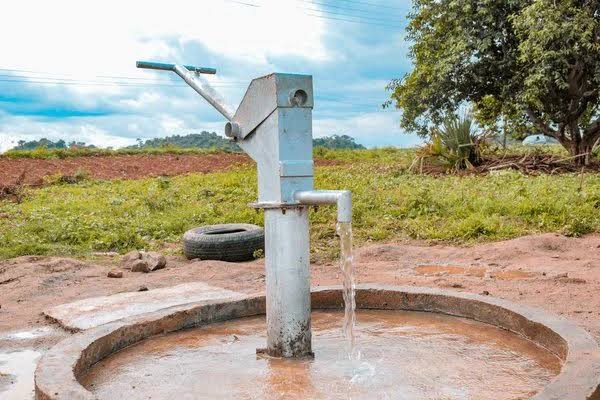
They described domestic boreholes as a necessity arising from inadequate public water provision, adding that some communities also faced groundwater contamination.
The coalition named Baruwa, Iludun and Ajegunle as areas where prolonged petroleum pipeline contamination had affected underground water sources. It also cited poor drainage, inadequate centralised wastewater management and saline intrusion in coastal areas such as Lekki.
The coalition further stated that residents in affected communities are forced to spend heavily on water supplied by vendors, while those with usable groundwater often share it with neighbouring households and contribute money to power their borehole pumps.
The coalition urged the state government to support such community arrangements rather than criminalise them.
It also questioned what it described as LASWARCO’s different approaches to households and large commercial water extractors.
The groups recalled that the commission had engaged multinational companies, including Nigerian Bottling Company, Guinness Nigeria and FrieslandCampina WAMCO, in regulatory discussions in late 2024, reportedly acknowledging that it had spent more than seven years in discussions over compliance defaults.
“It is unconscionable that the state could spend years patiently negotiating with multinational corporations guzzling millions of litres for private profit, yet threaten task forces, property sealings, and criminal charges against ordinary citizens drawing water for their pots and buckets,” the statement said.
The coalition further expressed concern that the proposed enforcement could weaken community water supply arrangements and push residents towards private water schemes and prepaid metering.
It called on LASWARCO to immediately clarify that domestic boreholes and wells were exempt from licensing under the 2017 law and assure residents that their homes would not be sealed or their occupants prosecuted for household water extraction.
The groups also urged the state government to prioritise access to safe piped water, rehabilitate public waterworks and direct regulatory enforcement towards high-volume commercial abstractors and industrial polluters.
They called for reforms in the management of the Lagos Water Corporation to give workers, communities, trade unions and civil society organisations a role in its governance.
The coalition urged community development associations, youth councils, labour unions, artisans, market women and neighbourhood groups to organise against any attempt to seal domestic boreholes.
It said any entry into residential communities by LASWARCO or armed task forces to demand permits or seal household boreholes would be treated as an unlawful provocation and resisted through legal action and coordinated mass protests.
Copyright PUNCH
All rights reserved. This material, and other digital content on this website, may not be reproduced, published, broadcast, rewritten or redistributed in whole or in part without prior express written permission from PUNCH.
Contact: health_wise@punchng.