







The Director-General of the World Trade Organisation, Ngozi Okonjo-Iweala, has said the growing erosion of trust among nations poses one of the biggest threats to global trade, investment and economic stability.
She said the rising mistrust was creating uncertainty that was hurting businesses worldwide.
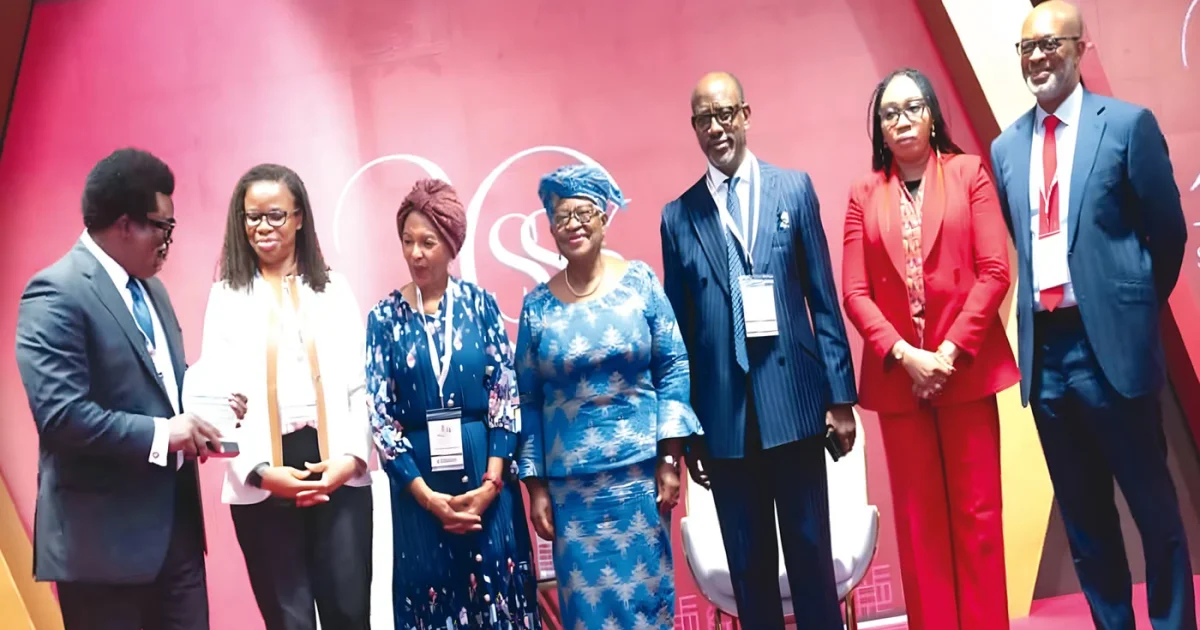
According to a statement on Friday, the WTO Director-General stated this during a fireside conversation at the 20th anniversary of commercial law firm Streamsowers & Köhn in Lagos on Thursday.
The former Nigerian Minister of Finance said countries that once regarded one another as reliable partners were increasingly questioning each other’s intentions, leading to conflict, missed opportunities and a fragmented global economy.
Okonjo-Iweala, however, expressed optimism that global cooperation would ultimately prevail, noting that no country, regardless of its influence, could tackle today’s complex global challenges alone.
She said, “The single biggest issue—the trust of countries in the world in each other has deteriorated because countries are seeing actions by those they thought were trustworthy that are no longer believable. This current mistrust is not good for the world. Mistrust leads to uncertainty, which is very bad for business.
“I think we can recover because we don’t have a choice.”
According to her, the world has gradually shifted from what she described as “cooperative multilateralism” to a more competitive international order in which countries increasingly see one another as rivals rather than partners.
She noted that issues such as climate change, disease outbreaks and water security require collective action, insisting that governments would eventually realise the need to rebuild trust and strengthen international cooperation.
Despite growing geopolitical tensions, the WTO chief said global trade had remained resilient, disclosing that about 72 per cent of world trade still operated under WTO rules.
She said, “In spite of all these disruptions, global trade has been very resilient. Seventy-two per cent of world trade still goes on WTO terms, and people are shocked when I say that.”
Okonjo-Iweala explained that many countries, including Australia, Singapore, New Zealand and the United Kingdom, continued to embrace multilateral trading rules because they provide greater long-term benefits than prolonged trade disputes.
The former minister also recalled the WTO’s intervention during trade tensions between the United States and China, warning that retaliatory trade measures could further fragment global commerce and force weaker economies to align with competing global powers.
Turning to Africa, she said the continent stood at a defining moment in its economic history but warned that a lack of political coordination could prevent African countries from fully exploiting opportunities in critical minerals and renewable energy.
“The opportunities for Africa excite me, but I am also dreading that we will miss those opportunities,” she said.
Okonjo-Iweala urged African countries to negotiate collectively through regional and continental blocs rather than individually, saying such an approach would strengthen the continent’s bargaining power.
On artificial intelligence, Okonjo-Iweala described the technology as both an opportunity and a potential source of disruption, stressing that effective governance would determine whether it drives inclusive development.
She also identified leadership, governance and strong institutions as critical to Africa’s development, recommending the book, Why Nations Fail, to young Africans.
“The failure of institutions and the failure of governance and leadership on our continent is what is holding us back. We have what it takes, but we somehow don’t get it right,” she said.
Reflecting on her leadership journey, the WTO chief said listening was one of the most important qualities of an effective leader, adding that humility, competence and openness to others’ views had helped her overcome resistance throughout her career.
The fireside conversation formed part of activities marking the 20th anniversary of Streamsowers & Köhn.
Also speaking at the event, senior investment banker and former Executive Secretary of the Nigerian Investment Promotion Commission, Yewande Sadiku, said Nigeria’s banking consolidation and debt relief reforms of the mid-2000s, though difficult, laid the foundation for stronger financial stability and improved investor confidence.
She added that recent improvements in Nigeria’s sovereign ratings and renewed frontier market recognition indicated that the country was gradually rebuilding investor confidence.


