

Janet Ogundepo
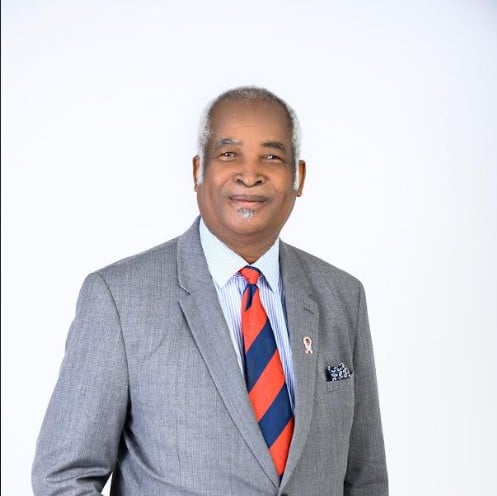
To ensure every Nigerian woman of reproductive age has access to family planning supplies, including modern contraceptives, the Founder and President/Emeritus of the Association for Reproductive and Family Health, Prof Oladapo Ladipo, has urged the Federal Government to allocate at least $1 for every woman of reproductive age to fund the supplies.
The renowned obstetrician-gynaecologist stated that proposed funding would amount to about $50m for the estimated 50 million women of reproductive age in Nigeria, instead of the current $3m to $4m committed by the government.
Ladipo stated that the increased funding was necessary to address reproductive health inequality and ensure that family planning commodities were available, especially to women in rural communities.
The renowned gynaecologist also noted that the country’s reliance on donor funding for contraceptive procurement and distribution was a major challenge, emphasising that the government must fund its family planning services in light of the reduction in donor support and funding cuts.
Ladipo, a member of the Board of Trustees and Council of the West African College of Obstetricians and Gynaecologists, made the call while speaking at the 5th Congress of the Association of West African Societies of Obstetrics and Gynaecology and WACOG in Lagos.
He said, “Now, my position is this. Government should allocate at least one dollar per woman of reproductive age for reproductive health commodities. It’s not too much for government. There are about 50 million women of reproductive age, so we’re talking about $50 million instead of $4 million. So we need to see that the government does more because of reproductive health inequality and injustice that we talked about today.
“Our maternal deaths are so high. Nigeria is rated as the worst place to be pregnant; that is shameful. Our MMR of 996 per 100,000 is shameful, when a place like Israel is two. It will be your generation to fight the fight to ensure that women can access good quality reproductive health services.”
PUNCH Healthwise reports that family planning advocates and reproductive experts have expressed concerns over Nigeria’s heavy reliance on donor funding for contraceptive procurement and distribution.
The suspension of the United States Agency for International Development support by the United States in 2025 disrupted the distribution of family planning commodities in Bauchi State, with stakeholders warning of broader funding gaps threatening access to contraceptives across the country.
Also, the Federal Government reduced its family planning allocation from N2.2bn in 2024 to N66.39m in the 2025 budget, further heightening concerns about the sustainability of contraceptive supplies as donor funding declines.
With Nigeria’s population estimated at 242.4 million, family planning remains a major challenge, as 21 per cent of currently married women and 36 per cent of sexually active unmarried women have an unmet need for family planning.
PUNCH Healthwise earlier reported that gynaecologists under the umbrella of AWASOG/WACOG called on the governments of West Africa to fund family planning to fight insecurity in West Africa.
Speaking further, Ladipo called for what he described as “qualitative reproduction”, urging families to have only the number of children they could adequately cater for.
“You must support qualitative reproduction and not quantitative reproduction. You heard the message today that the association must ensure that people have only the number of children they can cater for. Don’t reproduce recklessly because you can see the evidence today,” he noted.
He also called for the effective implementation of the national population policy, particularly in view of the country’s economic challenges.
“And of course, with the national policy, I think with the state of the economy today, you have a lot of roles to play with the National Population Council to ensure that the policy of government is implemented to the right level.”
“Now, one other area is funding for reproductive health. For reproductive commodities, the government is committed to $3 or $4 million only. The donors provide the rest of about $26 million. With Mr Trump, of course, it’s becoming difficult.
“One of the challenges in society today, ladies and gentlemen, and I hope you’ll join us, is that we need to advocate to the government to give more money for reproductive health commodities so that it will be available everywhere, and those in rural areas can access it. Because we know that if you plan your family, you’ll have a good quality of life.”
Ladipo reiterated that increasing domestic funding for reproductive health commodities was necessary to reduce inequality and improve access to family planning services.
The professor also urged the newly inducted fellows of the college to recognise the wider responsibilities involved in providing care for women, saying obstetricians and gynaecologists must be able to manage not only their patients but also their babies and families.
“I want to say that this is the most noble of all the noble professions, to be an obstetrician gynaecologist. The women are extremely special. But as practitioners, you know we don’t only deal with our patients. We deal with the husbands as well. We deal with the mothers, the fathers, mothers-in-law, fathers-in-law, even aunties. Not to talk about the baby in utero.
“So you need to acquire multiple skills. You need to ensure that you can manage the patient, you can manage the baby, you can manage the family as well. And of course, cultural influences also influence us,” the ARFH former president said.
Ladipo stressed the need for healthcare professionals to ensure that women and their babies receive appropriate care before, during, and after delivery.
“Women are very special. We must treat them specially. We must ensure that the babies that they carry are delivered in the optimal state of health with an Apgar score of 8, 9 or 10.
“In utero, you must monitor the growth and the welfare of the baby. Ensure that the baby is not compromised because if babies are asphyxiated, you know the cognitive function will be affected,” he noted.
He also emphasised the importance of breastfeeding and adequate nutrition in the early years of life, noting the consequences of poor nutrition on child development.
“After that, even after delivery, you must educate them. Six months of exclusive breastfeeding to ensure that the baby survives. Thereafter, good nutrition because nutrition between birth and age five is so critical. If they are stunted or undernourished, cognitive function is compromised,” Ladipo told the AWASOG/WACOG fellows.
Copyright PUNCH
All rights reserved. This material, and other digital content on this website, may not be reproduced, published, broadcast, rewritten or redistributed in whole or in part without prior express written permission from PUNCH.
Contact: health_wise@punchng.
