

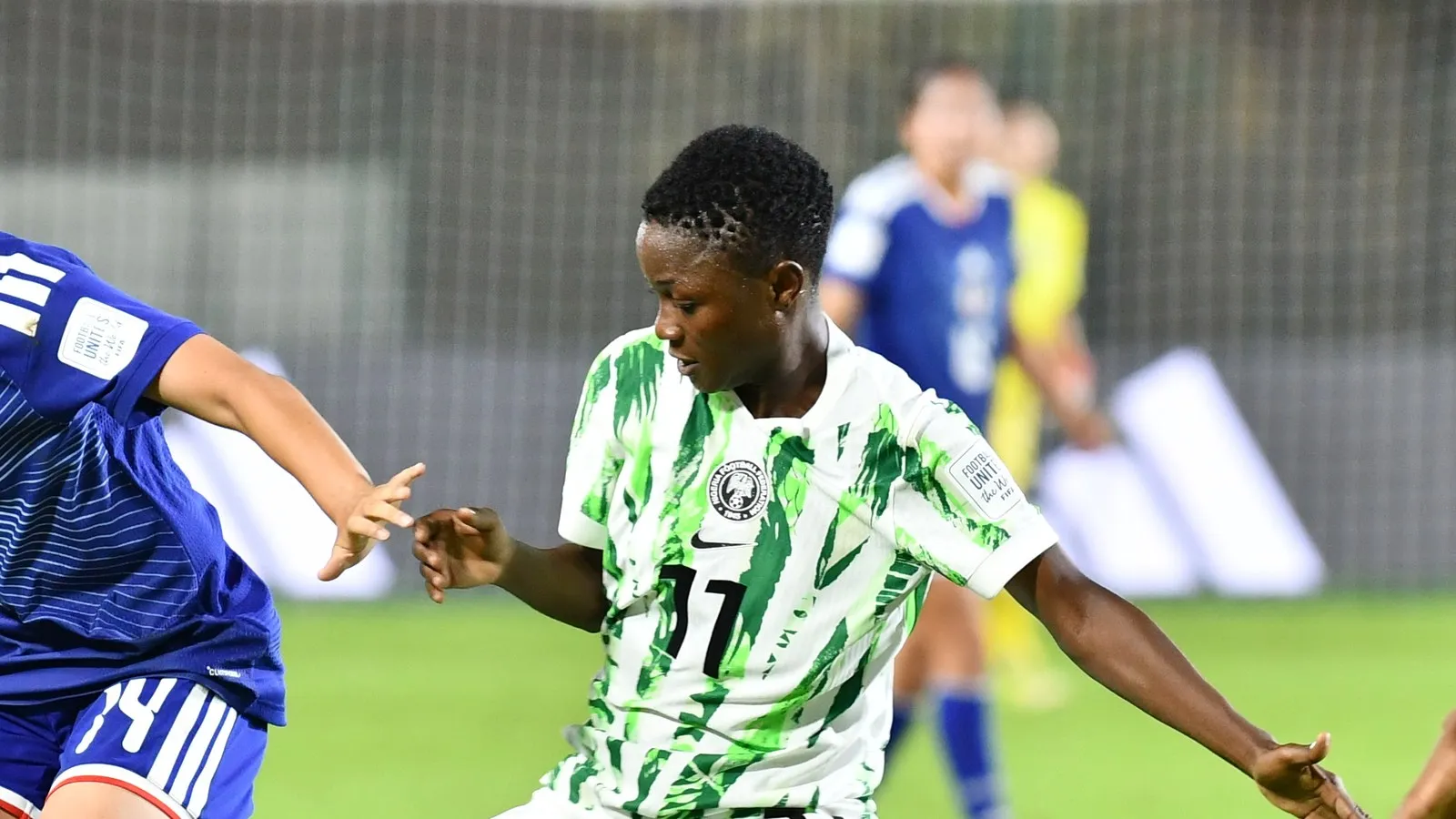
Flamingos head coach Akeem Busari has credited the late Yemi Tella as his biggest influence, and revealed the one rule that carried Nigeria from an opening defeat to the FIFA U-17 Women’s World Cup title, seven months after he took the job.
Busari was appointed in April, and his side won all five of their games at the WAFU B tournament before going on to become the first African team to win the competition, beating Japan in the final in Rabat.
Speaking to Punch, the coach went back over the campaign, from the day-one setback against Poland to the dressing-room habits that held the squad together.
The rule that turned the tournament
Busari said his staff studied Nigeria’s previous campaigns, including the second-round exit at the last edition, before settling on a simple demand.
“From there, we adopted a mindset that, against every team we played, nobody should score before us. And if they did, how would we respond? If you look at all the games, it was only Poland that scored before us, and that was the only game we lost.”
After that loss, he said, the team analysed the games and adjusted individually, in pairs, in groups and in team cohesion, which fostered the winning formula that took them to the final.
Discipline did the rest. “If we scheduled any activity for 4 pm, everybody would be out and ready 10 minutes before then,” Busari told Punch.
The Yemi Tella connection
The coach traced his methods back to Tella, who was in charge of Nigeria’s U-17 boys in 2007.
“My biggest mentor was the late coach Yemi Tella. I was in camp with him before the 2007 FIFA Men’s U-17 World Cup. That was where I gained experience in managing an U-17 team.”
Busari said he had worked with Tella since 1997, before any coaching course, and offered technical assistance in that 2007 camp. “I think what I sowed is what I am reaping,” he added.
His route to the Flamingos ran through the domestic game: a spell with Enyimba in the CAF Confederation Cup, a Federation Cup win with Bayelsa Queens and a role as technical director of NWFL side Pacesetter Queens, a background some had questioned when he was appointed.
Analysis: Why the Poland defeat was the making of Rabat
Busari’s own numbers explain the approach. The only side to score first against the Flamingos was the only side to beat them, so a rule built on never trailing was effectively a rule built on never losing.
What stands out is how quickly it was applied. Losing an opening game at a World Cup can unsettle a young squad, especially one with players still in school. Busari’s answer was analysis and a clear target rather than wholesale changes, and his side did not trail again for the rest of the tournament.
It also strengthens the case for home-grown coaching. A coach shaped by Tella’s camps and the NWFL has now delivered what no African side had managed, and that record is behind his place on the CAF shortlist covered in our piece on his nomination. It also adds a fresh entry to Nigeria’s list of global titles, and the next step is turning this group into Falconets and, in time, Super Falcons.
