

Idowu Abdullahi
The Federal Government and stakeholders have said that through the World Health Expo and the Healthcare Federation of Nigeria, the country was closing the gap in diagnostic capacity.
They said Nigeria was strengthening diagnostic systems through increased investment, capacity building, and strategic partnerships offered by platforms like WHX and HFN.
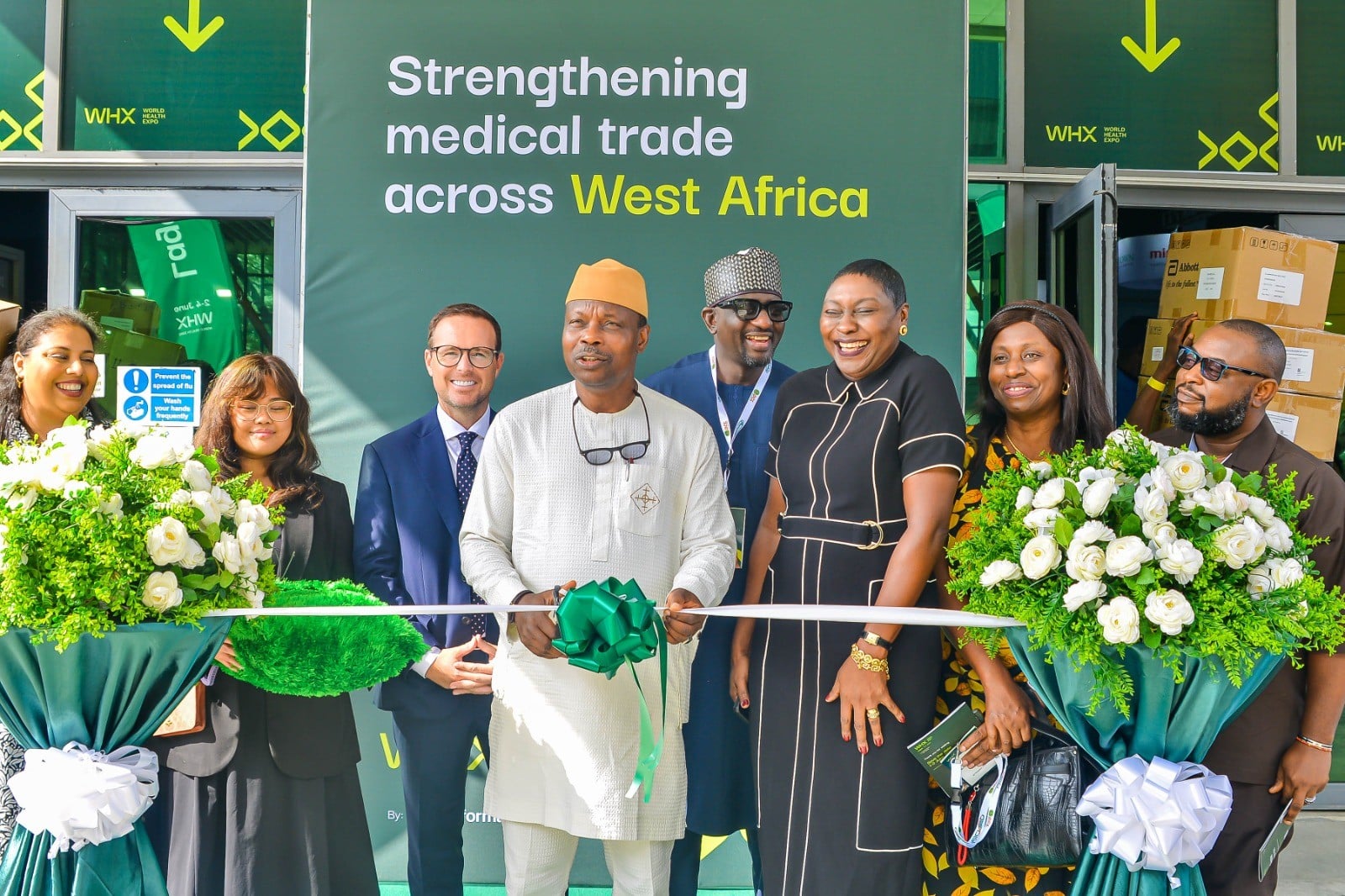
The stakeholders stated this on Tuesday at the World Health Expo Lagos 2026’s Healthcare Leadership Conference, themed “Enabling Market Access and Investment Readiness to Drive Health System Transformation”, held at Landmark Event Centre in Lagos.
The event, which is in its 15th edition and formerly known as Medic West Africa, brought together 8,000 healthcare professionals and 500 exhibitors from 40 countries.
Also, several products were exhibited at the event. The exhibition covers key segments including medical devices, diagnostics, healthcare services, infrastructure, wellness, laboratory services, and digital health.
Speaking at the event, the Minister of State for Health and Social Welfare, Dr. Iziaq Salako, said Nigeria was facing a diagnostic capacity gap.
“In the quest for advancing quality patient care in Nigeria, one of the most persistent challenges facing our health system is the chronic gap in diagnostic capacity.
“Across West Africa, estimates indicate that between 85 and 99 percent of medical equipment and in vitro diagnostics are imported, leaving our health facilities vulnerable to supply chain disruptions, high costs, and inequitable access to care,” he said.
He commended WHX Lagos and HFN for working deliberately to close the gap.
“WHX Lagos and HFN are connecting Nigerian hospitals, laboratories, and policymakers with global manufacturers, distributors, and innovators who can supply fit-for-purpose solutions at scale, for the right pricing and within a specified time frame.
“Through this expo, innovative point-of-care diagnostic tools, portable imaging equipment, automated laboratory systems, and digital health platforms are progressively finding their way into our public health facilities,” he said.
According to him, WHX Lagos and HFN have influenced the national health agenda in ways that go well beyond the exhibition hall.
He added, “The expo has no doubt served as a frontline showcase for breakthrough technologies in advanced diagnostics, medical imaging, artificial intelligence-driven health solutions, pharmaceutical innovations, and essential medical devices, and a convergence point where global healthcare technology meets Nigeria’s enormous healthcare demand.”
Salako stated that Nigeria was open to healthcare investment.
“Our federal tertiary hospitals need the very best in diagnostic equipment, therapeutic technologies, and digital health infrastructure, and we are determined to ensure that what is showcased here ultimately reaches the patients who need it most through a multiprong approach, including PPPs,” he said.
Additionally, Lagos State Commissioner for Health, Prof. Akin Abayomi, stated that health sovereignty remains a key priority for the Lagos government.
“Every year, this exhibition becomes bigger and bigger. The display of equipment becomes more impressive. The technology becomes faster and smarter. We are now introducing connectivity, artificial intelligence, and many other exciting innovations,” he said.
However, the commissioner noted that the technologies come at a price.
“One of the biggest challenges for us in Africa is affordability, as well as the issue of maintenance,” he said.
To address affordability, he noted that Nigeria recently enacted the National Health Insurance Authority Act, which stipulates that every Nigerian should, by law, have some form of health insurance coverage.
According to him, Lagos was quick to domesticate this through an Executive Order in 2024, and we are currently scaling up enforcement through public awareness campaigns and other implementation measures.
“We are hoping to apply this principle in Lagos by increasing health insurance coverage from the current level of just under 10 per cent to about 30 per cent over the next three to four years, and then continue expanding from there.
“If we are successful, technologies such as those displayed here today will become more affordable and accessible. More people will be willing to invest in healthcare because the sector will move closer to the centre of economic activity,” he said.
On his part, the Special Regional Representative, Director General, West Africa RCC, Africa Centres for Disease Control and Prevention, Prof. Aliko Ahmed, stressed the need for public-private sector partnership to drive health sovereignty.
Ahmed, who is the keynote speaker, said, “The African Union leaders have come up with a continental objective. What is that objective? The objective is to adopt an end-to-end approach whereby, by 2040, at least 60 per cent of all medical products consumed in Africa will be produced in Africa.
“You may ask whether that is feasible or not, but we believe it is possible with the appropriate frameworks and regulatory architecture in place. Public-private partnership is absolutely critical to building a resilient health system, and I believe Africa can achieve this goal.”
According to him, Africa’s health security and future sustainability are not the responsibility of governments alone.
“They are not the responsibility of regulators alone, nor of development partners alone. I believe the future of Africa’s health security depends on the strength of the partnerships we build between the public and private sectors, investors, manufacturers, innovators, and all stakeholders across the healthcare ecosystem.
“It will require the collective efforts of all of us and many more to achieve the vision we have set for the continent,” he said.
Also speaking, the HFN President, Njide Ndili, said it was important for healthcare leaders to work together in enabling market access and investment readiness to drive health system transformation.
“For the most part, the government’s role revolves around policy and strategic purchasing. Within the private sector, we have many innovations, but somehow we continue to operate in silos and are unable to achieve scale.
“At the same time, there is limited access to finance. Many institutions want to expand the scope and quality of services they provide, but they cannot access the financing they need. Only a few companies are able to access finance in the way they require, particularly long-term patient capital.
“So, this session of the expo is intended to bring together some of the barriers we face in the sector and explore how we can remove them,” she said.
Also, the WHX Exhibition Manager, Daniel Green, said WHX was designed to bring together healthcare manufacturers, diagnostic equipment suppliers, distributors, stakeholders, government officials, and key policymakers.
“Lagos is the perfect platform for this because it is a major economic hub in Africa and one of the fastest-growing healthcare markets on the continent. We are seeing strong demand from both local and international companies looking to enter and expand within this space,” he said.
Copyright PUNCH
All rights reserved. This material, and other digital content on this website, may not be reproduced, published, broadcast, rewritten or redistributed in whole or in part without prior express written permission from PUNCH.
Contact: [email protected]
