

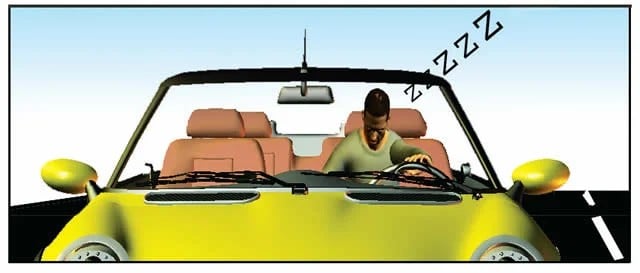
As road traffic accidents top Lagos emergency records between January and February, experts say driver fatigue, which mostly causes sleeping while driving, remains poorly understood and widely ignored.
Sleeping while driving, also known as drowsy driving, is a condition in which a motorist falls asleep or becomes sleepy behind the wheel.
Studies show that the condition, an indication of driver fatigue, accounts for about 20 per cent of fatal accidents, including brief “micro sleep” episodes that occur while driving.
Research also indicates that drowsy driving is more common among long-distance drivers, whose prolonged hours on the road increase the risk of fatigue and reduced alertness.
The Nigeria Highway Code notes that long distance driving can make motorists sleepy and advises drivers to take a 15 minute break after every four hours of driving. The Federal Road Safety Corps recommends an even shorter interval, urging motorists to take a 15-minute rest after every two hours on the road.
The warning comes as data from the Lagos State Emergency Management Agency shows that road traffic accidents accounted for the highest number of emergencies recorded in the state between January and February 2026.
The Permanent Secretary of the agency, Dr Olufemi Oke Osanyintolu, disclosed that the agency recorded 173 emergency incidents within the two month period, with 93 in January and 80 in February.
He noted that road traffic accidents accounted for 56 of the incidents, making them the most frequent emergencies handled by the agency during the period.
Medical and driving experts say sleep is a complex biological process controlled by the brain through hormones, nerve signals and body rhythms, and is essential for maintaining physical and mental health.
A Public Health physician, Dr Tuyi Mebawondu, explained that sleep helps the body restore energy, regulate emotions, strengthen the immune system and support brain memory consolidation and hormonal balance.

He noted that daytime sleepiness while driving occurs when the brain’s alertness system fails to maintain wakefulness.
“To understand this, we need to be familiar with the body’s arousal system called the reticular activating system. The arousal system refers to the network of brain structures and neurotransmitters that regulate wakefulness, alertness, attention and the transition between sleep and wake states. It ensures that the brain stays conscious and responsive to the environment,” Mebawondu said.
He added that when this system fails to maintain wakefulness, drivers may experience excessive daytime sleepiness, which significantly increases the risk of road accidents.
The physician listed sleep deprivation as one of the major causes of drowsy driving, noting that people who sleep for fewer than six to seven hours at night are more likely to become sleepy during daytime activities such as driving.
He also identified sleep disorders such as obstructive sleep apnoea, narcolepsy, insomnia and restless legs syndrome as conditions that can lead to poor sleep and daytime fatigue.
Other factors include long or monotonous driving, alcohol consumption, use of sedative medications, heavy meals before driving and certain medical conditions such as diabetes, anaemia, hypothyroidism and depression.
“Natural sleepiness can also occur during certain periods of the day, particularly between 2am and 5am and again between 1pm and 3pm. These periods are known as circadian rhythm dips,” he added.
Mebawondu also warned that dehydration, especially during hot weather, can contribute to fatigue and sleepiness.
He said drivers should watch out for warning signs that often appear before falling asleep at the wheel.
“Some of the warning signs include frequent yawning, heavy eyelids, drifting from the lane, missing road signs or exits and difficulty concentrating,” he said.
To prevent drowsy driving, the physician advised motorists to ensure they get at least seven to eight hours of sleep before embarking on long journeys.
He also recommended taking a 15 to 20 minute break every two hours while driving, avoiding alcohol or sedating drugs before driving, and stopping to take a short nap of about 20 to 30 minutes if they begin to feel sleepy.
He further advised drivers to keep a bottle of water in the car and take frequent sips to prevent dehydration, adding that listening to music can sometimes help maintain alertness.
“In case of a long journey, plan frequent stops and rest. If sleepiness persists, consult a sleep expert or see a doctor,” Mebawondu said.
Also speaking on the issue, a driving instructor, Mr Imoleayo Fadairo, identified tiredness, lack of proper sleep, and illness as common causes of sleeping while driving.
He urged drivers who begin to feel drowsy or struggle to keep their eyes open while driving to stop the journey or allow a more alert person to take over the wheel.
Copyright PUNCH
All rights reserved. This material, and other digital content on this website, may not be reproduced, published, broadcast, rewritten, or redistributed in whole or in part without prior express written permission from PUNCH.
