

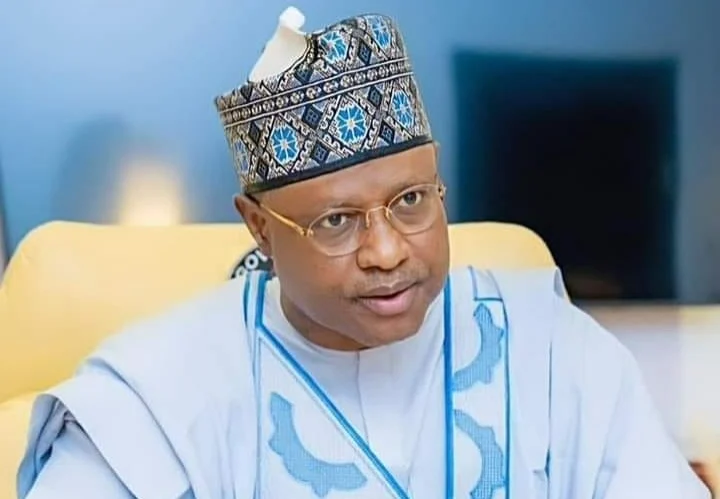

Former Archbishop of Canterbury, His Grace Justin Portal Welby, has commended Kaduna State for what he described as remarkable progress in restoring peace, unity and stability, noting a sharp departure from the ethno-religious tensions that once characterised the state.
Welby made the remarks during a courtesy visit to Sir Kashim Ibrahim House, Kaduna, where he was received by Governor Uba Sani.
The visit came on the sidelines of his engagement as guest speaker at the Ahmadu Bello University, Zaria, convocation lecture on Saturday.
Reflecting on his first visit to Kaduna in 2002, the former Archbishop recalled a period marked by deep divisions, mistrust and recurring communal crises.
He said the contrast between his experience more than two decades ago and the current atmosphere of relative calm and cohesion was striking and informed his decision to visit the Government House.
“What I see today is very different from what I encountered in 2002. The peace and sense of unity are evident, and that does not happen by accident,” Welby said.
According to him, the progress recorded in Kaduna highlights the importance of deliberate reconciliation efforts, inclusive leadership and sustained dialogue in managing diversity within a plural society.
Welby added that Kaduna’s experience should serve as encouragement to leaders and communities, particularly in divided societies, to remain committed to peacebuilding, dialogue and mutual understanding.
He stressed that lasting peace could only be sustained where governance is rooted in justice, fairness and respect for human dignity, irrespective of ethnic or religious differences.
Responding, Governor Uba Sani expressed appreciation for the visit and the commendation, describing them as an affirmation of the state’s peacebuilding efforts.
The governor said his administration had adopted what he termed the “Kaduna Peace Model,” which prioritises dialogue, inclusion, equity and fairness in governance.
According to him, the model has guided government policies over the past two and a half years and contributed significantly to the reduction of tensions in a state long associated with ethno-religious conflict.
“The absence of ethno-religious crises during this period is not accidental. It is the result of intentional leadership choices and a rejection of identity-based politics,” Sani said.
He added that his administration had consistently prioritised dialogue over discord and inclusive development aimed at reaching all communities, with the goal of replacing fear with trust and fostering a shared sense of belonging.
Sani reaffirmed the government’s commitment to consolidating the gains of peace, strengthening unity across differences and building a future anchored on collective progress and sustainable development.
