

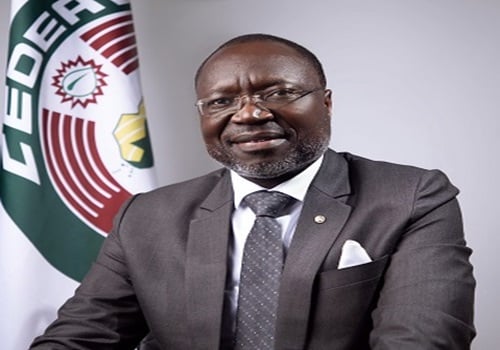


The Economic Community of West African States has placed regional security at the centre of its agenda as it works toward achieving five per cent economic growth across West Africa, according to the President of the ECOWAS Commission, Omar Touray.
Speaking in Abuja at a meeting with development partners on Thursday, Touray, while presenting highlights of the ECOWAS 2025 annual report, said security challenges continued to affect parts of the region, prompting intensified engagement by the bloc.
“If we look at the various sectors and areas of our activities, we will see that in the area of peace and security, our preoccupation remains with growing insecurity that some areas of the region continue to suffer from.
“Therefore, peace and security remain at the heart of our mandate,” he said.
Touray said ECOWAS had reinforced its security architecture, including the ECOWAS Stand-by Force and a 1,650-member Counter-Terrorism Brigade, while assessment missions to The Gambia and Guinea-Bissau highlighted gaps in training and exit strategies.
The commission’s president said the bloc continued to deal with the fallout from the withdrawal of Burkina Faso, Mali and Niger, while keeping channels open for dialogue.
“We also continue to address the implications of the withdrawal of Burkina Faso, Mali and Niger, while keeping our doors open for constructive engagement”, Touray said.
On counter-terrorism, he said ECOWAS had taken over the West Africa Police Information System from Interpol but faced setbacks due to reduced cooperation with the Alliance of Sahel States.
“However, reduced security cooperation with the Alliance of Sahel States bloc has complicated counter-terrorism efforts,” he said, adding that while attacks declined slightly, fatalities increased due to the growing use of improvised explosive devices.
Touray said ECOWAS strongly condemned an attempted coup in Benin, stressing the bloc’s zero-tolerance stance on unconstitutional changes of government.
“ECOWAS has condemned in the strongest terms,” he said, adding that the organisation took “very rapid intervention, to send the right message to the world that the region stands for no coup, there is zero tolerance for anti-constitutional behaviour in the region.”
He also addressed the aborted elections in Guinea-Bissau, saying ECOWAS called for a short, inclusive transition.
“ECOWAS calls for a short transition led by an inclusive government, and the government must have a limited mandate just to prepare, just to undertake constitutional reforms, electoral reforms, and prepare for free and fair elections,” he said.
Touray said Guinea had been readmitted into ECOWAS following elections.
Beyond security, Touray said the region’s economy remained resilient despite global headwinds. He said West Africa recorded growth of 4.6 per cent in 2025, with projections of five per cent in 2026.
“The annual report indicates that global economic growth has slowed down in 2025, and although inflation eased relatively, uncertainty remains high.
“Yet in the midst of these global headwinds, Africa, our continent, continues to demonstrate remarkable resilience. Growth is recovering, inflation is declining, and political stability has improved in several regions,” he said.
He added that ECOWAS outperformed the continental average. “This resilience is also evident within our own community, our own West African community.
“ECOWAS in 2025, the region outperformed the continental average. Growth was 4.6 per cent and is expected to get to 5 per cent in 2026, and this is for ECOWAS,” Touray said.
He attributed the performance to reforms and investment. “This robust performance is driven by structural reforms, rising investment in mining and energy, improvement in regional trade facilitation, and a strong rebound in services, transport, and tourism,” he said.
Touray said inflation, fiscal deficits and debt ratios had improved in several countries. “Our debt-to-GDP ratio has also declined modestly, reflecting strong nominal growth and improved macroeconomic management. Our external position remains sound,” he added.
On regional integration, he said ECOWAS made progress on free movement and trade, with seven countries now implementing the ECOWAS National Biometric Identity Card, including Nigeria. “The seventh one and the most recent one is the Federal Republic of Nigeria,” he said.
He said ECOWAS submitted a revised regional offer under the African Continental Free Trade Agreement and noted that nearly all member states had ratified the AfCFTA.
Touray said ECOWAS continued social and humanitarian interventions, committing about $8m to emergency response and disaster risk reduction, expanding drug rehabilitation services to 10 centres across the region, and supporting women and youth through capacity-building programmes.
On infrastructure, he said, “More than $42m had been mobilised for regional road studies,” including the Dakar–Abidjan corridor, while Côte d’Ivoire, Ghana and Nigeria were identified as regional internet exchange point hubs.
Concluding, Touray said ECOWAS had made progress despite persistent challenges. “Yes, ECOWAS did face several challenges in 2025, but the progress outlined reflects the resilience, determination and unity of our community,” he said.
He said the goal of a peaceful and integrated West Africa “remains within reach.”
PUNCH Online reports that West Africa is facing escalating political instability and security challenges, with several ECOWAS member states experiencing coups, attempted coups, and fragile political transitions.
Mali, Niger, and Burkina Faso remain under military-led administrations, while Guinea-Bissau recently joined this group following a military intervention. However, an attempted coup in the Benin Republic was foiled, further highlighting the fragility of democratic governance across the region.