




Janet Ogundepo
The Medical and Dental Consultants’ Association of Nigeria has urged federal and state governments to activate infectious disease isolation centres, strengthen surveillance and improve hospital preparedness following the confirmed case of Ebola Bundibugyo virus disease in the country.
The association also called for increased contact tracing, laboratory diagnostic capacity and cross-border collaboration at airports, seaports and land borders to contain the disease.
In a statement signed by its Publicity Secretary, Dr Taiwo Alatishe, on behalf of its President, Prof Apollos Ndukuba, MDCAN said Nigeria’s large population, high mobility and fragile health system required deliberate and coordinated efforts to prevent the outbreak from spreading.
The MDCAN president noted that Ebola was a deadly viral disease with a case fatality rate of 25 to 90 per cent, but said Nigeria could contain it, citing the country’s experience in 2014.
“However, given Nigeria’s huge population, high mobility and fragile health system, everyone has a role to play and concerted and deliberate efforts must be made to contain this,” Ndukuba said.
He expressed confidence in the Federal Government, the health ministers, the Federal Ministry of Health and collaborating agencies, including the Nigeria Centre for Disease Control and Prevention, to lead efforts to contain the outbreak.
The MDCAN president urged governments to apply lessons from the 2014 outbreak by activating emergency operations centres, port health services and infectious disease isolation centres nationwide.
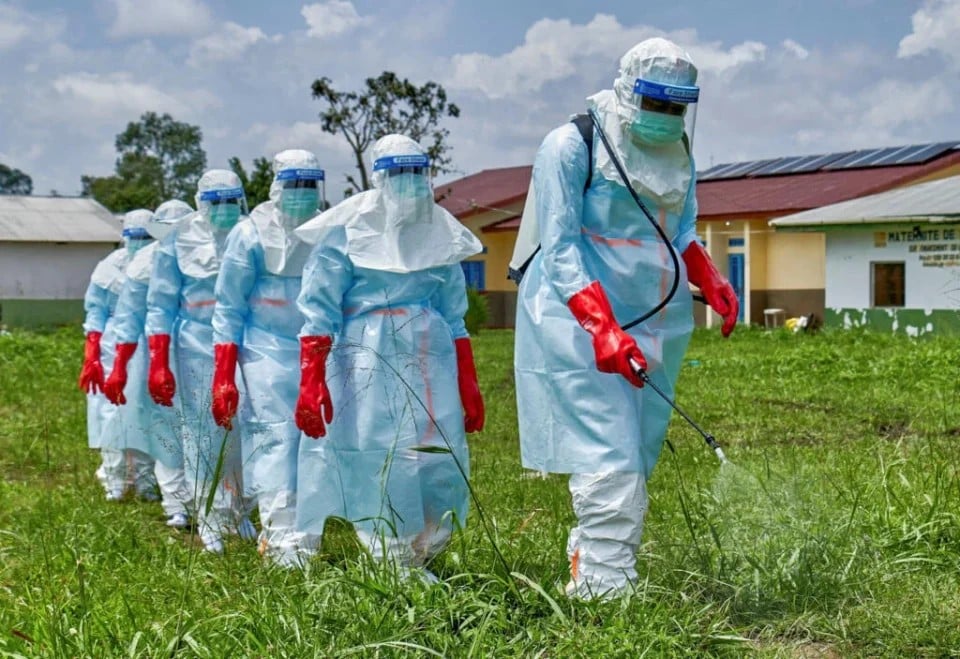
The association’s president also called for the training and retraining of frontline health workers in infection prevention and control measures, as well as adequate supplies of running water, personal protective equipment, diagnostic materials, holding bays and other consumables in federal tertiary institutions and state hospitals.
“We urge Chief Medical Directors/Medical Directors to ensure availability of running water, hand sanitizers, infrared thermometers and enforce no compromise on universal precautions,” Ndukuba said.
He stressed the need to improve the welfare of healthcare workers through hazard allowances and insurance cover, describing a motivated workforce as critical to containing the disease.
MDCAN president advised medical and dental consultants to maintain a high index of suspicion for patients presenting with fever, severe headache, vomiting, diarrhoea, unexplained bleeding or a history of contact with suspected cases.
He urged healthcare professionals to ensure that they and other members of their teams were adequately protected, warning that no member should attend to suspected Ebola cases without appropriate personal protective equipment.
He also called for strict adherence to hand hygiene, triage procedures and other standard precautions, as well as hospital-based training, drills and case simulations for resident doctors, nurses and other health workers.
The MDCAN president urged healthcare facilities to reactivate infection prevention and control committees and isolation areas and promptly report suspected cases to state epidemiologists and the NCDC in line with the Integrated Disease Surveillance and Response guidelines.
“Do NOT manage suspected cases in open wards,” he warned.
Addressing the public, Ndukuba advised Nigerians to avoid contact with the blood and body fluids of symptomatic persons, avoid bushmeat and wash their hands regularly with soap.
Continuing, Ndukuba said, “Ebola is real and here, but preventable. Avoid contact with blood and body fluids of symptomatic persons, avoid bushmeat, and practice regular handwashing with soap.
“Do not hide symptoms or sick relatives at home. Report immediately to the nearest health facility.”
He advised Nigerians to rely on information from official sources, including the NCDC, the Federal Ministry of Health and the World Health Organisation, warning that misinformation on social media could complicate containment efforts.
He cautioned against stigmatising patients, their families, healthcare workers and health facilities managing Ebola cases, noting that discrimination could discourage early presentation and worsen outcomes.
“Early presentation saves lives,” the MDCAN president said, adding that survival was possible with early supportive care.
Ndukuba said the association was committed to working with the government and Nigerians to contain the outbreak, expressing confidence that the country would overcome the challenge as it did in 2014.
PUNCH Healthwise reports that Nigeria has confirmed one imported case of Ebola Bundibugyo virus disease in the Federal Capital Territory, becoming the fifth country to detect the virus since the outbreak was declared in the Democratic Republic of the Congo on May 15, 2026.
The infection was confirmed by laboratory tests on October 20. According to the Federal Ministry of Health and Social Welfare, the patient is a woman with a recent travel history to Uganda. Her symptoms began on October 7, four days after her arrival in Nigeria, and she sought treatment at a private health facility in Abuja on October 11. She is currently in isolation and receiving medical care.
The Nigeria Centre for Disease Control and Prevention has activated its incident management system to coordinate the response.
The World Health Organisation describes Bundibugyo virus disease as a severe and often fatal form of Ebola disease caused by the Bundibugyo virus.
Copyright PUNCH
All rights reserved. This material, and other digital content on this website, may not be reproduced, published, broadcast, rewritten or redistributed in whole or in part without prior express written permission from PUNCH.
Contact: health_wise@punchng.