

Janet Ogundepo
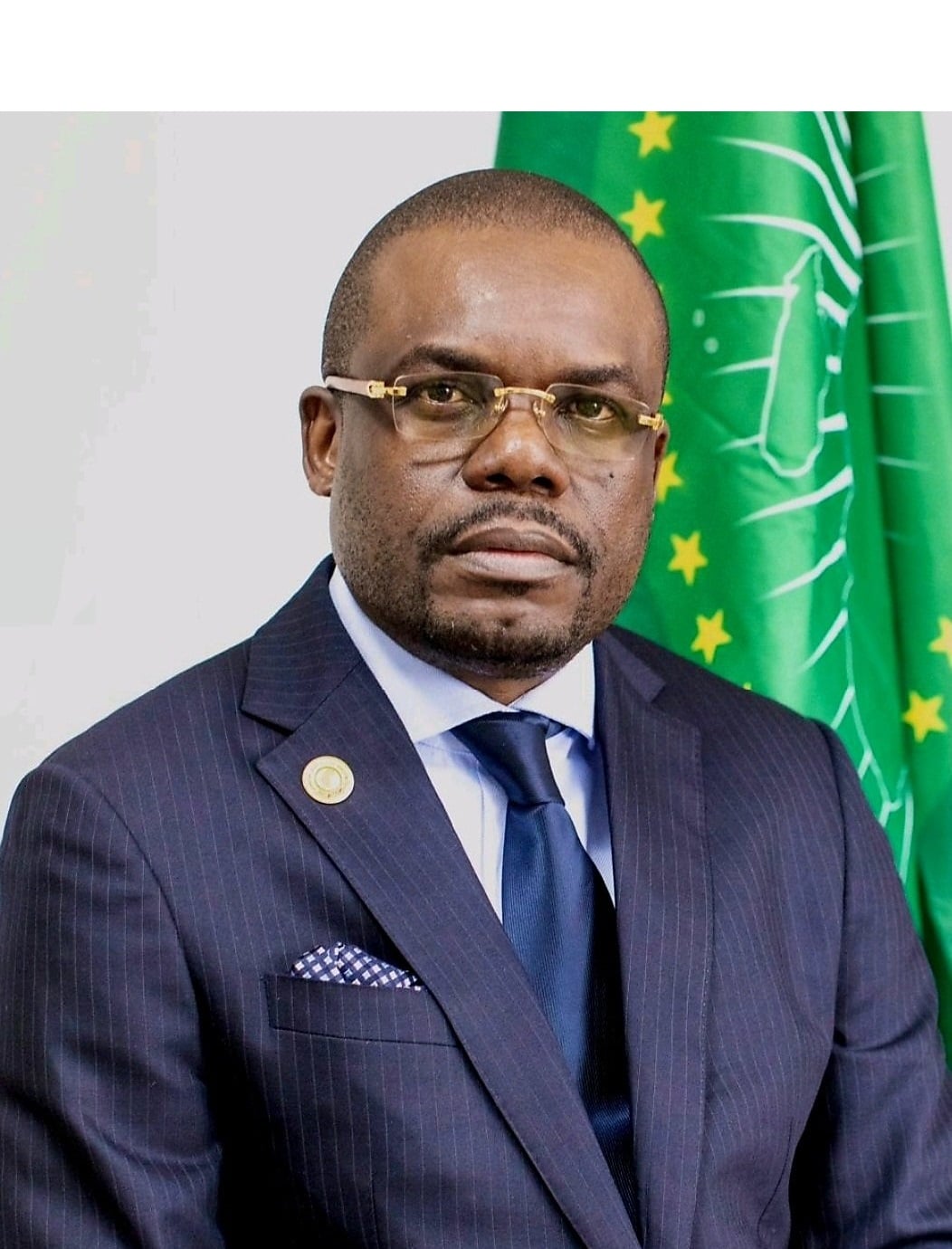
The Director-General of the Africa Centres for Disease Control and Prevention, Dr Jean Kaseya, has threatened to blacklist organisations that fail to account for funds received to support disease outbreak responses across Africa, warning that partners will no longer be allowed to operate without transparency and accountability.
Kaseya said the agency was seeking to establish how billions of dollars pledged for outbreak responses had been disbursed and spent, expressing concern that governments were sometimes left unaware of the funds received by partner organisations working within their countries.
Speaking during an interview on Channels Television’s The Morning Brief on Thursday, he disclosed that although $3bn was pledged at a meeting held on the sidelines of a United Nations and G20-related gathering in September, only about $220m had been accounted for by partners who attended a meeting convened to clarify the disbursements.
He said the lack of transparency could undermine governments’ ability to coordinate emergency responses effectively, adding that Nigeria would also need to ensure organisations supporting its Ebola response disclosed their activities and provided regular updates.
“There was a practice in many African countries, I say many, not all, but many. Partners will get money from donors. They will implement their activities without disclosing how much they got, without even sending a report to the government.
“And when the outbreak is over, we’ll hear from some capitals that billions of dollars were invested to stop this outbreak. I said, enough is enough. It will never happen again on this continent,” Kaseya said.
$700m unaccounted for
The Africa CDC chief said the agency had obtained figures showing that $3bn was pledged by donors, with $962m already disbursed, but the Democratic Republic of the Congo government was aware of only about $220m received by partner organisations that attended a meeting on the funding.
He said the Africa CDC subsequently engaged the DRC government and convened partners to determine how the money had been distributed.
“Out of that, $962 million was already disbursed. We went to work with the DRC government. We organised a meeting with partners. Only 19 out of 92 partners attended. These 90 partners who attended one night disclosed that they received around $220 million,” he said.
Kaseya questioned how governments could lead outbreak responses effectively without knowing how much funding had been received, which organisations were implementing activities and where the money was being spent.
“If I see, out of $962 million disbursed, the government knows only about $220 million, what kind of government can accept to lead a response without knowing even how much they have, without knowing who’s doing what and where?” he asked.
He, however, stressed that the agency was initially concerned about tracing the funds rather than immediately alleging fraud or mismanagement.
“Then I said, stop. I need first to know: where is the $700 million? For now we are not talking about mismanagement. For now we are not talking about fraud. No, for now we are talking about traceability; we want to know where is the money?” he further questioned.
Kaseya said the Africa CDC was working with donors to obtain details of the organisations that received funding and the amounts allocated to them.
He disclosed that the United States was expected to send him a list of funded partners and their allocations, while the European Union had already shared similar information.
“If today a partner got money from a donor, and the partner is unable to tell us what he did with this money, then I will start talking about fraud. Then I will start talking about mismanagement,” he said.
He warned that organisations that failed to comply with the accountability requirements would face sanctions across the continent.
“Partners who don’t want to comply with this rule, I will make sure that I will send a letter to all African countries, and I will go to the AU Assembly where they will be blacklisted in Africa,” Kaseya said.
Nigeria’s Ebola response
The Africa CDC chief said he had directed its Senior Advisor & Special Regional Representative, Professor Aliko Ahmed, to coordinate partners involved in Nigeria’s response to the latest Ebola outbreak and provide daily updates to the Minister of Health and Social Welfare, Professor Muhammad Pate.
He said the move was intended to ensure that the government knew which organisations were working on the response, what they were doing and how available resources were being used.
“This is why even in Nigeria, I already instructed Professor Aliko Ahmed, who’s working closely with Professor Mohammed Pate. His role will be to coordinate all partners who will be working in Nigeria and to provide the updates to the minister on a daily basis,” he said.
Kaseya said the Africa CDC was also mobilising resources and technical support for Nigeria, noting that a team of about 12 colleagues had arrived in Addis Ababa as part of the agency’s support efforts.
He said the agency had helped mobilise test kits and other assistance and was awaiting Nigeria’s national response plan to provide additional resources.
He urged African leaders to avoid politicising the outbreak and instead work together to contain the disease.
“My plea is clear to all leaders. We cannot play politics with this outbreak. We need to come together. We cannot point fingers. We need to come together. We cannot play isolation. We need to come together,” he said.
He warned that the threat extended beyond Africa, arguing that international cooperation was necessary to contain the outbreak before cases spread to other continents.
“This is why we need them to come to support us to stop this outbreak in Africa, not to export cases to their continent,” he said.
Africa CDC questions vaccine access
Kaseya also criticised the lack of an available vaccine for the latest Ebola outbreak, arguing that the response to the disease had been affected by limited interest from international partners.
He said the current outbreak was caused by the Bundibugyo strain of the Ebola virus, which he described as having caused only three outbreaks globally, unlike the Zaire strain, for which vaccines have been developed.
“I can tell you, if this outbreak was in Western countries, vaccine will already be available. Why this vaccine today is not available? Because some of our partners decided to consider this issue as an African issue, they were not interested,” he said.
Kaseya said the Africa CDC had initiated efforts to support clinical trials of new vaccines, including a Bundibugyo vaccine being developed by an African manufacturer in Egypt. He also said the agency was working with the Democratic Republic of the Congo and Uganda to support clinical trials and compassionate use of the Zaire vaccine, Ervebo.
He said the experience had strengthened the agency’s resolve to support vaccine manufacturing in Africa, improve coordination among partners and encourage greater domestic financing for public health emergencies.
“You will see, after Ebola, Africa will not be like before Bundibugyo, because we now have first pushed, we are pushing for manufacturing of vaccine in Africa. Second, we are pushing for alignment of partners. Third, we are pushing for more domestic resources from Africa,” he said.
Kaseya added that 28 African countries had contributed funding to support the response, describing the development as evidence that African governments were taking greater responsibility for public health emergencies.
He said the continent needed to build on its scientific expertise and manufacturing capacity to reduce dependence on external support during future outbreaks.
Appeal for cooperation in contact tracing
Kaseya also appealed for cooperation from a woman whose movements between Uganda and Nigeria had become relevant to the outbreak investigation.
He said the woman, who was born in Uganda, had travelled there and spent some days before her husband joined her. According to him, they returned to Abuja on October 3.
Kaseya said investigators needed further information about her movements, including whether she had travelled to the Democratic Republic of the Congo, left Kampala or had contact with anyone arriving from the DRC.
“What we want is collaboration from this lady, she has to disclose to the authorities. I need this information, Nigeria needs it because we also need to support Uganda,” he said.
He said the information would help authorities in both countries understand possible links relevant to the outbreak and prevent unnecessary tensions between African countries.
The Africa Centres for Disease Control and Prevention is the African Union’s public health agency, mandated to strengthen disease surveillance, emergency preparedness and response across the continent.
PUNCH Healthwise reports that Nigeria has confirmed one imported case of Ebola Bundibugyo virus disease in the Federal Capital Territory, becoming the fifth country to detect the virus since the outbreak was declared in the Democratic Republic of the Congo on May 15, 2026.
The infection was confirmed by laboratory tests on October 20.
According to the Federal Ministry of Health and Social Welfare, the patient is a woman with a recent travel history to Uganda. Her symptoms began on October 7, four days after her arrival in Nigeria, and she sought treatment at a private health facility in Abuja on October 11. She is currently in isolation and receiving medical care.
The ministry said investigations were ongoing to establish the likely source of infection and reconstruct the patient’s full travel and exposure history. So far, 44 contacts have been identified and are being monitored, while infection prevention and control measures have been strengthened at the private health facility where she sought care.
The World Health Organisation describes Bundibugyo virus disease as a severe and often fatal form of Ebola disease caused by the Bundibugyo virus.
Copyright PUNCH
All rights reserved. This material, and other digital content on this website, may not be reproduced, published, broadcast, rewritten, or redistributed in whole or in part without prior express written permission from PUNCH.
Contact: [email protected]
