







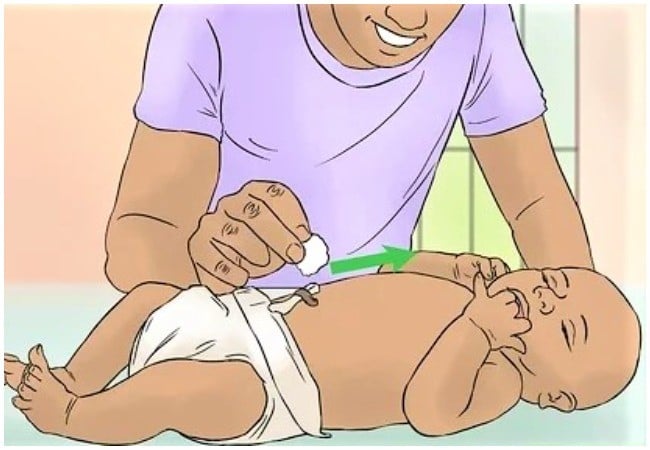
Seasoned child health specialists say the umbilical cord stump of a full-term newborn should fall off between five and 15 days after birth, warning that a stump that remains attached beyond three weeks could signal infection and require immediate medical evaluation.
The experts said delayed cord separation could be caused by infection, keeping the cord wet, poor cord care, prematurity, or, in rare cases, immune system problems, stressing that if left unattended to, the infection could spread to the baby’s bloodstream.
In exclusive interviews with PUNCH Healthwise, the paediatricians explained that while the umbilical cord in preterm babies or babies with low birth weight might take a bit longer before it falls off, when the umbilical cord remains for more than three weeks, such babies should be taken for evaluation.
They asserted that parents should seek immediate medical attention if they observed redness, pus, foul smell, continuous bleeding around the cord, or if the baby developed fever, poor feeding, vomiting, or abdominal distension.
The child health experts further warned parents against applying toothpaste, salt, detergent, cow dung, breast milk, or using hot fomentation and other local manipulations to hasten the cord’s separation, stressing that such practices could cause bleeding, create a portal of entry for infection, and in some cases leave an open wound on a newborn whose immune system was not yet equipped to fight it.
They stressed that the recommended cord care was the application of Chlorhexidine gel to the base and stump of the cord or cleaning with methylated spirit.
PUNCH Healthwise earlier reported that the improper and careless handling of the umbilical cord exposes newborns to infection and further contributes to the country’s high infant morbidity and mortality rate.
According to the 2024 Nigeria Demographic and Health Survey, Nigeria records 63 infant deaths per 1,000 live births, 41 neonatal deaths per 1,000 live births, and 110 under-five deaths per 1,000 live births.
Providing expert insight into the matter, a Professor of Paediatrics at Usmanu Danfodiyo University, Sokoto, Ben Onankpa, said the normal timeline for cord separation depended on the gestational age of the baby, with term babies expected to separate between four and 15 days, while preterm babies or those born with low birth weight could take up to three weeks.


Explaining biological reasons premature babies experience delayed separation, the child health specialist said, “Premature birth is one of the causes of delayed cord separation because there is something called inflammation, which is slow in preterm babies. We need inflammation for separation of the cord from the base, which is slow in preterm babies or babies with low heartbeat.”
On the causes of delayed cord separation in term babies, Onankpa said infection, poor cord care and the application of harmful substances to newborn cords were factors responsible.
He said, “Most times, if it is delayed, there could be infection or poor cord care. In our culture, there are different approaches to cord care. Some people apply cow dung, some women have used toothpaste, some have used detergent, salt. But these are manipulations that are not good care. It can get the cord infected. And remember, it is still connected to the baby.”
He said the cultural pressure to make the cord fall off quickly stemmed from beliefs about the completeness of the baby and social restrictions placed on mothers while the cord remained attached.
Onankpa said early manipulation posed the dangers of bleeding and infection, comparing premature cord separation to plucking an unripe fruit.
He described the warning signs that parents must treat as urgent.
The don said, “Once the skin around the cord becomes reddish, if you see continuous bleeding, it’s not a good sign. Also, if you see pus, or the baby becomes feverish and feeding poorly, vomits, or the abdomen becomes distended, the baby needs immediate medical evaluation because it (the cord) becomes a portal of entry for other infections. The infection can spread to the bloodstream.”
The child health specialist told parents, “There is no reason why the cord should remain there after the third week, all things being equal. If it drops before the third or fourth day, please seek medical care so that they can take proper care of the cord.”
He recommended chlorhexidine gel as the only appropriate cord care product and said the treatment was both effective and accessible.
He said, “The recommended cord care is chlorhexidine gel. Apply generously to the base of the cord, upwards to the stump. Most times, even if they apply it once, it’s still enough. But you can apply for the first three to four days. Avoid all local practices, including hot fomentation, pressing and manoeuvring, to make sure it drops quickly. If it drops naturally, it will get dried and then drop on its own.”
Also speaking, a Professor of Paediatrics, Omotayo Adesiyun, said the normal time frame for umbilical cord separation was between five and 15 days, with an average of six to seven days, and that it became medically significant only when it exceeded three weeks.


She said the reasons for delayed separation included the cord being kept wet, infection, and rarely, problems with the immune system.
She urged parents to watch for swelling, redness, and pus around the cord.
On what parents should do if the cord had not fallen off after two weeks, Adesiyun said they should check for warning signs, confirm that the baby did not have a fever and was feeding well, and if all was normal, keep the cord dry by cleaning it with methylated spirit.
“If the cord has not fallen off after two weeks, the parents should check for the warning signs. Also check that the baby does not have a fever and is sucking well. If there are none, then the cord should be kept dry by cleaning with methylated spirit. If the cord has not dropped by 3weeks, the baby should be taken to the hospital for evaluation,” the child health specialist noted.
Copyright PUNCH
All rights reserved. This material, and other digital content on this website, may not be reproduced, published, broadcast, rewritten or redistributed in whole or in part without prior express written permission from PUNCH.
Contact: health_wise@punchng.


