






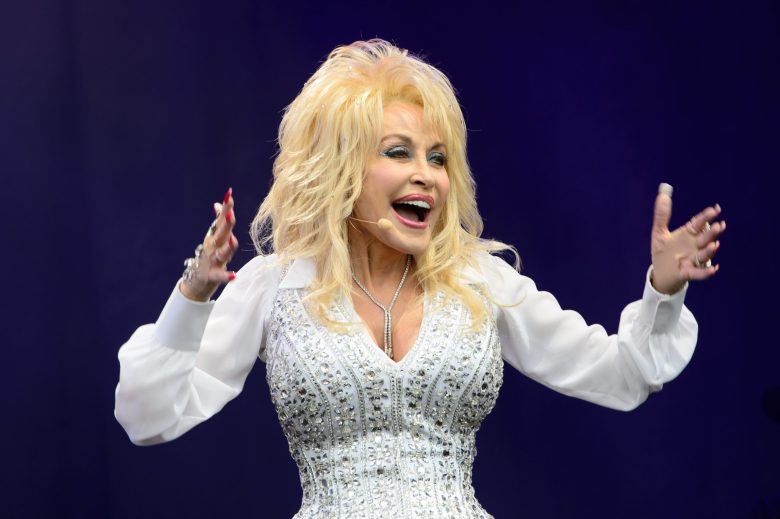
300 million free books mailed to children worldwide. Millions of dollars toward medical research. A voice that defined generations, and a heart that gave just as much back.
Dolly Rebecca Parton was born January 19, 1946, in a one-room cabin in Pittman Center, Tennessee, one of 12 children of a tobacco farmer.
From that almost unimaginable poverty, she built a six-decade career spanning music, film, television, business, and philanthropy, becoming one of the most beloved public figures America has ever produced.
On August 25, 2026, that story reached its final chapter as Dolly died peacefully in Nashville at age 80, after what her publicist described as a brief battle with cancer, while surrounded by loved ones at the Vanderbilt-Ingram Cancer Center. Her death confirmed in a family statement and a video from her nephew, Bryan Seaver. This carousel goes beyond the headlines as we dig into the lesser-known stories behind the iconic artiste. Swipe through.
Dolly’s musical life began almost before she could read. Her mother, Avie Lee, filled their cabin with old ballads passed down from England, Ireland, and Wales. These storytelling songs shaped Dolly’s ear for narrative long before she wrote a single lyric of her own.
She received her first guitar at age 8, and her mother would proudly interrupt guests to make them listen to a song “this little thing” had written. By 10 she was performing on local radio and television. By 11 she was a regular on Knoxville’s Cas Walker Show. And by 13, she wasn’t just watching the Grand Ole Opry from the audience but standing on its stage as one of the youngest performers the legendary Nashville institution had ever hosted.
Three years later, the day after graduating high school in 1964, she boarded a bus for Nashville and never looked back, arriving with nothing but talent, a guitar, and a childhood’s worth of songs already written in her head.
“Jolene” And “I Will Always Love You” Were Written Within Days Of Each Other
Two of the most iconic songs in American music (one a jealous plea to a red-haired temptress; the other a global ballad of devotion) came from the same brief creative burst.
Decades later, Dolly rediscovered the original demo cassette in her archives and realized the songs were recorded back-to-back, possibly written the same night.
Here’s the twist almost nobody knows: “I Will Always Love You” isn’t a romantic love song at all. It was written as a professional farewell to her mentor and business partner, Porter Wagoner, after years of co-hosting his TV show together.
When Dolly told him she was leaving to go solo, the relationship fractured. “There was a lot of grief and heartache there,” she later recalled. Rather than keep arguing, she went home, wrote the song that night, and sang it to him the very next day. He reportedly broke down in tears and told her she could go, on one condition: he got to produce the record.
Read Also: Was The Nigerian Movie Industry Named “Nollywood” By A Japanese Man?
When “I Will Always Love You” hit #1 on the country charts in 1974, Elvis Presley personally reached out about recording his own version but Dolly said no. The reason was business as Elvis’s manager, Colonel Tom Parker, had a standing rule that any songwriter wanting Elvis to cover their work had to sign over half the publishing rights.
Dolly refused to give up ownership of a song she’d written from the heart. It was a gamble that could have cost her one of the biggest names in music history as a collaborator. Instead, it protected her completely and set the stage for what happened almost 20 years later, when Whitney Houston’s cover for The Bodyguard turned the song into a global anthem, and every dollar of publishing stayed exactly where Dolly had insisted it belonged: with her.
She Took Whitney Houston’s Royalties And Invested Them Into The Black Community
This is arguably the least-known story on this entire list. When Whitney Houston’s 1992 cover of “I Will Always Love You” became one of the best-selling singles of all time, the songwriting royalties (because Dolly owned them outright) earned her millions.
What she chose to do with a portion of that money rarely makes it into the airwaves: she invested in an office complex in a predominantly Black neighborhood of Nashville, describing the decision as one she made with Whitney specifically in mind. She called the development “the house that Whitney built.”
Think about what that represents: a country song, transformed by a Black artist into a defining moment of pop culture, generating wealth that its songwriter then deliberately redirected into a Black community. It’s a decades-old example of reciprocity and gratitude that says as much about Dolly’s character as any award she ever won.
Dolly’s father, Robert Lee Parton, never learned to read or write and this fact stayed with her long into adulthood. In 1995, she turned that personal history into action, launching Dolly’s Imagination Library from her home county of Sevier, Tennessee.
The program mails a free, age-appropriate book to enrolled children every single month, from birth until their fifth birthday, at no cost to their families. What started as a local literacy initiative has since grown into a global operation, having sent more than 120 million books to children around the world, with international partnerships that have reached families well beyond the United States, including programs across parts of Africa.
Dolly herself said her father took more pride in being called “the book lady’s daddy” by local kids than in anything her fame had brought her.
At Dollywood, being an employee came with more than a paycheck:
• Free college tuition: 100% of tuition, fees, and textbooks covered for any employee who wanted to study, from day one on the job.
• Free meals: every single working shift.
• A dedicated healthcare centre: built specifically for Dollywood staff.
• Subsidized childcare: costs covered for employees using approved daycare partners.
Back home in Sevier County, Tennessee, she also gave $75,000 in scholarships, every single year, quietly handed to graduating seniors who wanted to chase a dream.
She Is A Multi-Instrumentalist, A Fashion Rebel And Owns Enough Wigs For Every Day Of The Year
Beyond her voice, Dolly could play the dulcimer, banjo, piano, recorder, and even saxophone and she once told Vogue she plays “some of everything,” crediting a musical family that handed instruments to every child in the house.
Her visual identity was just as deliberate as her sound. When she first arrived in Nashville, record executives pushed her toward a slicker, more restrained pop look. She refused outright, later explaining that she couldn’t perform authentically if she didn’t feel comfortable in her own skin and instead doubled down on the big hair, bold color, fringe, and rhinestones that became her signature.
That commitment extended to her now-legendary wig collection and when asked exactly how many she owned, she couldn’t give a real number, joking that since she wore a different one nearly every day and she must own “at least 365.”
In 2015, when her DreamMore Resort opened in Pigeon Forge, Tennessee, Dolly did something no one expected. She recorded a song called “My Place in History” and sealed it away.
• Stored on a CD, tucked inside a chestnut wood “Dream Box.”
• On display at the resort but locked.
• Not to be opened until January 19, 2046, in what would’ve been her 100th birthday.
• She even left a CD player inside the box, just in case the technology disappears before anyone gets to press play.
Only she ever knew what was on it.
And it clearly ate at her because she once compared keeping it hidden to “burying one of my kids,” but she also joked, more than once, that she might just live to be 100 and show up to open it herself.
She didn’t make it as she passed at 80, on August 25, 2026.
Which means, that song will be a message from her, waiting twenty years to be heard.
For years, fans speculated about whether Dolly had tattoos she was hiding under her signature long sleeves.
In a 2020 interview, she finally addressed it directly noting that during a period of serious illness that required a feeding tube and several medical procedures, she was left with visible scarring. Rather than hide it, she had the scars covered with delicate ribbon, bow, and butterfly tattoos, describing them as art born from healing, not rebellion.
In an equally memorable piece of Dolly trivia, 1996 marked the year Scottish scientists achieved a genuine scientific milestone: cloning the first mammal from an adult cell, using DNA from a mammary gland. In a nod to the country star’s famous figure, they named the sheep “Dolly” meaning one of the most significant breakthroughs in modern genetics carries her name to this day.
She Entered A Dolly Parton Lookalike Contest And Lost
One of the most beloved stories in Dolly folklore is also one of the funniest. She reportedly entered a Dolly Parton drag lookalike contest in Los Angeles, done up in full costume, exaggerated makeup, and an even bigger wig than usual, competing against contestants trying to impersonate her.
The judges weren’t convinced and she lost to a man who, by her own account, gave a more convincing performance as “Dolly Parton” than she did. She later joked to reporters that she’d been “the least convincing Dolly Parton in the room.” It’s a small story, but it captures something essential about her: a global superstar, famous enough to be widely self-aware enough to laugh when someone else did it better.
Dolly’s generosity extended far beyond the Imagination Library, and much of it happened without fanfare.
In 2020, she donated $1 million to Vanderbilt University Medical Center specifically for COVID-19 research in a contribution researchers later credited as critical early funding for what became the Moderna vaccine effort. Two years later, she gave another $1 million to the same institution, this time for pediatric infectious disease research.
After the devastating 2016 East Tennessee wildfires, she personally established the My People Fund, distributing $1,000 a month for six months to families who had lost their homes. The fund ultimately reached at least 900 families (921, according to Dollywood Foundation and Knoxville News Sentinel figures) with total payouts exceeding $9 million, and final checks bumped up to $5,000 each thanks to an outpouring of public donations that pushed the fund well past its original goal.
And as recently as 2024, following the destruction of Hurricane Helene, she and her businesses jointly gave $2 million toward relief efforts. That sustained pattern of giving earned her the Carnegie Medal of Philanthropy in 2022. This is one of the highest honours available in American charitable work, awarded to someone who, by her own account, simply wanted “to be a part of anything that’s good.”
Country music icon Dolly Parton died on August 25, 2026, in Nashville, Tennessee, at age 80 following a brief battle with cancer. Her family remembered her as an enduring inspiration through her “music, prolific songwriting… wit, warmth, and kindness”. Her nephew, Bryan Seaver, officially announced her passing in a pre-recorded video she had requested years prior.
Parton’s death comes 18 months after the loss of her husband of 58 years, Carl Dean, who stayed out of the spotlight but inspired classics like “Jolene.”
Tributes poured in across genres and industries:
• Taylor Swift: Stated a world without Dolly “doesn’t feel possible, real, or right” and praised her legacy of generosity.
• Beyoncé: Called her “the barometer, the North Star” and thanked her for teaching lessons on staying true to oneself.
• Miley Cyrus: Described her godmother as “the purest soul” and expressed deep heartache over the loss.
• Paul McCartney: Remembered her as “bubbly and full of life,” calling her talent and philanthropy unrivaled in country music.
• Eminem: Shared a warm, handwritten letter she once sent him, noting that the icon touched people across all genres “in ways you don’t even know.”
• Her Legacy Rising from a one-room Appalachian cabin, Parton sold over 100 million records and wrote more than 3,000 songs. Beyond her music, she was a shrewd businesswoman, an icon, and a legendary philanthropist who funded child literacy programs, disaster relief, and medical research.
She gave more than she ever asked for in return. Rest easy, Dolly. You will always be loved.
The post Dolly Parton: The Icon. The Philanthropist. The Legend. appeared first on Moji Delano | BLOGGER | ENTERTAINER | DIGITAL MEDIA STRATEGIST.


