



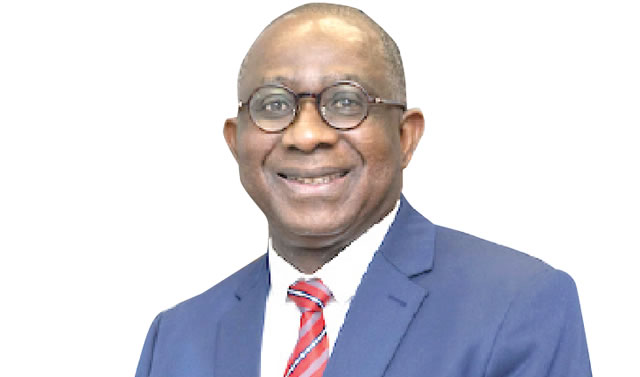


A renowned economist and former Senior Special Adviser to the President of the African Development Bank on Industrialisation, Prof. Banji Oyelaran-Oyeyinka, has said Nigeria could unlock up to $115bn in GDP and create 70,000 jobs if the Ajaokuta Steel Company is revived through privatisation.
In his keynote address at a virtual international conference titled “The Ajaokuta Phenomenon in Tinubu’s Era: A Turning Point or Another Missed Opportunity?”, Oyelaran-Oyeyinka said the steel plant remained critical to Nigeria’s industrial future.
In a statement on Friday, he said, “This keynote slide tells the story in three numbers — $115bn in GDP gain, $9.1bn in foreign exchange savings, and 70,000 jobs created.
“These are not just statistics; they represent growth, stability, and opportunity for millions of Nigerians. Reviving Ajaokuta is not about steel alone — it’s about reclaiming our economic sovereignty, empowering our youth, and building the foundation of a self-reliant industrial future.”
The conference was organised by the Coalition for the Revival of Ajaokuta.
Oyelaran-Oyeyinka, a Fellow of the Open University, UK, called for the urgent privatisation of the steel complex, insisting that decades of government control had failed to deliver results.
“The time for hesitation has passed. The time for decisive action is now. Public ownership and management of steel should end,” he declared.
He proposed that a capable Nigerian consortium, backed by experienced foreign partners, should take over the plant.
“My specific recommendation is to allow a capable Nigerian group or consortium to take majority ownership, with foreign partners that have a proven record of operating steel plants,” he said.
Oyelaran-Oyeyinka cited South Korea’s POSCO as a model, noting that strategic reforms and private sector participation transformed it into a global steel giant.
He described Ajaokuta as a “monumental white elephant”, lamenting that despite billions of dollars invested since the 1970s, the plant has failed to produce steel at scale.
“We invested between $6–10bn… yet decades later, Ajaokuta remains idle — a monument to unrealised potential,” he said.
According to him, Nigeria continues to import about $4bn worth of steel annually, worsening pressure on foreign exchange and limiting industrial growth.
“A country of over 200 million people without primary steel production is a travesty,” he added.
He further warned that if entrenched interests frustrate reforms, Nigeria should consider an alternative private-sector-led model.
“If rent-seekers will not allow it, I repeat, let us find the Dangote Refinery solution to the challenge of primary steel production,” he said.
He urged the Federal Government to act decisively to reposition the sector, warning that continued delay would leave Nigeria dependent on imports.
“Let us choose progress over paralysis, action over hesitation, and transformation over dependence. The time to revive Ajaokuta is now — for growth, for savings, and for jobs.
“Reviving Ajaokuta is not just about producing 1.3MT of steel — it is about catching up with comparator nations that used steel to transform their economies. Without decisive action, Nigeria risks remaining import-dependent while peers continue to leverage steel as a foundation for prosperity,” he added.
Other panellists at the conference echoed concerns over the project’s long-standing challenges.
A professor at FUT Minna, Oladiran Abubakare, warned against repeating past mistakes, attributing the plant’s failure largely to corruption.
“The problem with Ajaokuta is corruption… a company that produced more ministers than producing steel,” he said, urging stakeholders to closely monitor any new agreements.
Similarly, policy analyst Collins Nweke described Ajaokuta as Nigeria’s “most enduring industrial paradox.”
“A project that reached about 98 per cent completion… has never produced steel at industrial scale after more than four decades,” he said.
He cautioned that while there are signs of renewed government interest under President Bola Tinubu, success would depend on execution rather than policy announcements.
“Ajaokuta does not fail for lack of plans; it fails at the point of execution,” he said.
The session was moderated by Mohamad Attah of the Coalition for the Revival of Ajaokuta.
Other panellists included Dele Ajayi-Smith and Clifford Thomas.