


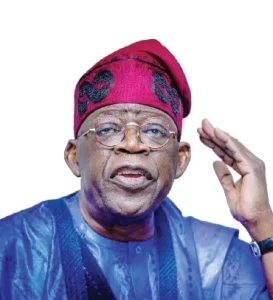




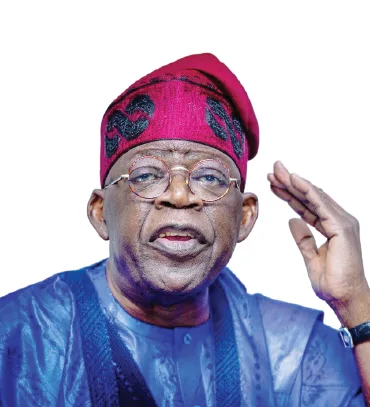


“The next phase is about accelerating growth and ensuring the benefits are felt in every home, every community, and every region.” — President Bola Ahmed Tinubu, Democracy Day Address, June 12, 2026
A national development programme is like a map joined by many roads. A magnificent highway in one part of the country cannot complete the map. Development becomes truly national when the lines extend across regions, connect communities and create economic opportunity wherever Nigerians live.
Nigeria is too large and diverse for federal development to be measured from Abuja, Lagos or a handful of flagship projects. The more important question is what is being built, rehabilitated, financed or delivered across the 36 states and the Federal Capital Territory.
By May 2026, the Federal Government reported more than 2,700 kilometres of highways and major roads under construction, reconstruction or rehabilitation. But the federal development footprint extends much further—to healthcare, education, skills, housing, agriculture, power, rail and digital connectivity.
Nearly 3,000 primary healthcare centres have been revitalised under the IMPACT programme, alongside emergency obstetric and newborn-care facilities.
Subsidised dialysis has reduced the approved treatment cost from N50,000 to N12,000 per session at selected federal tertiary hospitals in Kano, Maiduguri, Bauchi, Jos, Abuja, Lagos, Ibadan, Benin, Yenagoa, Owerri and Abakaliki, with expansion planned.
The Federal Ministry of Education’s TVET Initiative offers tuition-free technical and vocational training, monthly stipends and start-up support, widening pathways from skills acquisition to employment and enterprise. Housing, agricultural interventions, electrification and TETFund investments further broaden the national footprint.
In April 2026, the African Development Bank approved $200m for Nigeria’s digital infrastructure programme, designed to expand the national fibre backbone to approximately 120,000 kilometres and connect all 774 local government areas, including schools, health facilities, agro-industrial zones and rural communities. The AfDB has emphasised the importance of regional integration in expanding markets, strengthening competitiveness and developing regional value chains.
The Lagos–Calabar Coastal Highway and Sokoto–Badagry Superhighway are intended to connect regions, production centres and markets across long distances.
Attention is also being given to inherited infrastructure. On the Abuja–Kaduna–Zaria–Kano Highway, 118 kilometres have been completed, while the remaining 164-kilometre section was reported at more than 60 per cent completion, with completion targeted for December 2026. Work has also continued on the Kano–Katsina Road, alongside railway development in the Northwest.
These are more than construction projects. Efficient transport corridors can reduce travel and logistics costs, connect farms and factories to markets, stimulate trade and investment and create employment. Their ultimate value lies in the economic activity and opportunities they unlock.
In India, national programmes have combined rural connectivity with electrification, sanitation, housing, healthcare and financial inclusion, extending development from central policy into villages and households.
For South Korea, the Saemaul Undong programme channelled national support into villages while communities helped determine priorities. Investments improved housing, electrification, agricultural productivity, local infrastructure and household incomes, helping transform rural living conditions.
Brazil: Federal programmes reached citizens through states and municipalities. Bolsa Família, linked with health and education responsibilities, combined income support with human-capital development, while Brazil’s Unified Health System extended healthcare through a decentralised national structure.
Indonesia: National resources were pushed directly towards villages through community-development programmes and fiscal transfers, supporting water and sanitation, health, education, livelihoods, microcredit and locally selected infrastructure.
The common thread is clear: national development becomes transformative when federal resources travel the full distance—from policy and budgets to states, local authorities, communities and ultimately the citizen.
The presidential candidate for the Nigeria Democratic Congress, Peter Obi, had questioned the priority and cost of the Lagos–Calabar Coastal Highway, arguing that unfinished roads and urgent needs in healthcare, education and poverty reduction deserve greater attention, although he acknowledges the highway’s economic potential. The Nigeria Labour Congress, led by Joe Ajaero, had similarly called for subsidy savings and increased revenues to translate more visibly into roads, hospitals, schools and improved living conditions.
There is another dimension. Roads are not an alternative to economic development; well-chosen roads are engines of it. The Lagos–Calabar concept dates back over 50 years, according to some experts, while the Sokoto–Badagry Superhighway revives another longstanding national ambition. Meanwhile, inherited projects including Abuja–Kaduna–Zaria–Kano and Kano–Katsina are also being advanced. The picture is therefore one of pursuing new strategic corridors while completing inherited infrastructure and investing simultaneously in human development.
Three proverbs for the reset:
Yoruba: “Igi kan kò dá igbó se.”
One tree does not make a forest. National development cannot rest on one project, state or region.
Hausa: “Komai nisan jifa, ƙasa zai faɗo.”
However far a stone is thrown, it eventually returns to the ground. Policy must ultimately land in the lives of the people.
Igbo: “Onye aghana nwanne ya.”
Let no one leave another behind. Development must reach communities across the federation.
A nation is not transformed by the number of projects it announces, but by how widely development reaches, how well projects are completed and how profoundly they improve the lives of its people.
The National Patriots commends the expansion of federal development interventions across regions, progress on inherited infrastructure, healthcare investments and, in particular, the Federal Government’s tuition-free technical and vocational training, which combines skills acquisition with stipends and pathways to employment and entrepreneurship.
Development must also reach the classroom. Too many schools still operate with damaged roofs, inadequate desks and chairs, insufficient or unusable toilets, unhealthy surroundings and, in some cases, no reliable potable water or functional borehole. The National Patriots proposes a National School Rehabilitation and Basic Facilities Initiative, undertaken with states and local governments, beginning with a transparent nationwide condition audit to identify the most distressed schools. A safe roof, adequate desks, clean toilets and potable water should be minimum conditions for learning.
The National Patriots also proposes stronger grassroots economic intervention for petty traders, market women, artisans and micro-enterprises. Alongside immediate relief through cash transfers, a LAPO-style Grassroots Enterprise Revolving Fund, delivered through credible microfinance institutions, cooperatives and market associations, could provide affordable working capital that can be replenished and recycled among beneficiaries. Digital registration, transparent selection and independent monitoring would strengthen accountability.
Nigeria’s development map is gradually filling in. The challenge is not merely to announce projects, but to complete them, maintain them and ensure that their benefits travel the final mile.
A highway must lead to commerce. Broadband must create opportunity. Healthcare must save lives. Skills must create livelihoods. A school must be fit for learning. Public investment must ultimately become a better life for the citizen.
That is when a national project becomes national development.
Nigeria’s federal development footprint extends beyond flagship infrastructure into healthcare, education, skills, housing, agriculture, digital connectivity and social intervention. The decisive measures are completion, geographical reach, value for money and measurable improvement in citizens’ lives.
- Princess Adebajo-Fraser is the President of The National Patriots


