




As Nigeria heads towards the 2027 general elections, the political landscape is already shifting. Over the past few months, defections from opposition parties to the ruling All Progressives Congress (APC) have dominated headlines, sparking debates about the health of Nigeria’s democracy, the stability of political parties, and the potential for a one-party state. Analysts note that such defections, especially involving governors and high-profile politicians, not only alter the numerical strength of political parties but also reshape political influence and patronage across the country. Amid these developments, former APC chieftain and Labour Party (LP) candidate in the last governorship election in Anambra State, Chief George Moghalu, offers a perspective in this interview with ADAMU ABUH. With decades of experience navigating Nigeria’s complex political terrain, he provides insights into the dynamics of defections, the moral and political implications for democracy, and why no ruling party is invincible. He also reflects on internal party democracy, opposition unity, and the prospects of APC’s dominance in 2027.
A lot has been happening in Nigeria’s political space, particularly with defections from one party to another. As an experienced politician, how do you view this trend? Who is benefiting and who is losing?
It is of great concern to me, and indeed to every genuine democrat. If you ask me who is losing, I will say democracy is losing. Something clearly has to be done. I agree that defection is a personal right, and anyone can exercise it. However, what troubles me is that most of those defecting did not consult the people who sent them to office. That is the crux of the matter.
For me, the best way to test the legitimacy of a defection is simple – once you defect, you should lose the position you are occupying and return to the people to seek a fresh mandate. That is the only way to test whether the people agree with your decision.
From a political standpoint, who really benefits from these defections?
The party being defected to certainly benefits. Party politics is about numbers and influence. When a governor defects, for instance, he does not go alone. He moves with elected officials, political appointees, supporters, and beneficiaries of power. So, the receiving party benefits enormously in terms of numbers and influence. But beyond that, there is a moral question: Is it right to take a mandate given on one platform to another without consulting the people? That question must be answered by those defecting.
Many Nigerians fear that these defections could lead to a one-party state. Do you share that concern?
There is no way Nigeria will become a one-party state. We have seen this situation before. There was a time when the PDP controlled about 29 states. I remember vividly when the late Chief Vincent Ogbulafor, then PDP chairman, jokingly told me that PDP would rule Nigeria for 60 uninterrupted years. We laughed. Today, where is PDP? After three terms in power, PDP collapsed from that dominance. What is happening today in favour of APC is not new in Nigerian politics. History shows us that no party lasts forever; political dominance is always temporary.
Are you suggesting that the APC could also go the way of the PDP?
I am not a prophet, a soothsayer, or a native doctor. I do not predict the future. Nobody can accurately say what will happen. However, one thing is certain: Politics is a game of interests and ambitions, and these interests must clash. Political parties in Nigeria are not ideological; they are vehicles for the actualisation of power. When ambitions clash, crises are inevitable. Whether APC survives or not, nobody can say for sure.
There is an argument that people are defecting to APC because the government is performing well. What is your take on that?
I would rather listen to the individual reasons given by those defecting. Everyone has personal motivations. Some say they want to “connect to the centre.” I usually ask: Were their states disconnected before? Constitutionally, states are entitled to their allocations irrespective of party affiliation. Governance should not be reduced to survival politics. Constructive opposition is also part of governance. The party in government must fulfill promises, while the opposition ensures those promises are kept.
You have advocated that defecting governors should lose their seats. Do you support a constitutional amendment to that effect?
Absolutely! There is nothing wrong with that. Ballot papers in Nigeria carry party names, not candidates’ names.
What the people vote for is the party, represented by individuals. It is morally unjustifiable to take the people’s mandate to another platform without their consent. The only way to obtain that consent is to resign and subject that mandate to another election. This is about accountability, and it ensures that the people’s voice remains central.
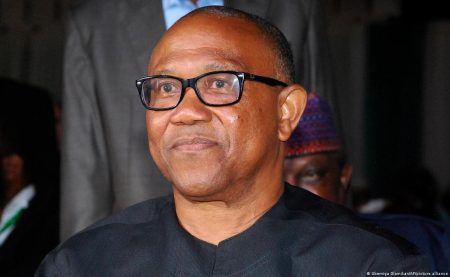
The presidential candidate of the Labour Party in the last general election, Peter Obi, has moved to the ADC. Are you moving with him?
I have a close personal relationship with His Excellency, Peter Obi. His decision to move is his personal decision. As for me, I am consulting widely. I do not take political decisions unilaterally. I consult my supporters, stakeholders, and political associates. Once I conclude my consultations, I will make my position known.
Do you think Obi or the opposition can mount a formidable challenge to APC in 2027?
Removing an incumbent is not a tea party. The only way to present a formidable opposition is unity of purpose.
We saw this clearly before 2015. When opposition parties were fragmented, they lost repeatedly. It was only when forces came together — ACN, CPC, ANPP, and others — that APC emerged and defeated the PDP. The same principle applies today. A fragmented opposition cannot win. Unity is not optional; it is compulsory.
Some say the APC is unbeatable in 2027. Do you agree?
No, APC is not unbeatable. We politicians sometimes make the mistake of playing God. Who can guarantee that anyone will even be alive in 2027? Elections will come and go. Power belongs to God, and He gives it to whom He pleases. Nothing is cast in iron. History has shown us repeatedly that dominance is temporary and that the will of the people always finds a way.
When governors defect, they often become automatic leaders of the party in their states. What is your view on this?
It is unfortunate, but that is the reality of our politics. Governors have resources, power, and influence. Leadership in Nigerian parties often follows power, not merit.
Just as the President leads the party nationally, the governor becomes the leader in the state, and local government chairmen lead at their levels. That is how our system currently operates.
What is the solution to godfather–godson politics in Nigeria?
Internal democracy! When you allow the people to own their party, leaders will emerge naturally. You don’t appoint leaders; leaders evolve. The absence of internal democracy places excessive power in the hands of a few individuals, and that is the root of godfatherism. This is where the system breaks down – when the people are denied a voice and power is concentrated.
Looking back, why did you lose the Anambra governorship election?
I have taken stock. There was internal sabotage, and I also lacked the financial muscle to compete in vote procurement. Even if I had the money, I would not buy votes. The little resources I had were deployed to logistics. Politics is about strategy, not just money. But, unfortunately, internal sabotage played a role in undermining our campaign.
Finally, what is your advice to the opposition ahead of 2027?
Place Nigeria first. Drop personal ambition. Politics cannot be about “me, myself, and I.” Opposition leaders must be truthful with themselves, make sacrifices, and unite. Without unity, there is no way to defeat an incumbent. It is not possible. Focus must be on the people, not personal gain.