

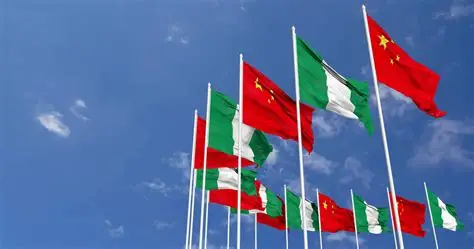
Trade between Nigeria and China rose by 35 per cent to $17.4bn in the first half of 2026, with Nigeria’s exports to the Asian country increasing by 81 per cent to $2.25bn, the Director of the China Cultural Centre in Nigeria, Yang Jianxing, has said.
Yang disclosed this on Thursday at the launch of the Mandarin Service of the Voice of Nigeria and the celebration of the China-Nigeria Bridge Chinese Radio Programme in Abuja.
He said the figures reflected growing economic cooperation between both countries, adding that China’s zero-tariff policy for 53 African countries, including Nigeria, had created fresh opportunities for increased exports to the Chinese market.
According to him, China-Africa trade exceeded `$207.4bn in the first half of 2026, setting a record for the period.
He added that China’s imports from Africa reached $28.5bn between May and June, representing a 23.5 per cent increase year-on-year.
Yang said imports of African aquatic products, textile raw materials and specialty fruits recorded double-digit growth, while the zero-tariff policy had contributed to an estimated six per cent increase in overall African exports to China.
“Nigeria’s performance has been particularly impressive. In the first half of this year, bilateral trade between China and Nigeria reached 17.4 billion US dollars, up 35 percent year on year.
“China’s imports from Nigeria amounted to 2.25 billion US dollars, representing a remarkable increase of 81 percent,” he said.
The China Cultural Centre director also disclosed that imports from Nigeria recorded year-on-year growth of more than 40 per cent in May and June.
He said the developments presented opportunities for Nigeria and other African countries to expand their exports, particularly agricultural produce, raw materials and other specialised products.
Yang also highlighted China’s proposed principles for cooperation with Africa in the mining sector, including respect for African countries’ sovereignty over their natural resources, mutual benefit, high-quality development and a fair and open investment environment.
On security, he said Chinese President Xi Jinping had outlined four principles for addressing regional conflicts in Africa.
They include an African-led approach, fairness and justice, ending hostilities and pursuing peace, as well as addressing both the symptoms and root causes of conflicts.
Yang said the principles demonstrated China’s commitment to respecting African countries’ right to determine their development priorities.

Speaking on the launch, Yang said the China-Nigeria Bridge radio programme, launched on September 2, had broadcast 10 episodes, attracting appreciation from listeners across Africa.
The programme, jointly initiated by the Chinese Embassy, Xinhua News Agency Africa Regional Bureau and VON, with the China Cultural Centre as a supporting partner, combines Chinese language lessons with reports on China-Africa cooperation.
Yang described it as a platform for promoting cultural understanding and strengthening people-to-people relations between China and African countries.
Speaking at the event, the Director-General of the Voice of Nigeria, Jibrin Baba Ndace, represented by Danladi Abdulkarim, said the Mandarin Service was the organisation’s ninth broadcasting language.
He said the addition would strengthen Nigeria’s international communication and enable the country to project its culture, economic opportunities and national interests to Mandarin-speaking audiences.
“Today, we take a bold step to change that. From today, Voice of Nigeria will broadcast in English, French, Arabic, Hausa, Igbo, Yoruba, Fulfulde, Kiswahili, and now, Mandarin,” he said.
Ndace disclosed that 26 Nigerian journalists, including five from VON, received training in Beijing in April 2026 at the National Radio and Television Administration Research Institute.
He added that VON signed a Memorandum of Understanding with Xinhua News Agency on April 24, 2026, covering content sharing and news exchange.
According to him, another strategic agreement signed with the Chinese Embassy on May 18, 2026, provides for Chinese language training, broadcasting capacity development, content production and exchange, and collaboration against misinformation.
He said the Mandarin Service would promote Nigeria’s image, deepen mutual understanding, support the comprehensive strategic partnership between both countries and strengthen efforts to combat fake news.
