

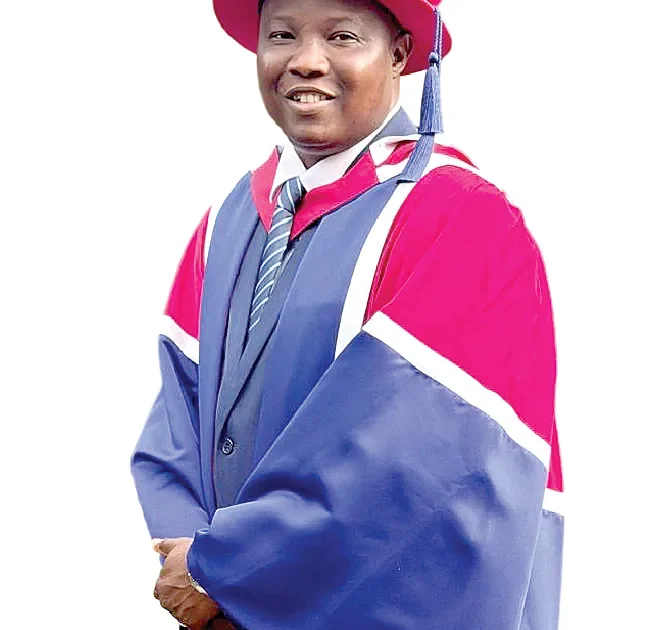
Dr Ayodeji Afolami tells AYOOLA OLASUPO how a three-day kidnapping ordeal on his farm in Ogun State in 2021 shattered his sense of security, forced him to abandon his academic pursuit in Nigeria and relocate to the UK, where he rebuilt his life and earned a PhD in Sustainable Agriculture and Crop Production
How did you begin your educational journey?
I’m an agricultural researcher specialising in crop production, agronomy and sustainable agriculture. I studied Crop Production at Olabisi Onabanjo University, Ago-Iwoye, Ogun State, and later obtained a master’s degree in Agronomy from the University of Ibadan, Oyo State.
I started my PhD in Crop Production at the Federal University of Agriculture, Abeokuta, in 2019 and had completed my first year before I was abducted in 2021. Following the trauma, I relocated to the UK and continued my academic journey at the Royal Agricultural University, where I completed a PhD in Sustainable Agriculture and Crop Production, focusing on soybean production under northern temperate conditions.
I currently work in agricultural research, focusing on sustainable agriculture, crop production and environmental change.
What were you doing when the kidnappers struck?
I was involved in agricultural activities and trying to build something for myself. The incident happened on August 4, 2021, while I was at my farm in Ibara Orile, Abeokuta, Ogun State. Five armed men dressed in camouflage emerged from the bush and abducted me. They took some of my belongings and forced me into the forest. We walked for about eight hours before arriving at the place where they held me captive for three agonising days.
It was completely unexpected. One moment, I was going about my normal activities; the next, I was being taken into the forest by armed men.
What went through your mind when you realised you had been kidnapped?
Initially, I was in shock. It happened so suddenly that it was difficult to process what was happening. When I realised that I had been taken deep into the forest and that the people holding me were armed, my thinking changed completely.
At that point, I was no longer thinking about my PhD, my business or anything else. My only concern was survival. I thought about my wife and family and wondered whether I would ever see them again. It was a very frightening experience.
What was your experience like in captivity?
I was held captive for three days in very difficult conditions. I was subjected to physical assault and constant psychological pressure. The kidnappers demanded a ransom of N30m. What made the experience particularly difficult was the uncertainty. I did not know what would happen to me or whether I would survive. I was isolated in the forest with armed men, far away from my family and everything I knew. There was nothing I could do to control the situation. I could only hope and pray that my family and friends would be able to secure my release.
What was the most traumatic moment?
It was the uncertainty and feeling of helplessness. I was in a forest with armed men, being beaten with machetes and the butts of their guns. I did not know what they were capable of doing or whether I would see my family again.
The physical assault was extremely difficult, but the feeling of being completely powerless was probably the hardest part. There were moments when I wondered whether I would make it out alive.
Did you ever fear that you might not survive the ordeal?
Yes, I did. There were moments when I genuinely thought I might not survive. When you are being held by armed men in a forest and have no control over your situation, the possibility of death becomes very real.
I tried to remain calm and not allow the fear to overwhelm me completely, but there were moments when I thought about my family and wondered whether I would ever see them again.
How did you eventually regain your freedom?
My family and friends worked very hard to secure my release. They negotiated with the kidnappers while trying to find a way to bring me home safely. On the third night, the ransom was eventually delivered. The kidnappers counted and shared the money, and I was subsequently released.
After my release, I was taken to hospital because I sustained injuries and needed urgent medical attention. Being free was a huge relief, but my physical release did not mean that the psychological effects of the experience ended immediately.
What was it like reuniting with your family?
It was a mixture of relief, gratitude and emotions that are difficult to explain. Everyone was happy that I was released, but I still had a lot to process. Looking back, I am still grateful to be alive and to see my family again. After my release, I was not the same person who was abducted. I struggled to deal with the reality of what happened to me.
How did the kidnapping affect your mental and emotional well-being?
It affected me deeply and changed how I went about my daily life. I became fearful and found it difficult to do many of the things I had previously done without hesitation.
Activities such as going to the farm, moving around freely and continuing with my work and academic activities became much more difficult because I was constantly conscious of my safety. After I was discharged from hospital, one of my bosses noticed how much I was struggling and helped arrange therapy sessions for me in Lagos.

Did you attend the therapy sessions?
I had several sessions with a therapist who helped me begin to process the trauma and deal with what happened. I realised that physically surviving the kidnapping was only one part of the experience. I also had to deal with how it had affected my confidence, sense of security and ability to carry on with everyday life.
Even with the therapy, the fear remained with me for quite some time. It eventually became one of the reasons I could no longer see myself continuing my normal life in Nigeria.
What other challenges did you face as you tried to rebuild your life after the incident?
Returning to normal life was extremely difficult. Before the incident, I was active in agriculture, pursuing my PhD and building my future in Nigeria. After the kidnapping, the trauma and constant fear made it difficult to continue living and working there as I had before.
I tried to cope, but eventually realised that I could no longer function normally in that environment. The fear and trauma largely influenced my decision to relocate to the UK and rebuild my life.
It was a difficult decision because I had already completed the first year of my PhD in Nigeria and invested a lot in my agricultural plans. But at that point, my mental well-being had to come first.
How traumatic was the incident for your family?
Extremely, especially for my wife and mother. Imagine receiving a call that someone close to you has been kidnapped and that armed men are demanding millions of naira for his release. You then have to negotiate without knowing whether that person will come home alive.
My family went through that uncertainty while I was in captivity. They had to deal with the fear, financial pressure and emotional stress of trying to secure my release. Even after I returned home, they were still dealing with the consequences of what had happened to me. The experience affected the whole family, not just me.
What motivated you to continue pursuing your academic ambitions despite the trauma?
I think it was partly because I had already invested so much in my academic journey.
The incident disrupted my plans, but it did not take away my passion for agriculture or my desire to develop myself. When I moved to the UK, continuing my education became part of rebuilding my life.
It was not always easy, especially while dealing with the trauma, adapting to a new country and managing the demands of doctoral research. But I remained determined to keep moving forward.
How would you describe your journey to earning a PhD from the Royal Agricultural University in the UK?
My PhD journey has been quite unusual. I chose to continue with soybean research because I had already worked on it during my master’s degree and developed a strong interest in the crop. After coming to the UK, I also noticed that soybean was still considered a relatively minor crop there, despite the country’s significant dependence on imported soybeans.
I saw this as an opportunity to investigate whether soybean could be grown more sustainably under UK conditions and help reduce some of that dependence on imports. My research examined soybean varieties, seed rates, nitrogen management and biological nitrogen fixation.
It was challenging to adapt to a new country while dealing with the effects of what I had experienced, but I remained focused and eventually passed my viva and completed my PhD.
Looking back, the journey was not just about earning a qualification. It was also about rebuilding my life, finding a new direction and turning my experience and interest in soybean research into something that could have practical value for UK agriculture.
What does earning a PhD mean to you, considering what you went through?
Completing my PhD means much more to me than just getting another certificate. It represents survival, rebuilding and perseverance. In 2021, I wondered whether I would survive and see my family again. Years later, I completed my PhD and continued building a career in agriculture. That is what makes the achievement so personal to me.
What is the biggest lesson you took away from your kidnapping experience?
It is that life can change very quickly, so we should never take life, family or opportunities for granted. I also learnt that surviving something terrible does not mean the experience ends when you are physically released. There is also a psychological aspect to recovery, and that takes time.
The kidnapping changed the direction of my life. I lost my sense of security, my plans in Nigeria were disrupted, and I eventually had to relocate. But I also learnt that you can rebuild.
If there is one thing I would take from the experience, it is that what happens to you can change your direction, but it does not have to determine where you eventually end up. I am grateful to God for preserving my life, to my family and everyone who stood by me, and for the opportunity to rebuild my life and continue contributing to agriculture.
