

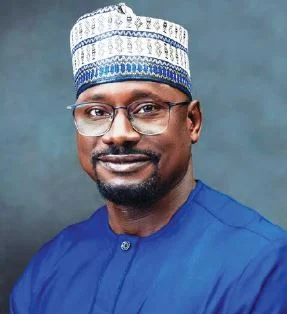

The Managing Director, Rural Electrification Agency, Dr Abba Aliyu, speaks with select journalists on the agency’s completion of a nationwide energy mapping exercise that identified more than 750,000 communities, as well as the central role of electricity in driving economic growth and supporting emerging technologies. OKECHUKWU NNODIM was there
How important is reliable electricity to Nigeria’s development, particularly as Artificial Intelligence continues to reshape the global economy?
Power stimulates economic development and growth, enhances agriculture, improves the quality of health services, and enhances the quality of education, especially now that we are in the era of artificial intelligence. The future is the electrification of everything, which means that whatever you do will depend on electricity, with AI at its centre.
If you are going to receive medical treatment, it will be powered or supported by AI. Precision agriculture is already taking place, and AI is enabling that. Manufacturing and many other sectors are benefiting as well. However, AI cannot function without electricity. Electricity is the backbone that powers AI, and I will give you a typical example.
Many of us have used ChatGPT, which is a well-known AI platform, but what many people do not realise is that behind every response generated by AI is a packet of electricity that powers the process. We are already seeing this play out. The future is one in which electricity will determine almost everything we do, and Nigeria is not being left behind. Under the administration of Mr. President, we are working to ensure that every Nigerian has access to electricity.
This is the wisdom of the current administration: providing grants for production rather than consumption. We catalyse the private sector to deploy infrastructure by providing capital grants to de-risk deployment costs, which, by extension, reduces electricity tariffs.
How is the agency using productive energy solutions to support agricultural clusters across Nigeria?
One of the key priorities during our planning was identifying critical government institutions across three sectors: agriculture, health, and education. In agriculture, we identified production and processing clusters because we recognise that one of the biggest challenges facing Nigeria’s agricultural sector is post-harvest losses. These losses can only be significantly reduced through productive energy use by providing reliable electricity.
Last year, we were in Plateau State, in Quan’pan Local Government Area, specifically in Namu community. It is one of the country’s most agriculturally fertile communities and a major rice-producing area. Within Namu is a cluster of rice processors that relied entirely on diesel-powered processing. Because of the high cost of diesel, their rice was not competitive in the market. When all processing costs were added, the cost of a bag of rice exceeded the prevailing market price.
Under one of our programmes, Africa Mini-Grid, we deployed a 50-kilowatt system as a pilot project. That installation enabled one of the largest rice processing plants to switch from diesel to clean energy. Today, more than 200 bags of rice processed under the mini-grid are competitive in the market. We are now scaling up from 50 kilowatts to nearly five megawatts. That is about a 100-fold increase. The five-megawatt system will power the remaining 37 factories and the surrounding communities.
What framework guides the implementation of REA projects across the country?
For the first time, we have completed the mapping of the entire country, giving us reliable data on where we should intervene, how we should intervene, and which technology is most suitable for each location. Nigeria has had about 16 presidents, and each came with the best intentions to improve electricity access. However, what was missing was a structured national plan that identified the millions of Nigerians without electricity and outlined the most effective way to electrify them.
Under my leadership, we identified more than 750,000 communities across the country, from communities in Lagos State with over 2.5 million households to settlements with just two or three houses. We have comprehensive data. We know the number of households in each community, whether they are electrified or underserved, and the least-cost technology required for electrification. We know whether they need standalone solar systems, isolated mini-grids, interconnected mini-grids, or grid extension. That plan has made implementation much easier.
How has the revised mini-grid regulation enabled the REA to undertake larger electricity projects?
That is one of the major achievements recorded under this administration. Under the previous mini-grid regulation, the maximum capacity we could deploy was one megawatt. We consistently engaged the regulator, explaining that Nigeria needed to be far more ambitious. Several African countries with fewer electricity challenges already permit private-sector mini-grids of up to 50 megawatts.
We made our submissions, and the regulation was subsequently reviewed. Today, we can deploy isolated mini-grids of up to five megawatts and interconnected mini-grids of up to 10 megawatts.
How is the agency working with state governments under the Electricity Act?
The Rural Electrification Agency has taken an innovative approach. Last year, we introduced what we call the State-by-State Roundtable, where we bring together state executive management teams, led by their governors, alongside the private sector and the REA in Abuja.
It is more than just a meeting. The State-by-State Roundtable provides an opportunity to align the activities of state governments with those of the REA. Last year, we held engagements with 27 states, and we are continuing with Anambra, Taraba, and the remaining states, including the Federal Capital Territory.
How does your deployment model ensure sustainability while promoting financial inclusion in rural communities?
Every mini-grid we deploy comes with 100 per cent metering and SCADA systems that track every unit of electricity generated, from the solar farm to households and businesses. Once electricity reaches rural communities, financial inclusion follows, and more businesses begin to emerge.
In one community in Abuja, for example, there was no business centre or POS outlet before the deployment of a mini-grid. However, with guaranteed 24-hour electricity, new businesses sprang up, and residents now use their phones to purchase electricity credit for their meters. We currently record a collection rate of up to 97 per cent. Our projects are catalysing the growth of small and medium-sized enterprises.
We have also moved away from the traditional model in which government is solely responsible for deploying public infrastructure or simply awarding contracts. Instead, we developed a model that embeds sustainability in every programme.
By partnering with the private sector, we created an ecosystem of Renewable Energy Service Companies, which are trained to deploy renewable energy infrastructure. In addition, we introduced Result-Based Financing (RBF). Rather than simply awarding contracts, we require RESCOs to secure debt or equity financing, use our data, select communities, and deploy the infrastructure.
What is the REA doing to promote local solar manufcturing in Nigeria?
Globally, there are only seven major manufacturers of solar photovoltaic panels, and together they control about 75 per cent of global production capacity. All seven are Chinese companies. We understand that we cannot compete directly with China. Even developed countries struggle to do so.
Our strategy is straightforward. We want Nigeria to capture a share of that market. We signed a joint development agreement to establish 3.7 gigawatts of manufacturing capacity across the country. Four facilities are located in the Lagos/Sagamu axis, two in Kano, two in Akwa Ibom, one in Bayelsa, while two facilities in Lagos have already commenced operations.
Secondly, we are supporting local demand for products manufactured in Nigeria. For example, Levin Energies, a photovoltaic manufacturing company in Ikotun, Lagos, already has a production capacity of 150 megawatts. The company not only supplies the Nigerian market but also exports to Accra, Ghana. In Abuja alone, there is already more than 400 megawatts of manufacturing capacity. Nigeria is well positioned to become a renewable energy manufacturing hub in the near future.
