

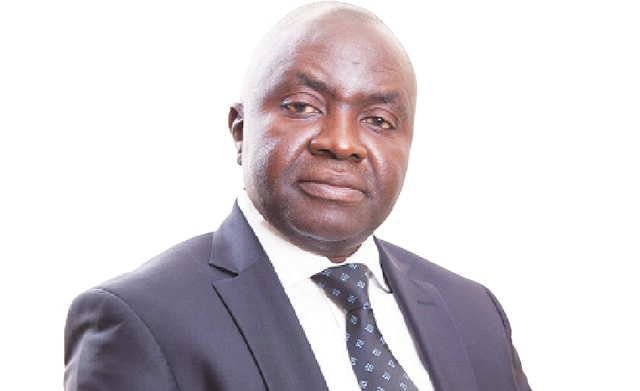

The Centre for the Promotion of Private Enterprise has called for targeted tariff adjustments to support domestic refining, improve transportation and expand access to renewable energy across the country.
CPPE Chief Executive Officer, Muda Yusuf, made the call in a statement on Sunday in Lagos while reacting to the 2026 Fiscal Policy Measures and Tariff Amendments.
The News Agency of Nigeria reports that the framework signals a shift towards domestic production, deeper industrialisation and reduced dependence on imports, with measures including revisions to import adjustment taxes across 192 tariff lines, selective import restrictions, reduced duties on inputs, excise changes and the introduction of green taxes on imported vehicles.
Yusuf said the policy presents both opportunities and risks depending on sector positioning, noting that higher tariffs on imported finished goods such as food, plastics, textiles and metals, with combined levies ranging from 20 to 70 per cent, would boost local competitiveness.
“This measure raises import costs and strengthens domestic producers’ competitiveness. Given reliance on imports, the policy could significantly reshape market dynamics,” he said.
He noted that sectors such as agro-processing, light manufacturing, packaging and metals could benefit through improved capacity utilisation, but warned that import-dependent businesses may face significant adjustment challenges.
According to him, increased tariffs would raise costs for traders, compress profit margins and reduce sales volumes.
Yusuf, however, expressed concern over what he described as a weak fiscal stance on petroleum product imports, stressing that stronger protection is needed for domestic refining.
“Protective tariffs for locally refined products are vital for investment security, energy stability, foreign exchange conservation, and macroeconomic strength,” he said, adding that the absence of such measures leaves local refineries at a disadvantage.
He also called for a review of the 40 per cent tariff on used vehicles below 2000cc engine capacity, noting that additional charges push the effective rate above 50 per cent.
Yusuf warned that the high tariff regime limits access to vehicles and could constrain job creation in sectors such as e-hailing and car hire services, recommending a reduction to a maximum of 25 per cent, inclusive of all charges.
In the automotive sector, he urged more supportive policies, proposing tariffs not exceeding five per cent for semi-knocked-down parts and zero duty for completely knocked-down components to encourage local assembly.
He further advocated lower duties on mass transit buses to five per cent alongside a full VAT waiver, saying this would stimulate investment in public transport and ease commuting costs.
“It will also stimulate public mobility investment and ease high transport costs on citizens,” he said.
Yusuf also pushed for reduced tariffs on renewable energy equipment, particularly batteries and inverters, recommending a five per cent import duty and full VAT waiver to improve affordability for households and small businesses.
He said the current costs of such equipment remain prohibitive, adding that easing tariffs would provide alternatives to unreliable grid power and boost productivity.
“The 2026 fiscal measures mark a bold step towards restructuring, industrialisation and resilience. For investors, there is strong potential in manufacturing and green industries, but risks remain for import-dependent and consumer-facing sectors,” Yusuf added.
