

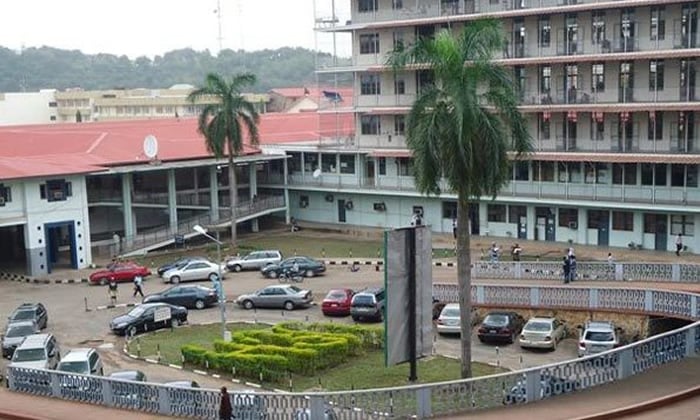
Resident doctors at the University College Hospital, Ibadan, Oyo State, have threatened to embark on an indefinite strike if the hospital’s management fails to provide a lasting solution to the lingering power crisis at the institution.
They said the electricity problem had reached a tipping point, affecting the quality of care for patients and preventing doctors in training from getting the best out of their residency programme.
The doctors warned that if nothing changed within three weeks, they would commence an indefinite industrial action to press home their demands.
The resident doctors had earlier embarked on a one-week warning strike from March 2 to 6, 2026, demanding improved and longer hours of electricity supply within the hospital premises.
However, speaking exclusively with PUNCH Healthwise on Monday, President of the Association of Resident Doctors, UCH, Dr Uthman Adedeji, said the doctors had already communicated their plans to embark on an indefinite strike if the situation persists.

According to him, a teaching hospital in 2026 is being forced to operate like a facility from a bygone era.
Adedeji said, “We embarked on a five-day warning strike. It started on Monday last week and ended on Friday. When we returned to work on Saturday, the situation had not changed. That was only a warning strike because we are trying to follow due process and resolve the issue responsibly.
“Unfortunately, since our warning strike ended, we have not been called to any meaningful meeting for discussion or resolution.
“However, we have issued another ultimatum for 21 days, which started on March 7, 2026. If nothing changes after that, we may embark on an indefinite strike. We have communicated this clearly.”
PUNCH Healthwise reports that in 2024, following the upgrade and movement of institutions and hospitals to Band A feeders, the removal of subsidies in areas under Band A feeders, and the consequent rise in electricity tariffs, bills for many health and academic institutions tripled, making it difficult for them to meet obligations.
Some tertiary hospitals paid as much as N300m per month to cover electricity bills, up from less than N100m before the tariff review.
PUNCH Healthwise reports that the Ibadan Electricity Distribution Company disconnected UCH from the national grid over an outstanding debt of N495 million on October 26, 2024.
The spokesperson of IBEDC, Busolami Tunwase, explained that the disconnection became unavoidable following the failure of UCH to pay the debt.
Also speaking about the issue in November 2024, the Chairman of the Joint Health Sector Unions at the UCH, Oladayo Olabampe, disclosed that the hospital was spending about N80 million monthly on electricity bills despite its worsening financial situation.
The power was, however, restored in UCH on February 12, 2025, after Minister for Power, Adebayo Adelabu, intervened and helped resolve the issue between the hospital and IBEDC.
PUNCH Healthwise investigation reveals how the 109-day power outage led to avoidable deaths of patients as doctors used torchlight and flashlights on their mobile phones to provide care.
Continuing, the UCH ARD president told our correspondent that during the over 100 days of power outage, the doctors never went on strike, but showed solidarity with the management.
“You would be surprised that not a single union raised an eyebrow. We did not go on strike. We did not agitate. We did not shout about it. All we did was understand the situation — that it was a crisis — and that we needed to work with management and assist them to see how we could advocate and get out of that situation.
“So we also did our bit as responsible stakeholders to see what exactly the problem was in the hospital and how we could help.
“But we did not go on strike. For 102 days, which is unprecedented. It had never happened before that electricity would go off that way, and we would keep quiet. But we were understanding. Unfortunately, our understanding was taken for weakness,” he said.
According to him, when the electricity was eventually reconnected, we started having staggered electricity within the hospital.
“I need to mention something: it is not that we are fighting because IBEDC is not supplying electricity. Electricity is coming to the feeders of UCH. It is the UCH management that is down-regulating and staggering how much electricity gets to the hospital premises,” Adedeji said.
He said the management approached the unions and explained that they needed to pay the debt alongside the current electricity bills and requested the unions to work on how electricity could be rationed so the bill would not overwhelm the hospital.
“But unfortunately, that decision was taken unilaterally. One morning, we woke up and discovered that electricity had been rationed. They started giving the hospital six hours of electricity.
“They did not discuss with any union before starting the staggered electricity supply. We wrote letters and requested meetings so that we could sit down and discuss the rationing, but there was no response. Later, they changed it to eight hours per day,” Adedeji said.
Our colleague collapsed in the theatre due to the heat
The UCH ARD president said the blackout due to the rationing of electricity in hospital premises had taken a toll on both patients and doctors.
He noted that one of the doctors collapsed in the theatre due to heat and exhaustion.
“I should also mention that one of my colleagues collapsed in the theatre two weeks ago and had seizures due to heat and exhaustion. While they were trying to save her life, another patient arrived in critical condition requiring emergency surgery.
“Despite the horrible conditions and lack of electricity, they still attempted the surgery because they could not allow the patient to die,” he said.
We’re rejecting patients
Adedeji lamented that doctors are now rejecting patients in UCH because of the lack of water due to electricity rationing.
He said, “The environment is no longer safe. There is no water. I’m just coming back from my department now after seeing patients, and there is no water to wash my hands in the hospital.
“This is a hospital that was among the first teaching hospitals in the world many years ago. Yet we cannot even maintain minimum standards compared to other hospitals around the world. So we felt this was not right. It was not safe for patients or for our members.
“We have had cases of emergencies — for example, a pregnant woman lying in a pool of blood that we were supposed to save. But because there was no electricity in the hospital, we could not save her. We had to transfer her to another facility because we did not want her death in our hands. These are the issues we face every day. We are the ones seeing the patients. We are the ones exposed to these hazards.”
According to him, we feel that if things cannot get better immediately, they should at least not get worse.
“We are not fighting for money. We are not asking anyone to give us money. We are not fighting for food.
“We are simply saying: make the lives of Nigerians safe in our hands. Make it possible for poor Nigerians who cannot seek treatment abroad to at least receive minimum acceptable care here. That is all we are asking for,” the UCH ARD president said.
PUNCH Healthwise reports that following outcry from the management of teaching hospitals and universities grappling with high electricity costs after the move and upgrades to Band A, the Federal Government approved a 50 per cent subsidy in August 2024.
While there appears to be silence on the implementation of the electricity subsidy, the government announced the solarisation of hospitals and tertiary institutions projects to ensure stable electricity.
Over N300bn was earmarked in the 2025 Appropriation Act for the special energy intervention, but PUNCH Healthwise findings show that no funds have been released, resulting in zero implementation progress on the project announced last year.
The UCH is one of the listed beneficiaries of the solar mini-grids.
The Public Relations Officer at the university, Funmi Adetuyibi, confirmed to PUNCH Healthwise that, “We are on the list, but the mini grid is not yet on the ground.”
Copyright PUNCH
All rights reserved. This material, and other digital content on this website, may not be reproduced, published, broadcast, rewritten or redistributed in whole or in part without prior express written permission from PUNCH.
