

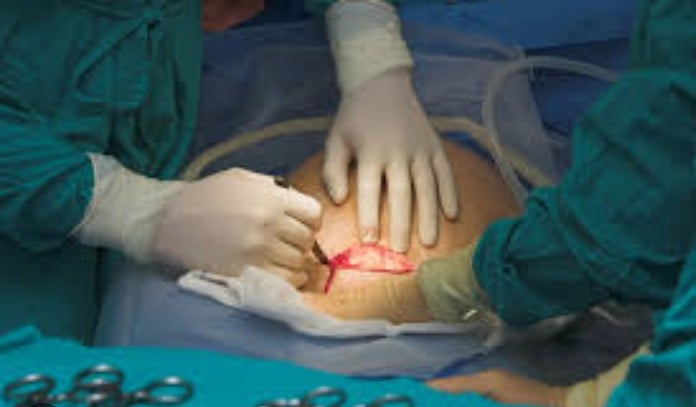
Maternal health experts have warned that infections, diabetes, obesity, poor surgical technique, and sustained coughing can cause wound breakdown after caesarean section, urging women to keep incision sites clean, avoid strenuous activities, and report warning signs immediately.
They stated that wound disruption after surgery is not common and typically occurs in patients with underlying conditions such as uncontrolled diabetes, anaemia, malnutrition, or existing infections before surgery.
The seasoned gynaecologists noted that proper wound care, adequate rest, good nutrition, and adherence to prescribed medications are essential to prevent complications and ensure faster recovery from caesarean section.
Recently, a man on X, formerly Twitter, posted a picture of his wife’s open scar a few days after she underwent a C-section. The post generated several reactions, with many attributing the wound breakdown to the negligence of the medical professionals at the hospital.
C-section is a surgical procedure used to deliver a baby through incisions in the mother’s abdomen and uterus, rather than through the birth canal.
PUNCH Healthwise earlier reported that maternal health experts advised new mothers who delivered their babies through caesarean section to prioritise rest, get adequate sleep, and avoid strenuous activities to aid faster recovery.
The physicians cautioned women against treating caesarean section recovery as a test of strength, warning that rushing into household chores, lifting heavy buckets or neglecting prescribed medications could delay healing and lead to serious complications.
Commenting on the matter, a Professor of Obstetrics and Gynaecology at the University of Uyo, Akwa Ibom State, Aniekan Abasiattai, stated that the integrity of wounds depends on several factors, adding that infections, either pre-existing or surgical site infections, are major causes of wound breakdown.

He stated, “Infections, either an already existing infection, operating on an already infected environment, or surgical site infection after surgery, can cause wound disruption. When that happens, because of the existing infection, you may have some disruption of the wound.”
The gynaecologist noted that increased abdominal pressure from persistent coughing or constipation can disrupt wounds, adding that chronic cough and straining during bowel movements increase pressure that may cause wound breakdown.
Abasiattai stated that medical conditions such as diabetes mellitus, especially when poorly controlled, prevent wounds from healing well, adding that diabetes is associated with reduced immunity and poor natural wound healing.
He listed other factors causing poor wound healing to include anaemia, malnutrition, obesity, malignant cancers, and HIV infection, noting that these conditions reduce immunity and prevent proper wound healing.
The maternal health expert stated, “Anything that can disrupt the natural healing processes
will not lead to a sound wound. Factors like anaemia, malnutrition, diabetes, obesity, where you have a lot of fat and space for collection of fluid or blood after surgery, can predispose you to infection.”
Regarding surgical factors, Abasiattai emphasised the importance of surgical technique in wound healing, noting that wound edges must be properly opposed and that appropriate suture materials with better tensile strength should be used.
He stated that for uncomplicated caesarean sections, the surface wound typically heals by the fifth day, adding that sutures are usually removed on the fifth day or absorbable sutures are buried beneath the skin.
The professor urged women who notice wound disruption after uncomplicated caesarean sections to immediately see their doctors for thorough evaluation and proper treatment.
He stated, “Once you notice wound disruption, you should immediately go and see your doctor, who would evaluate you thoroughly, determine the cause of the wound disruption and depending on the cause, would now advise on the most proper approach for treatment.”
Abasiattai noted that treatment may include wound dressing, antibiotics after microbiological studies, or secondary closure of the wound, depending on the extent of disruption.
In an earlier interview, a Professor of Obstetrics and Gynaecology, Abubakar Panti, stated that women’s recovery from caesarean section depends on patient factors, physician factors, and the type of caesarean section performed.

He explained that patient factors include immune system response to trauma, while physician factors include expertise and skills in preventing infection and complications, adding that elective caesarean sections have better recovery outcomes than emergency procedures.
Panti urged women to prioritise rest and healing after a caesarean section, noting that the body needs enough rest and sleep after major surgery.
He stated, “Rest as much as possible, because the body has just gone through major surgery. She needs enough rest, enough sleep. She has to avoid over-exertion. She doesn’t need to stress herself. She doesn’t need to lift anything heavier than the baby, at least for the first four to six weeks.”
The gynaecologist called on women to eat well for recovery, stay hydrated, and consume high-protein diets including lean meat, eggs, legumes, and milk to promote tissue repair.
He urged women to add fibre through fruits, vegetables, and whole grains to ease bowel movement and prevent constipation, noting that straining can affect caesarean section wounds.
Panti stated that women should take iron-rich foods, vitamins, and zinc, adding that gentle movement through early walking improves circulation and prevents blood clots.
He warned against abdominal exercises until cleared by healthcare providers, usually around six to eight weeks, to allow wounds to heal properly.
The gynaecologist urged women to manage pain by taking prescribed medications regularly, noting that some women wait until pain becomes severe before taking drugs.
He stated, “You don’t wait for pain to become severe before you take your drugs. Sometimes you take drugs to prevent pain, and you take them at the times that the doctor asks you to take them. Most people abuse paracetamol and take it only when they feel pain, and they will tell you it doesn’t work.”
Panti called on women to keep incision sites clean and dry, wear loose clothing and cotton underwear to avoid irritation, and watch for signs of infection, including redness, swelling, pus discharge, fever, or foul odour.
He urged women to breastfeed comfortably using side-lying positions to avoid pressure on the abdomen and to be patient as breast milk may not flow immediately after caesarean section.
The gynaecologist stated that emotional recovery is important, noting that it is normal to feel overwhelmed, tired, and emotional after surgery, adding that some women experience sadness, anxiety, or guilt about not delivering naturally.
He called on women to attend all postnatal visits, usually at two weeks and six weeks after surgery, to discuss pain, bleeding, breastfeeding, mood changes, and baby immunisation.
Panti stated that typical recovery shows pain and fatigue in the first one to two weeks, subsiding swelling between three to four weeks, and resumption of normal activities, including driving and sexual intercourse, by six to eight weeks after doctor’s approval.
He warned women against lifting heavy objects heavier than the baby, driving too soon before four to six weeks, straining or doing household chores early, and having sexual intercourse before bleeding stops completely and healing is confirmed by doctors.
The expert urged women not to scratch or apply unprescribed products to wounds and to report warning signs of infection immediately, including fever, foul-smelling discharge, heavy bleeding with clots, severe abdominal pain, or swelling around the incision.
