

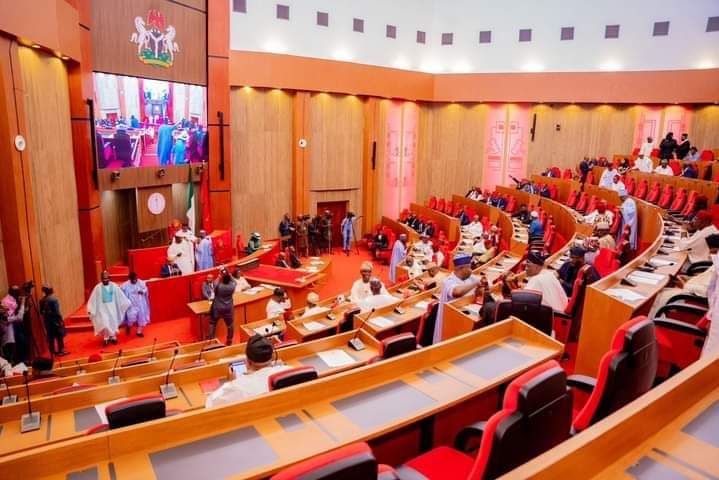
Stakeholders and human rights activists have thrown their weight behind the National Assembly, urging lawmakers to ensure the swift passage of the Reserved Seats for Women Bill, which has reached an advanced stage of legislative consideration.
The call was made on Thursday in Abuja during a Capacity Building for Women’s Rights Organisations on Engaging Male Allies, an advocacy forum organised by the African Centre for Leadership, Strategy and Development (Centre LSD), with support from the Ford Foundation and the Male Feminists Network.
The proposed legislation seeks to address Nigeria’s persistent gender imbalance in political representation by creating 37 additional seats in the Senate, 37 in the House of Representatives, and three reserved seats per state in all 36 state Houses of Assembly, exclusively for women candidates.
Nigeria currently ranks among the lowest globally in women’s political representation.
Women occupy just 3.7 per cent of seats in the Senate and 3.9 per cent in the House of Representatives, despite constituting nearly half of the country’s population. Repeated attempts at electoral reforms and affirmative action have so far failed to reverse the trend.
Addressing journalists in Abuja, popular human rights advocate, Dr Otive Igbuzor, said the reserved seats proposal aligns with global best practices and remains one of the most effective pathways to improving women’s participation in governance.
He said, “We support the Special Seats for Women Bill in the National Assembly. If you look across the world, particularly in Africa, the countries that have increased women’s participation did it through constitutional provision.
“But Nigeria is one of the worst countries in the world in terms of women’s representation. The 10th National Assembly will write its name in gold if they pass the reserved seats bill, and we expect it will do just that.”
Igbuzor noted that beyond political exclusion, Nigeria continues to grapple with entrenched structural inequalities that fuel gender-based violence and limit women’s access to power and decision-making.
Earlier in his remarks, he warned that patriarchy remains deeply rooted in Nigeria’s social, cultural, religious, and political institutions, stressing that sustainable gender justice cannot be achieved without the active involvement of men.
He said, “Patriarchy is deeply embedded in our social, cultural, religious, and political institutions, and while women have led courageous struggles for justice over decades, one critical gap has remained largely unaddressed: how men are engaged—not as bystanders, but as accountable actors—in dismantling patriarchy.
“It cannot be dismantled without men changing their beliefs, behaviours, and use of power. One of our most important outcomes—though not always captured in numbers—is a noticeable reduction in hostility toward feminism, particularly among men who previously saw it as anti-male.
“This cultural shift is critical, because you cannot end gender-based violence without changing the beliefs that sustain it. Men are using their influence to dismantle the very systems that harm women and girls.”
Stakeholders at the forum, however, expressed optimism that the 10th National Assembly would prioritise the bill as part of broader efforts to deepen inclusivity, strengthen democracy, and align Nigeria with regional and international commitments on gender equality.
