

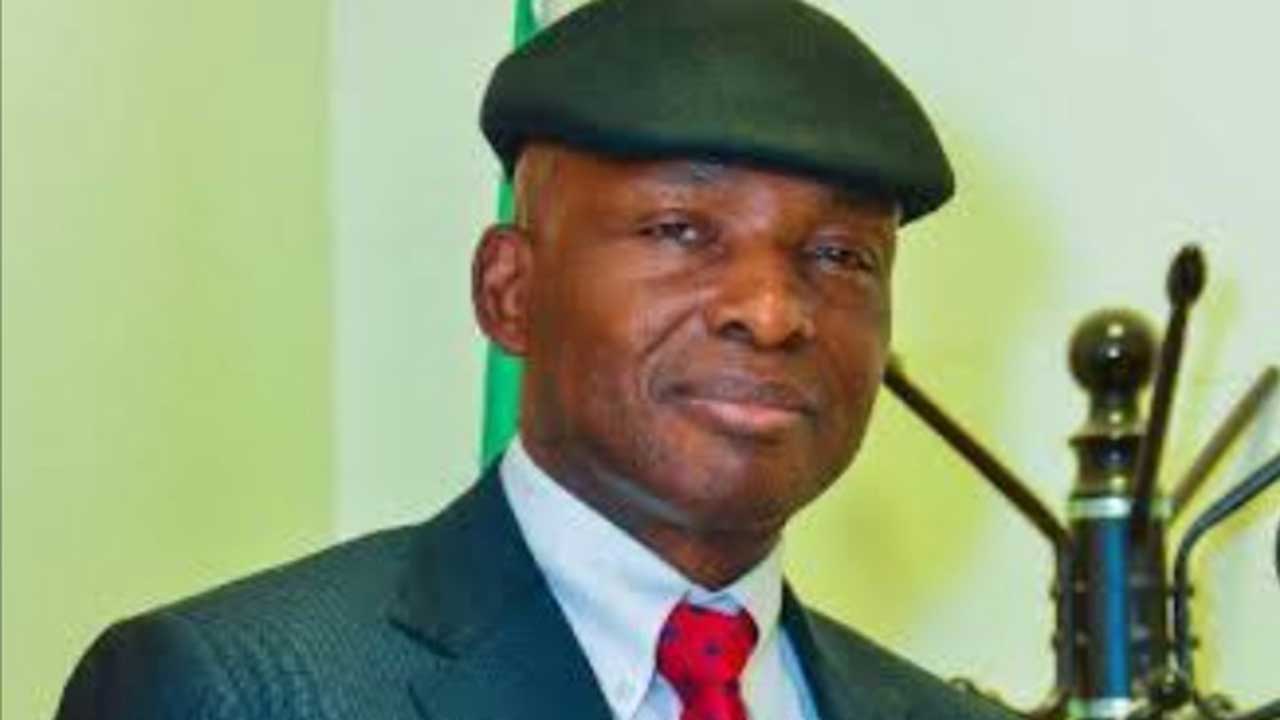
Gershom Bassey, who represented Cross River South Senatorial District in the 8th and 9th National Assembly, spoke with TINA AGOSI TODO on how defections from the Peoples Democratic Party (PDP) have exposed deep-seated structural and ideological weaknesses in the main opposition party. He also blamed impunity and the breach of the zoning principle for the PDP’s loss of power in Cross River State.
It has become fashionable for politicians to defect from one political party to another. What do you make of the persistent rumours about your imminent defection from the PDP to either the APC or the African Democratic Congress (ADC)?
I have no intention of joining the APC, although in politics one rarely says never. I have not defected to the ADC. I remain a member of the PDP, but I am a sympathiser of the coalition movement, of which the ADC is only one component. That said, the coalition must embark on internal cleansing to realign its priorities. The idea of a coalition is not bad in itself, but for it to succeed, square pegs must be placed in square holes.
Are you not worried that these defections raise concerns that Nigeria may be drifting towards a one-party system?
I am concerned, but I am not alarmed. History has shown that political dominance comes and goes. I strongly believe in multi-party democracy, as enshrined in our Constitution. Politics is not only about grabbing power; it is also about providing alternatives and ensuring good governance, whether through a party platform or a coalition. In mature democracies such as the United Kingdom (UK), parties like the Green Party or the Liberal Democrats may not always control power, but they remain relevant due to their principles. Politics should not be reduced to a desperate quest for power alone.
You have often cited President Bola Tinubu’s political journey to buttress that point. Why?
In 2003, all the states in the South-West moved to the PDP, except Lagos. Bola Tinubu did not defect. He stood his ground, even when the PDP controlled about 28 governorships across the country.
He had enough friends in the PDP and ample opportunity to defect, but he chose to remain where he was. That consistency and commitment to principle are things I deeply respect about him. If one must copy a politician, then copy him well. On the issue of defection, I am copying Tinubu’s principled stance.
How would you assess the performance of the APC-led Federal Government so far?
The truth is that many Nigerians are suffering under the current policies. This is not propaganda; it is a reality felt across all social classes. That said, I do not believe in judging a government at halftime. Governments should be assessed at the end of their tenure. Expectations have not been met so far, but we must wait and see how things unfold.
Any advice to the Tinubu-led administration in view of the economic hardship in the country?
In my opinion, the removal of fuel subsidies was rushed. If subsidy removal was inevitable, it should have been gradual and preceded by strong infrastructure, improved security and effective social safety nets. Governments across the world sometimes reverse policies when they are not working. A U-turn is not a failure. What matters is whether a policy delivers results. Right now, citizens are bearing the brunt of subsidy removal.
What are your views on the ongoing tax reforms controversy?
I am not a believer in high taxation. It is better to have a broad tax base where people willingly pay than to impose excessive taxes.
I have not studied the new tax law in detail, but raising the tax threshold is a positive step. However, blocking all tax loopholes without first providing basic services such as electricity, water and security can suffocate citizens. The government must allow people some room to breathe.
There have been calls for urgent amendments to the Electoral Act ahead of 2027. What critical areas do you prescribe for reform?
One major issue is the electronic transmission of results. The intention was to create a transparent system where polling unit results uploaded to the INEC Result Viewing Portal (IReV) could be independently verified by the public.
In 2023, that system failed due to technical challenges. One proposal is to codify the process clearly into law rather than leaving it to regulations. Another issue is the exclusion of automatic delegates during party primaries. That gap in the law disenfranchised many party leaders. I hope the National Assembly addresses this anomaly.
Looking back at the 2023 elections, how would you describe your participation?
For me, the 2023 elections were a movement. The experience was bittersweet. The bitter aspect was that the PDP, a party I deeply love, made a fatal mistake that almost wiped it out in Cross River State.
The party lost the governorship and deputy governorship, all the Senate seats, most of the House of Representatives seats and 22 seats in the House of Assembly. Virtually everything was lost. That was painful because the PDP was once the dominant political force in the state.
The party produced three governors, controlled between 90 and 100 per cent of the House of Assembly for many years, and held all National Assembly seats for a long time. Before 2023, the last non-PDP candidate to win a National Assembly seat in the state was Florence Ita-Giwa. After that, no other party succeeded until 2023.
All of that collapsed because the party failed to listen to the people. The strength of the PDP had always been its ability to listen. Whether at the local government, councillorship or state level, the party traditionally respected arrangements and public sentiment.
In 2023, however, the party became arrogant and assumed it could impose candidates. The people of Cross River State were clear that power should rotate and that it was the turn of the South. That sentiment was widespread across the state, yet the PDP ignored it and insisted that the ticket could come from anywhere. Times have changed, but the party did not adjust. By abandoning the very principle that guaranteed its success for years, the PDP set itself up for failure and lost woefully.
What do you mean by the “sweet” side of that loss?
The sweet part was that the people of Cross River reaffirmed the founding principles of the state. From the Calabar–Ogoja Accord, there has always been an understanding that power should rotate among the senatorial districts.
In 2023, some of us wondered whether zoning was merely political rhetoric. The election results answered that question clearly. The PDP, which fielded its governorship candidate from the wrong zone, lost overwhelmingly. Even its candidate lost his own local government, while the APC, which respected zoning, swept the polls. People from the North, Central and South rallied behind a southern candidate because it was the South’s turn. That unity made me very proud as a citizen of Cross River State.
Give us a sense of the current state of the PDP nearly three years after the elections?
The PDP entered a phase of self-destruction after the elections, something unprecedented in my view. Much of it was driven from Abuja and aided by certain elements within the state.
Many serious people have left the party. What remains today is only a shadow of what it once was. Personally, I have not made any dramatic moves. I have simply observed. Politics has cycles, and this phase will eventually pass.
Does the party still have a future in Cross River State, and are you contemplating contesting the governorship again?
Yes, every political party has a future, even if it is not immediately visible. The PDP will not implode. It will evolve, although the direction of that evolution is not yet clear. Speculations about my political future or a possible contest for elective office in 2027 remain just that—speculations. All I can say for now is that I am not currently considering elective office. I am still watching events unfold.
What is your assessment of Governor Bassey Otu’s administration?
Leaders often have a broader view of governance and may not always feel the direct impact of certain policies as strongly as citizens do.
From areas where I have personal knowledge, particularly security and infrastructure, there are noticeable improvements. However, leaders must see criticism as a tool for growth rather than hostility.
Not all criticism is destructive. Many critical voices offer valuable insights that can help leaders perform better. Turning critics into enemies is counterproductive. Constructive criticism strengthens governance and promotes inclusiveness.
