

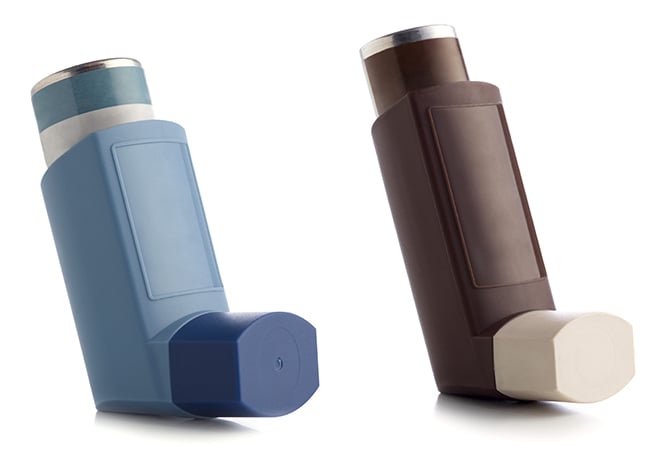
As Nigeria joins the global community to mark the 2026 World Asthma Day today, pulmonologists have raised concerns over the high cost of anti-inflammatory inhalers, warning that this could lead to inappropriate treatment and poor control of the condition.
The chest physicians explained that asthma is a chronic condition driven by inflammation in the lungs, noting that anti-inflammatory inhalers act as preventers by targeting this inflammation, while other inhalers, known as relievers, only provide temporary symptom relief without providing adequate treatment.
The lung specialists stated these inhalers remain limited due to poor availability, low awareness, and wrong prescriptions by healthcare providers, further identifying cost as a major barrier to effective asthma care.
They decried the stigma and misconceptions about inhaler use, noting that some patients avoid them due to fears of addiction or the belief that they indicate severe illness.
In exclusive interviews with PUNCH Healthwise, the pulmonologists advocated increased public education, awareness, better training for healthcare providers, stronger health insurance coverage, and early diagnosis.
World Asthma Day is observed on the first Tuesday of May every year to raise awareness, education and support for the 260 million people affected by asthma globally.
The theme for 2026 is “Access to anti-inflammatory inhalers for everyone with asthma – still an urgent need.”
According to the Nigerian Thoracic Society, over 30 million Nigerians are living with asthma.
PUNCH Healthwise previously reported how the exit of the British multinational pharmaceutical company, GlaxoSmithKline, in 2023 led to the scarcity and astronomical increase in the prices of inhalers the company produced.
The report had highlighted the challenges asthmatics faced in getting the inhalers, as well as the implications of the scarcity.
Speaking with PUNCH Healthwise, a Professor of Medicine at Lagos State University College of Medicine, Ikeja and Pulmonologist at LASUTH, Olufunke Adeyeye, said asthma treatment in many cases is misguided, as patients are given only relief medications instead of drugs that address the root cause of the disease.

She strongly stated that anti-inflammatory inhalers are essentially “preventers” that target airway inflammation, which is the underlying problem in asthma.
“Asthma is a chronic condition characterised by inflammation in the airway. So that inflammation must be targeted. It’s not just for you to give something to relieve someone; you need to treat what is actually going on there all of the time,” she said.
Adeyeye noted that although combination inhalers that serve as both relievers and preventers now exist, access remains limited due to several barriers, including poor availability, lack of awareness, and wrong prescriptions.
“The anti-inflammatory inhalers are the preventers. Luckily, now we have the combined ones; those that are preventers and relievers combined into one. This makes it easier to ensure no one is left without anti-inflammatory medication when treating asthma.
“The challenges we are having are availability of the inhalers and knowledge about it, among the public, prescribers and even doctors and healthcare providers in knowing the right type of inhaler to prescribe to patients with asthma,” she said.
The professor of Medicine further emphasised the need for awareness that the management of asthma is to target the inflammation going on in the airway for treatment.
She added that cost is another major obstacle, stressing that many families cannot afford the medications.
“Access to the medication is also limited by cost. If you take the minimum wage, which is N70,000, and there is a child with asthma in the family, the cost of these inhalers ranges from N10,000 to N60,000. This makes it inaccessible for most families,” she said.
The pulmonologist also identified stigma and misconceptions about inhaler use as key factors discouraging patients from using the medications.
“There’s some stigmatisation associated with using an inhaler. Some people think using an inhaler means the disease is severe or that they will become addicted. No. Inhalers are the best way to deliver medication directly to the airway with minimal side effects and interference with the brain, leg or blood,” she explained.
Adeyeye further pointed out that improper use of inhalers reduces their effectiveness, noting that many patients do not receive adequate guidance on correct inhaler techniques.
“People are not taught how to use inhalers properly, so they don’t get the benefit and may abandon treatment,” she said.
She emphasised that improving asthma care requires a strong focus on education, early diagnosis, and better support systems.
“For me, it is education, education, education. Once a diagnosis is made, patients and caregivers must understand that asthma is chronic and that even when symptoms are not obvious, the inflammation is still there,” she said.
She urged healthcare workers to improve their knowledge and prescribing practices, noting that many patients are still given syrups and tablets without anti-inflammatory inhalers.
The expert also called on the government to make asthma medications more affordable and accessible through health insurance coverage.
“Health insurance needs to be strengthened to cover asthma medications. If people know their drugs will be covered, they are more likely to adhere to treatment,” she said.
Adeyeye added that schools should also play a role by supporting children with asthma and ensuring access to inhalers when needed.
She warned that asthma remains underdiagnosed, particularly among young people.
“Studies have shown that a lot of young people in the age group 12-14, up to 15 per cent of them, have asthma symptoms, and more than 80 per cent of them are not diagnosed, though they have the symptoms, they are coughing and breathing badly,” she said.
The pulmonologist advised parents to take persistent cough, chest tightness, wheezing, noisy breathing and breathing difficulties seriously.
“Don’t ignore a child who wakes up in the middle of the night coughing, feeling tightness in their chest, and their breathing is somehow noisy. Don’t just give them water and ask them to go back to sleep. Take them to a healthcare provider and get them checked for asthma,” she said.
She stressed that with proper diagnosis, access to anti-inflammatory inhalers, and correct use of medications, asthma can be effectively controlled and complications prevented.
In an earlier interview with PUNCH Healthwise, the President of the Nigerian Thoracic Society, Prof. Musa Babashani, said access to inhalers remains critical to achieving good asthma control, warning that millions of Nigerians are at risk due to poor availability and rising costs.

He noted that over 30 million Nigerians are estimated to be living with asthma, stressing that anti-inflammatory inhalers play a key role in reducing severe attacks and deaths.
Babashani, however, lamented that access to these essential medicines has worsened in recent years, leading to a rise in poorly controlled asthma cases.
“Since the exit of some pharmaceutical companies and the rising exchange rate, affordability has been greatly reduced for most patients. Access to registered, quality inhalers has also declined,” he said.
He noted that clinicians are now seeing more patients with uncontrolled asthma due to the inability to afford or access the right medications.
“In clinical settings, we have observed an increase in the number of asthmatic patients whose condition is uncontrolled, largely because of lack of access and decreased affordability of these important drugs,” he added.
The thoracic expert also raised concerns over the growing circulation of fake and substandard inhalers, warning that their use could worsen health outcomes.
He called on regulatory agencies and the government to intensify surveillance and clamp down on the sale of unregistered drugs, even in licensed pharmacies.
He further urged the government to sustain efforts to improve access by waiving import duties on essential medicines and supporting the availability of quality inhalers.
Copyright PUNCH
All rights reserved. This material, and other digital content on this website, may not be reproduced, published, broadcast, rewritten or redistributed in whole or in part without prior express written permission from PUNCH.
Contact: [email protected]
