

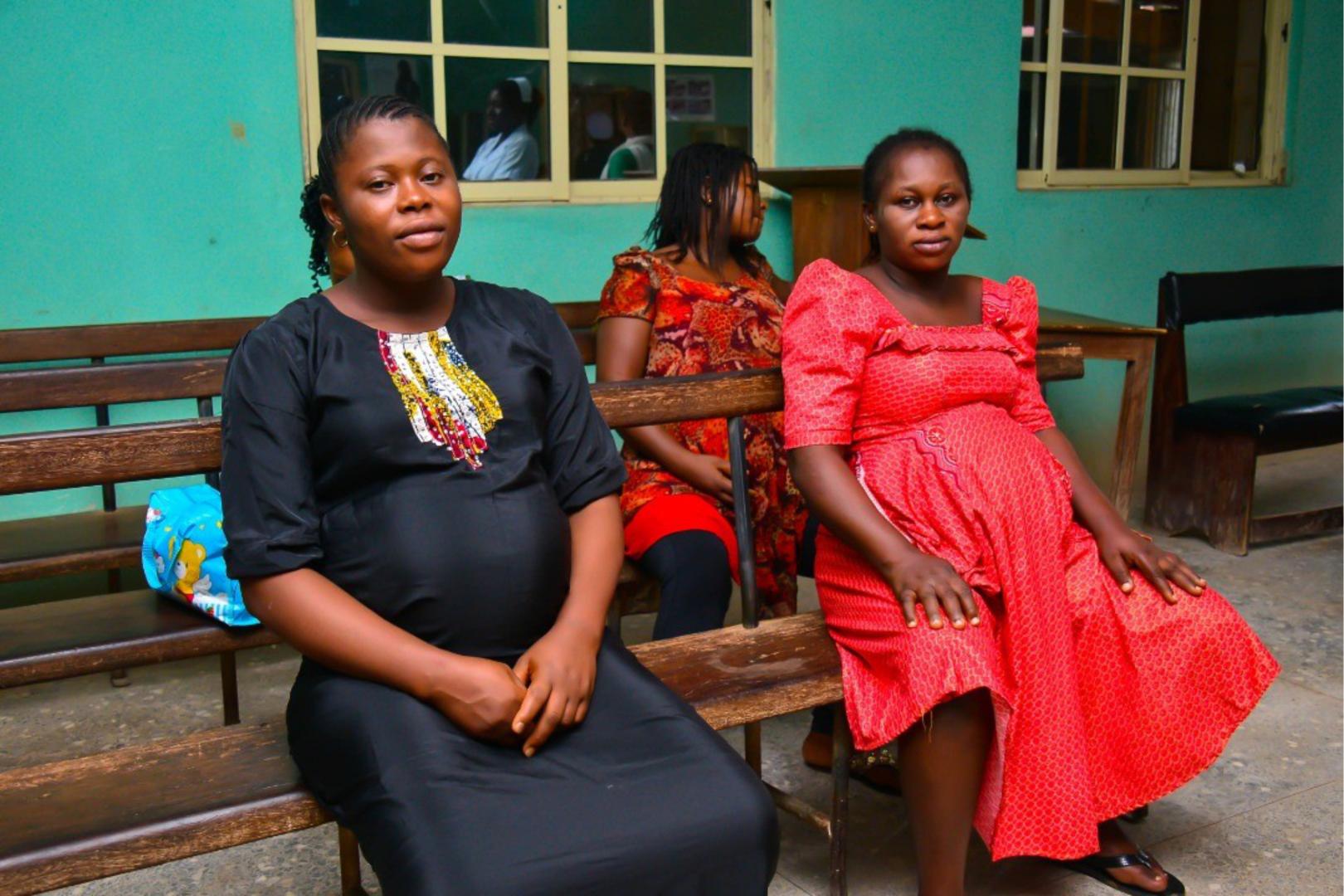
One year after the Federal Government announced free caesarean sections for indigent pregnant women to reduce Nigeria’s high maternal mortality rate, PUNCH Healthwise’s investigation reveals widespread implementation gaps across federal teaching hospitals. While many institutions have commenced the service, major tertiary hospitals in the South-West, including the Lagos University Teaching Hospital, Idi-Araba; the University College Hospital, Ibadan; and the Federal Medical Centre, Abeokuta, are yet to implement the policy, leaving vulnerable expectant mothers who need the service to continue struggling to pay out-of-pocket for the emergency procedures. JANET OGUNDEPO reports
Seven months after the birth of her first child, Cynthia got pregnant again. This time, with twins.
At 13 weeks of gestation, when the pregnancy was confirmed, she returned to the Lagos University Teaching Hospital, Idi-Araba, to begin antenatal care.
Due to the short interval between pregnancies (less than 12 to 18 months apart) and the fact that she was carrying twins, a high-risk pregnancy, Cynthia was told she would undergo a caesarean section.
The mother of three said she had mentally prepared herself for the procedure as her pregnancy progressed, but the hospital bill took her aback.
“The bill was much, both directly and indirectly,” Cynthia told PUNCH Healthwise.
Cynthia was delivered of her twins in October 2025, 11 months after the Federal Government announced the Comprehensive Emergency Obstetric and Newborn Care, CEmONC, also called free CS, for poor and vulnerable women across the country.
Yet, Cynthia says she was never told about the initiative during her antenatal clinics at LUTH and had not heard about it elsewhere.
On October 12, 2025, the eve of her caesarean section, Cynthia paid N253,593 to book admission into the female ward in preparation for the birth of her babies.
After a successful surgery, the mother of twins said she was asked to pay N70,000 and N127,312 upon discharge from the hospital.
In all, Cynthia paid N450,905 for the procedure. However, she still had to buy hospital consumables and some prescribed medications that the hospital pharmacy did not have from private pharmacies, incurring additional expenses.
She estimated spending N1.3 million at LUTH during the birth of her twin babies.
“Having to pay this much at a federal hospital, I feel that our health sector is supposed to be free up to a limit. We should be able to benefit from one or two things from the government. The money is a lot. If we must be charged at government hospitals, it should be minimal so that every person, even the lowest of all, can afford it,” Cynthia told PUNCH Healthwise.
Cynthia’s experience is not isolated. She said that her younger sister, who also had a C-section at the same facility two weeks later, paid over N150,000 for admission into the ward.
Announced but unknown
To address the country’s high maternal and newborn mortality rates, the Coordinating Minister of Health and Social Welfare, Prof Muhammad Pate, on November 7, 2024, announced a free caesarean section for poor and vulnerable pregnant women across the country at a three-day Nigeria Health Sector-Wide Joint Annual Review meeting in Abuja.

The policy, introduced under the Maternal Mortality Reduction Innovation Initiative and branded Comprehensive Emergency Obstetric and Newborn Care, CEmONC, is fully subsidised in designated facilities.
It is designed to treat fatal pregnancy, labour, and newborn complications as part of a broader national push to reduce preventable maternal and newborn deaths and strengthen frontline health systems.
Already, Nigeria has the third-highest maternal mortality rate and accounts for 34 per cent of global maternal deaths.
Despite the alarming figures, experts say Nigeria would be unable to meet the Sustainable Development Goal target of 70 deaths per 100,000 live births by 2030.
Researchers and maternal experts have asserted that the high cost of caesarean sections in Nigeria has been identified as a major barrier to accessing safe delivery services, particularly for low-income women.
According to the World Health Organisation, caesarean section rates should ideally be between 10 and 15 per cent of all births. However, many women who require the procedure are unable to afford it, leading to preventable maternal and newborn deaths.
Findings by PUNCH Healthwise further show that pregnant women attending antenatal clinics at some federal hospitals remain unaware of the policy.
‘We don’t offer such service here’
At LUTH, Nigeria’s foremost teaching hospital, the free CS initiative is a foreign term to pregnant women attending the antenatal clinic, including nurses and even social workers.
A visit to the facility revealed that the term was alien, as medical officers continued to ask other colleagues whether they had heard of the initiative and if the hospital was rendering such services.

Our correspondent engaged one of the pregnant women present at the facility for antenatal care on whether she had been told about the free C-Section for indigent women in need of it. Her response was that she had never heard of it.
“We have not been told anything about it, even during antenatal services. Except they might have selected some people and whispered it to them, I have not heard of it, and it has never been mentioned,” she told PUNCH Healthwise.
Several pregnant women at the Tuesday antenatal clinic also told PUNCH Healthwise that they have never heard “that CS is free for indigent pregnant women at LUTH.”
After the responses from clients at the hospital, our correspondent went further to make an inquiry at the nurses’ station. The response was the same.
One of the nurses said, “I am not aware of that. They have not told us that CS is free. Let me find out from my oga.”
After a few minutes, the senior nurse came around and was asked the same question.
She responded, “LUTH is not part of the hospital, though it is a federal hospital.”
Another senior nurse was asked, and she responded, “That is done in the north, but there is nothing like free CS in federal hospitals in the South-West here. Some states might do it sometimes. You will have to go to the north to access such a service.”
Still not satisfied with the response, our correspondent headed to the social works/NHIS office for further enquiry.
At the corporate services office, a senior officer, whose name PUNCH Healthwise could not ascertain, said, “I don’t think the programme has started. They are still in the process. There have been meetings between people from the Ministry of Health and LUTH management, but I don’t think they have finalised the process.”
At UCH
At the University College Hospital, Ibadan, Nigeria’s flagship tertiary healthcare institution, CEmONC has yet to begin, though the facility was among the 31 tertiary facilities that signed the Memorandum of Understanding in December 2024.
Findings at the hospital show that a year after the programme began, indigent pregnant women accessing care at the institution have yet to benefit from the scheme.
Confirming the situation, the Head of Obstetrics and Gynaecology Department at UCH, Prof Christopher Aimakhu, clarified that the government’s announcement does not translate into universally free CS services across all federal tertiary hospitals.
He explained that the intervention is targeted at selected local government areas where poverty rates are high, and women are less able to afford surgical obstetric care.
“There are clearly some selected parts of the country where they are concentrating on facilities in those areas to offer free services,” he explained, stressing that it would be unrealistic to assume that every Nigerian woman can access free CS in all federal hospitals.
At UCH, he confirmed, there is no across-the-board free CS policy currently in operation, stating that even when a service is described as “free,” someone must bear the cost.
“When you say free, somebody is paying. The government is paying, or an NGO is paying. The manpower, equipment and facilities, somebody has to account for it. You cannot just say it should be free for every Nigerian woman without looking at who funds it,” he maintained.
The leading gynaecologist warned that making CS universally free without a sustainable funding structure could strain the health system and even distort clinical decision-making.
Undoubtedly, LUTH and UCH are the biggest and most renowned federal teaching hospitals in the southwest. These third-tier hospitals provide the highest level of obstetric care to pregnant women, many of whom are in fatal conditions.
Yet, PUNCH Healthwise investigations clearly show that the programme has yet to start at these tertiary facilities.
PUNCH Healthwise reported in March 2025 that federal tertiary hospitals in the South-West had not begun the programme, although plans to get the services started were still in place.
The report revealed that LUTH, UCH, OAUTH and FMC Abeokuta were yet to commence the services, while only the Federal Medical Centre, Ebute Metta, Lagos, had fully launched the programme for indigent pregnant mothers.
At FMC Ebute Metta ‘Free’ CS Promise
However, a visit to the Federal Medical Centre, Ebute Meta, revealed gaps in awareness about the initiative among frontline staff and patients.
Nurses attending to antenatal patients appeared unfamiliar with the policy, leaving women who might qualify for the service unaware of its existence. When some expectant mothers were asked whether they had been informed about the initiative during routine health talks on clinic days, they responded negatively.
Further enquiries by PUNCH Healthwise from a senior nurse in the antenatal clinic also indicated a lack of awareness about the availability of free CS services at the facility.
Enquiries at the billing office to seek clarification on the initiative and to obtain the cost of the procedure at the centre showed that the estimated cost of a C-section was a minimum of ₦700,000 in cases without additional complications.
The figure may vary depending on clinical circumstances, but the staff indicated that ₦700,000 is the baseline.
After persistent enquiries and being referred to several staff members, a dark-complexioned man, who said he was the only one who attended the NHIA seminar organised for participating hospitals on the initiative, confirmed that the service exists but that not all patients and staff are informed, indicating that information may not be uniformly available across departments.
When pressed on how women would know about the service, the official said, “If the patient has the opportunity to meet any senior doctor, then they will likely hear about it from the doctor who would certify the patient’s condition, need for CS and indigent status.”
Few beneficiaries in South-West
PUNCH Healthwise gathered that the initiative is yet to begin at the FMC, Abeokuta.
PUNCH Healthwise had in March 2025 reported that the hospital’s Public Relations Officer, Segun Orisajo, confirmed that the “programme is yet to commence at our centre due to some logistics that we’re trying to sort out.”
Further enquiry in January revealed that the just-ended 84-day Joint Health Sector Union stalled the provision of the free CS initiative with a promise to begin after the industrial action is called off.
At the Obafemi Awolowo University Teaching Hospital, the Head of Obstetrics and Gynaecology Department, Prof Alexander Owolabi, said the hospital joined the programme in March 2025, months after the national announcement in November 2024, and has since been implementing the intervention for eligible patients.
Confirming OAUTHC’s participation, he explained that the scheme is primarily targeted at indigent women, particularly those who present as emergencies or are referred from other facilities in critical condition.
He noted that eligibility is determined based on clearly defined parameters, stating that hospital administrators assess patients’ financial status, including whether they have health insurance or visible means of support, before enrolling them under the free CS initiative.
He stressed that the intervention has been lifesaving for many vulnerable women who might otherwise have died due to the inability to pay for emergency obstetric care.
On how the scheme operates within the facility, Owolabi clarified that it is not primarily designed for women who are already registered for antenatal care at the hospital.
He added that while awareness about the initiative is gradually spreading through word of mouth, the hospital is not actively publicising it through media campaigns. According to him, the focus at this stage is on data gathering and assessing how well the system functions before scaling up awareness efforts.
Need for free CS
After the launch of the free CS initiative, a January 2025 report by The Guardian showed that the NHIA expanded the services across over 104 facilities nationwide.
According to the NHIA, the first phase was launched in four healthcare facilities in Kano and Akwa Ibom States, while the second phase involved seven facilities in Borno, Kebbi, Sokoto and Bauchi states.
The agency further added that between September and December 2024, a Memorandum of Understanding was signed with 42 facilities across the country, with 62 facilities in the onboarding process.
However, in April 2025, Pate said that 4,000 women have benefited from the free C-Section initiative since its inauguration.
“We are scaling up Comprehensive Emergency Maternal, Obstetric, and Newborn Care, especially for indigent and vulnerable populations.
“More than 4,000 women have already received caesarean sections, treated, and reimbursed through the National Health Insurance Authority’s emergency obstetric care programme,” he said.
In September 2025, the NHIA Bauchi State Coordinator, Mustapha Mohammed, representing the Director-General Dr Kelechi Ohiri, said, “CEmONC is a life-saving emergency care for women and newborns for the vulnerable population in underserved areas… All treatments are covered free.”
According to the United Nations Children’s Fund, at least 70 million Nigerian babies are born each year.
Data from the WHO shows that CS deliveries continue to rise globally, accounting for one in 5 childbirths. This means that 21 per cent of childbirths are through CS.
The WHO says the figure is likely to increase to 29 per cent of all births delivered by CS by 2030.
The global health body says CS is an essential and lifesaving surgery where vaginal deliveries would pose risks to the mother and child.
Speaking further, the maternal health expert, Aimakhu, said the medical need for CS is substantial, particularly at tertiary facilities.
He estimated the Caesarean section rate in Nigeria at about 25 to 30 per cent, roughly three out of every 10 deliveries. However, in tertiary referral centres, the rate is significantly higher, often between 40 and 60 per cent.
“That is because most of the patients referred to tertiary hospitals already have complications, severe hypertension, convulsions, or obstructed labour. These are women who cannot safely deliver vaginally,” he explained.
Further findings reveal that the average cost of a caesarean section in federal hospitals costs as high as 400,000 and N700,000, further revealing the burden and cost of out-of-pocket payment.
Free CS in the North, South
States in the northern part of the country have the highest maternal mortality rate, and the free CS seems to have gained strides and is well utilised in the region.
For example, PUNCH Healthwise gathered that 379 pregnant women were beneficiaries of the free CS initiative in 2025 at Usmanu Danfodiyo University, Sokoto State.
In the South-South part of the country, federal hospitals such as the University of Uyo Teaching Hospital, Akwa-Ibom and the University of Port Harcourt Teaching Hospital, Rivers State, have been providing free CS services to indigent women.
The Head of Department of the NHIA at UPTH, Dr Ephraim, told PUNCH Healthwise that the programme was ongoing and started in February 2025 at the facility.
Ephraim said 86 indigent pregnant women were CEmONC beneficiaries, while 70 newborns were managed for complications in the intensive care unit.
In the South East, findings show that the programme is ongoing.
For example, the National Obstetric Fistula Centre, Abakaliki, Ebonyi State, currently provides free obstetric care to indigent women in need of the life-saving service.
Free CS reduces maternal deaths – Experts
A Professor of Obstetrics and Gynaecology at the University of Uyo, Akwa Ibom State, Aniekan Abasiattai, has described caesarean section as a life-saving operation that should be available in all facilities offering maternity care.

He stated that any facility offering antenatal care and delivery services without immediate access to emergency caesarean section has no business managing women during pregnancy and labour.
“Caesarean section is one of the components of comprehensive emergency obstetric care. I strongly believe that because of its significance in maternity care and in reducing the proportion of women who die as maternal deaths, if any facility offers maternity care and does not have recourse to immediate emergency caesarean section services, either in that facility or where patients can be quickly referred, they have no business managing women during pregnancy and labour and delivery,” he said.
The obstetrician explained that a caesarean section is done for two primary reasons: either because normal delivery is not possible or would pose a severe threat to both mother and baby, or because waiting for labour to start may take too long and result in severe complications.
He noted that caesarean section rates worldwide are on the increase, with tertiary centres in Nigeria recording rates of about 31 per cent, while the WHO recommends a rate of about 15 per cent of deliveries.
Abasiattai said claims by faith-based homes and unorthodox health facilities that women would die if they underwent a caesarean section have created fear and discouraged many from seeking hospital care, even when the procedure is clearly indicated.
“The peculiarity in my own area is not just because of the cost, but because of the fear of caesarean section and the influence of faith-based homes. Those who do not come to orthodox facilities are told that if they have a caesarean section, they will die. So because of that, the women, even if there’s an indication, will prefer to go and live in those places and are only brought to the hospital when they are almost dead,” he said.
The professor strongly advocated for subsidised or free maternal healthcare services nationwide, describing it as a major factor that would reduce maternal mortality rates.
“I’m one of those people who believe that maternal healthcare should be virtually free. That’s one of the main factors that would reduce maternal mortality rates. If women can afford pregnancy services, delivery services, including operative delivery services, it will go a long way to increase hospital attendance rates and delivery rates,” the gynaecologist said.
Also, a Professor of Obstetrics and Gynaecology at the Usmanu Danfodiyo University, Sokoto, Sokoto State, Abubakar Panti, stated that the free obstetric care has been running successfully in northern teaching hospitals for over a year, with indigent patients receiving free emergency caesarean sections.

He explained that the scheme covers all emergency maternal surgeries, particularly caesarean sections, for indigent patients who present their national identity cards.
Panti noted that patients only need to present their national identity card or health insurance card to access the free services, with the government covering procedure fees, materials and anaesthetic costs.
The don clarified that the scheme covers only emergency cases, not elective caesarean sections.
He expressed surprise that the scheme is not being implemented in some southern teaching hospitals, noting that the programme was announced as a national initiative.
Write to the minister
Efforts to obtain comments on when CEmONC would commence at LUTH were unsuccessful, as the Chief Medical Director, Prof Wasiu Adeyemo, when contacted, said he would speak with our correspondent later.
Messages sent to his WhatsApp line had yet to receive a response as of press time.
However, a gynaecologist at the facility, who spoke on the condition of anonymity because he was not authorised to speak on the matter, confirmed that the initiative had yet to begin.
To obtain the reaction of the Federal Ministry of Health and Social Welfare, our correspondent contacted the ministry’s spokesperson, Alaba Balogun, who said a formal letter should be addressed to the Permanent Secretary’s office in Abuja.
“The directive is that it is only the minister who can respond to it. What you will do is write to the Permanent Secretary…and through that method you will get an official response,” he said.
Given the press deadline, our correspondent requested an email address to submit the letter electronically rather than by post. Balogun said he would provide the address but had yet to do so as of press time.
Copyright PUNCH
All rights reserved. This material, and other digital content on this website, may not be reproduced, published, broadcast, rewritten or redistributed in whole or in part without prior express written permission from PUNCH.
