

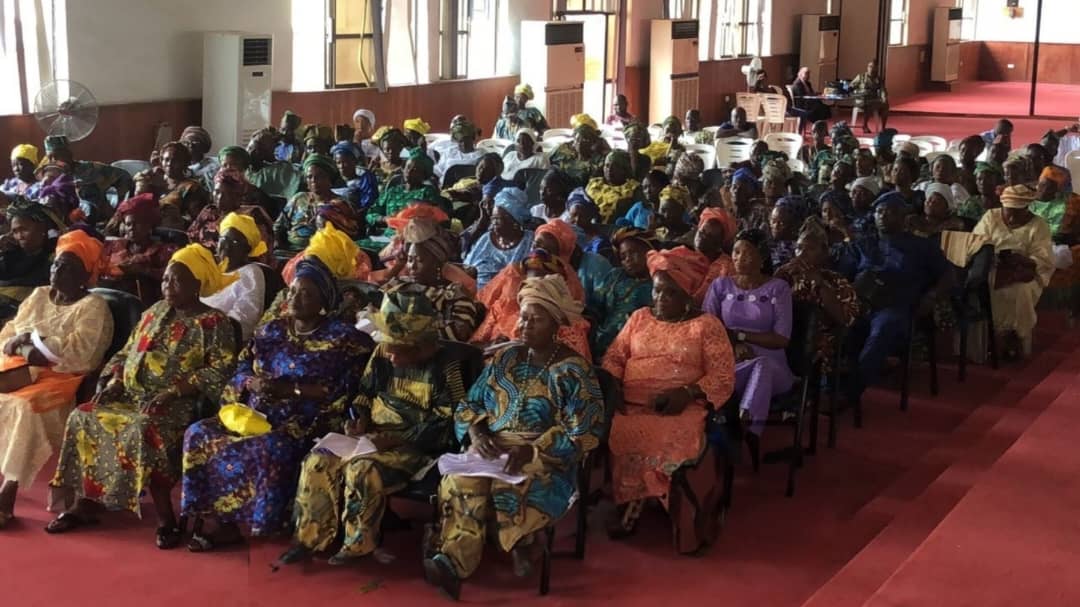
A non-governmental organisation, Lydia Wilson Foundation, has launched an economic empowerment programme to train 999 displaced women and children in Northern Nigeria on baking skills to generate sustainable income and combat hunger.
The Foundation’s Chairperson, Lydia Balogun-Wilson, said the Bake to Empower programme was designed to address the structural barriers that keep families in cycles of dependency, particularly as Nigeria faces one of its most severe hunger crises.
Speaking on the initiative, Balogun-Wilson said, “The most sustainable response to hunger and poverty is empowerment. While humanitarian aid has provided critical short-term relief, it has not always addressed the structural barriers that keep families in cycles of dependency.”
The foundation noted that Nigeria’s food security situation had deteriorated sharply in recent years due to conflict, economic pressures, and dwindling humanitarian funding.
According to the United Nations World Food Programme, nearly 35 million Nigerians are projected to face severe food insecurity during the 2026 lean season, the highest level recorded in the country’s history.
The foundation stated that rural populations in the conflict-affected north were among the hardest hit as food assistance was being sharply reduced due to funding shortfalls.
It added that the situation was particularly acute in parts of northeastern Nigeria, where violence and displacement had disrupted agricultural livelihoods and strained access to essential services.
Under the Bake to Empower programme, participants will receive practical baking training designed to impart hands-on skills relevant in local markets, basic starter equipment to facilitate initial production, and ingredients for the first production cycle.
The programme will also provide guidance on hygiene and food safety, critical for quality and customer trust, as well as simple pricing and selling support, enabling beneficiaries to operate as micro-entrepreneurs.
Balogun-Wilson added, “For families who have lost their homes, security and access to stable livelihoods, this programme offers a path towards independence. With enough donor support, the women and children would never have to depend on aid to survive.”
The LWF, registered with the Office of the Scottish Charity Regulator in the United Kingdom with operational presence in Nigeria, has a track record of supporting vulnerable families through practical humanitarian programmes in education, food security, health, agriculture, and economic empowerment.
The foundation noted that its work focused on communities facing chronic hardship, including widows, displaced persons and households struggling to secure stable income and food access.
It stated that the initiative aligned with broader development goals of poverty reduction and gender equity in Nigeria by prioritising skills and income generation alongside essential needs support.
Copyright PUNCH
All rights reserved. This material, and other digital content on this website, may not be reproduced, published, broadcast, rewritten, or redistributed in whole or in part without prior express written permission from PUNCH.
Contact: [email protected]
