

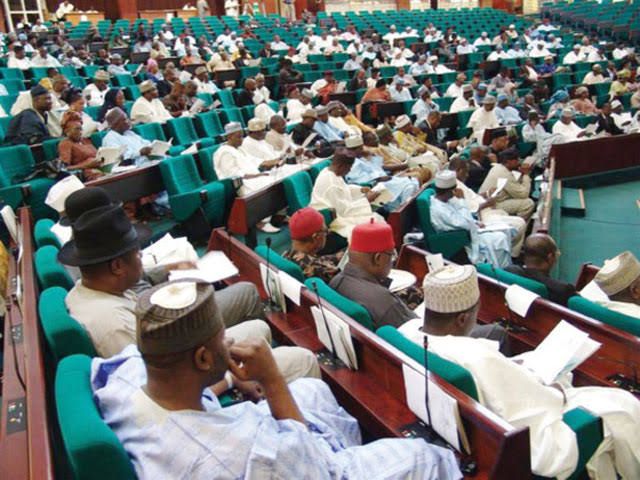
Following the House of Representatives’ refusal to criminalise vote-buying at the level of party primaries, several stakeholders, yesterday, criticised the lawmakers, warning that the decision will further weaken Nigeria’s already fragile electoral system.
They described vote-buying during party primaries as one of the most damaging practices in the political process, saying that candidates who resort to inducement at the stage of candidates’ selection are likely to deploy similar tactics during general elections.
The Labour Party’s 2023 presidential candidate, Peter Obi, while reacting to the decision, described the House of Representatives’ refusal to criminalise vote-buying at party primaries as a setback for Nigeria’s democracy ahead of the 2027 general elections.
In a post on X (formerly Twitter), the former Anambra State governor said many Nigerians had expected the lawmakers to take a firm stand against what he called the “cancer of vote-buying,” which continues to undermine the democratic process. Obi said the decision amounted to protecting a dysfunctional political system rather than safeguarding the country’s future.
“By refusing to criminalise vote-buying at the foundational stage of party primaries, the House has chosen to protect a broken system rather than safeguard the nation’s future,” he wrote.
He said that credible elections would not emerge from corrupt foundations, stressing that any genuine effort to curb vote-buying must begin at the primaries, where candidates are first selected.
“Any effort to stop vote-buying must begin at the primaries. Without addressing the problem at its roots, any measures taken later will lack the strength to endure,” Obi added.
The former governor warned that a democracy driven by inducement and bribery would not deliver national progress, describing a system where votes are bought and sold as a “criminal marketplace” rather than a true democracy.
Obi also expressed concern that vote-buying had spread beyond formal political contests, noting that it was now evident in town unions, village associations, clubs and even student elections.
He, therefore, urged lawmakers and political stakeholders to prioritise electoral reforms ahead of 2027, insisting that Nigeria’s democratic future must not be compromised.
“A new Nigeria is possible, but only if we confront these practices boldly and insist that integrity begins at the very start of our electoral process,” he said.
General Secretary of the Nigeria Union of Journalists (NUJ), Achike Chude, while corroborating Obi’s position, said he was not surprised by the lawmakers’ decision, saying that party primaries are where most electoral malpractices originate. He said that many aspirants believed that once they secured their party’s ticket, victory in the general election was almost guaranteed.
Chude added that electoral laws should be strengthened to punish not only agents and voters who accept inducements, but also politicians who orchestrate vote-buying.
Similarly, a former Minister of Defence and National Secretary of the Social Democratic Party (SDP), Olu Agunloye, described vote-buying at the primary stage as one of the gravest crimes against the nation.
He questioned the billions of naira and dollars allegedly spent by aspirants to induce delegates at parties’ conventions, suggesting that lawmakers’ reluctance to criminalise the practice was driven by personal interest.
Also speaking, veteran journalist Wale Adeoye, described vote-buying as morally reprehensible, saying that it erodes democratic values and enables the emergence of corrupt leaders.
Adeoye said that such measures would be ineffective unless political parties were democratised and the influence of wealthy financiers curtailed.
“The worst form of vote-buying occurs when party members have no real power, and decisions are taken by a few rich individuals.
“Criminalising vote-buying will mean little without enforcement. Such measures only work where the rule of law is upheld,” he said. He added that weak law enforcement remained a major challenge, noting that laws in Nigeria often existed only on paper.
