

By Ibrahim Adam
When scrolling through social media, reading newspapers or checking WhatsApp statuses, it has become common to come across appeals for donations to support people undergoing dialysis or living with kidney disease.
The growing frequency of such appeals reflects a deepening public health crisis, as Nigeria records a worrying surge in chronic kidney disease, with unusually high numbers of patients requiring dialysis and kidney transplants.
Daily Trust reported that a specialist in Internal Medicine and Nephrology at the Faculty of Clinical Sciences, Niger Delta University, Wilberforce Island, Bayelsa State, Professor Oghenekaro Egbi, warned that chronic kidney disease is on track to become the fifth leading cause of death globally.
Delivering the university’s 65th inaugural lecture, titled ‘The Human Kidney: Casualty of Societal Maladies; An SOS Distress Call,’ he stated that an estimated 230,000 Nigerians currently require life-saving interventions such as dialysis or kidney transplantation.
Egbi attributed the rising burden of chronic kidney disease to the increasing prevalence of non-communicable diseases, including hypertension, diabetes and obesity, compounded by persistent infectious diseases such as hepatitis and HIV.
Despite President Bola Tinubu’s approval to reduce the cost of kidney dialysis sessions from N50,000 to N12,000 per session, the prevalence of kidney disease in the country continues to rise.
The crisis recently took centre stage in Lagos when a renowned media personality and culture curator, Efemena Adabamu, popularly known as Efe Tommy, used his 40th birthday celebration in August 2025 to launch The Kidney for Life Relief Foundation.
The initiative, unveiled before family, friends and colleagues in the industry, aims to support Nigerians living with kidney disease and raise awareness about prevention and early detection.
The foundation is deeply personal to Efe, whose journey through kidney failure and eventual transplant formed the emotional core of the event.
He battled kidney-related complications for two years before undergoing a successful transplant at St Nicholas’ Hospital, Lagos, a story that has since inspired many facing similar challenges.
Amid growing public concern, Nigerian social media health influencer and medical doctor Chinonso Egemba, popularly known as Aproko Doctor, has also drawn attention to the realities of kidney disease through educational content shared on his YouTube channel.
He explained the vital role the kidneys play in maintaining overall health, noting that they filter waste from the blood, remove excess water, regulate blood pressure and balance essential minerals.
“Your kidneys work very hard. They clean your blood by filtering out waste, removing excess water and turning it into urine, controlling your blood pressure and balancing important ions like sodium and potassium. They also help keep your bones and blood healthy,” Egemba said.
He warned that kidney disease occurs when these functions fail, likening the condition to a blocked drainage system where waste and fluid build up in the body.
“Now imagine that out of all these things your kidneys do, they suddenly stop working. When that happens, your entire body becomes like a blocked drainage pipe. Waste stays inside, water builds up, and blood pressure goes out of control,” Egemba said.
According to him, early signs of kidney disease include swelling of the legs and face, foamy urine, persistent tiredness, itchy skin and shortness of breath caused by fluid build-up in the lungs.
“If you notice any of these signs, do not wait. Get tested. Do not blame stress or the weather. Detecting kidney problems early makes treatment easier and can prevent kidney failure,” he said.
Egemba explained that once the kidneys fail, treatment options are limited to dialysis or transplantation, both of which are costly and difficult to sustain for most Nigerians.
“In Nigeria, there are about 20,000 new cases of kidney failure every year, but fewer than 2,000 people are on dialysis. The country has only about 304 functional dialysis machines for over 200 million people,” he said.
The medical practitioner added that Nigeria also has fewer than 250 kidney specialists nationwide, many of whom have emigrated, further straining the healthcare system.
Egemba noted that the financial burden is often heavy, revealing that about 90 per cent of Nigerians who start dialysis die within 90 days, not because the treatment is ineffective, but because they cannot afford to continue.
Below are 10 essential tips to help protect your kidneys:
Control your blood sugar levels
Egemba explained that diabetes is one of the leading causes of kidney disease in Nigeria, with prolonged high blood sugar damaging the tiny blood vessels responsible for filtering waste.
“When blood sugar remains high for a long time, it damages the tiny blood vessels in the kidneys, reducing their ability to filter waste effectively,” he said.
Keep your blood pressure in check
Uncontrolled blood pressure, the medical practitioner said, quietly destroys kidney function over time by scarring delicate blood vessels.
“High blood pressure slowly scars and weakens the delicate blood vessels in the kidneys, and over time, this damage prevents the kidneys from cleaning the blood properly,” he explained.
Avoid abuse of painkillers
Egemba warned that misuse of over-the-counter painkillers and herbal mixtures is a major but often overlooked cause of kidney failure.
According to him,“Frequent use of painkillers such as ibuprofen, Alabukun and unregulated herbal mixtures can poison the kidneys when taken without medical supervision.”
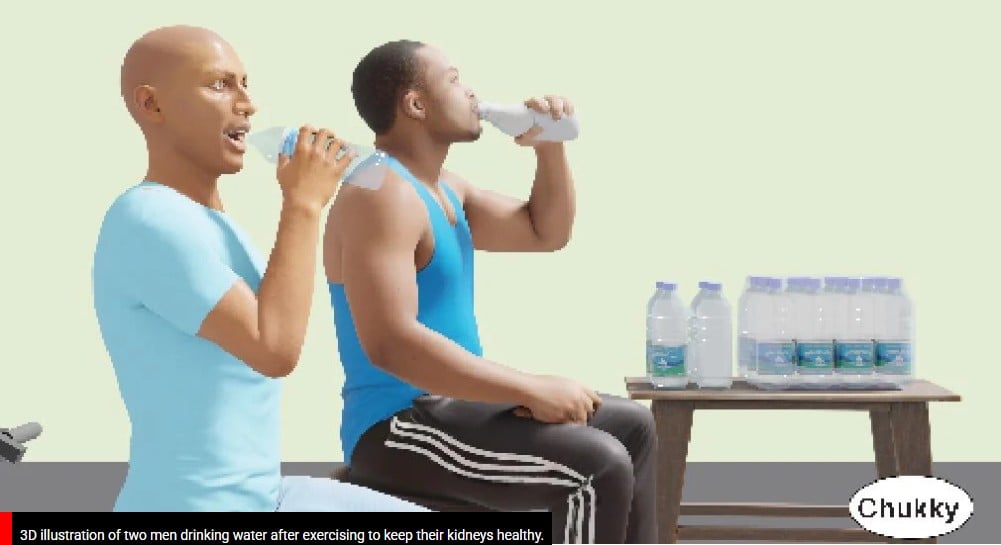
Drink enough clean water daily
Adequate hydration, he noted, is essential for flushing toxins out of the body and preventing kidney stones.
“Dehydration causes waste to concentrate in the urine, increasing the risk of kidney stones and kidney damage, especially in hot climates like Nigeria,” Egemba said.
Be careful with toxins and chemicals
He further cautioned against undue exposure to harmful substances through food, water or skin, as such products can impair kidney function.
“Bleaching creams, battery acid drinks, contaminated water and unsafe chemicals can damage the kidneys, so what you eat, drink or apply to your skin matters,” he said.
Know your family health history
A family history of kidney disease, Egemba added, increases individual risk and requires closer monitoring.
“If kidney disease runs in your family, your risk is higher, which means you should be more proactive with testing and lifestyle choices,” he advised.
Prevent and control hypertension
A Clinical Assistant Professor of Internal Medicine at Western University of Health Sciences, California, United States, Dr Emmanuel Okenye, while educating the public on kidney disease and prevention on his YouTube channel, @DrEmmanuelOkenye, stressed that managing blood pressure is one of the most important steps in kidney protection.
“If your blood pressure is not well controlled, it puts a lot of stress on your kidneys and can damage them,” he said.
Properly manage diabetes
Okenye explained that high blood sugar directly damages the kidney’s main filtering unit and emphasised the need for proper medication and glucose control.
“High blood sugar perforates the glomerulus, which is the main filtering system in the kidneys, and causes proteins to start leaking out,” he said.
Avoid nephrotoxic medications
The doctor advised that certain medications, particularly when overused, can be toxic to the kidneys.
“Ibuprofen, diclofenac, Aleve and similar drugs should be taken sparingly and only under medical guidance,” he said.
Maintain a healthy weight
Okenye called for healthy eating and regular physical activity, noting that obesity is linked to kidney stress and abnormal protein loss in urine.
“Excess weight puts a lot of stress on the kidneys and causes proteins to start leaking out, which is not a good thing,” he said.
Copyright PUNCH
All rights reserved. This material, and other digital content on this website, may not be reproduced, published, broadcast, rewritten, or redistributed in whole or in part without prior express written permission from PUNCH.
